Easter women: gospels, films, plays, the Pope, blogposts
Below are short excerpts from and links to recent posts on how women are portrayed around Easter.
———
For years, as a biblical scholar, I have been devoted to trying to understand marginalized, forbidden and forgotten people like the women in the biblical story whose stories have been sidelined. Women’s stories have taken second place to the interests and needs of male biblical writers and male leaders in Christian churches over the centuries.
– April D. DeConick, Professor of Biblical Studies, Rice University in a Huffington Post piece, Let’s Remember the Biblical Women at Easter
In 597 pope Gregory the Great delivered a homily on Luke’s gospel in which he combined Mary Magdalene with Mary of Bethany (Martha’s sister), suggesting that this Mary was the same woman who wept at Jesus’ feet in Luke 7, and that one of the seven demons Jesus excised from her was sexual immorality. The idea caught on and was perpetuated in medieval art and literature, which often portrayed Mary as a weeping, penitent prostitute. In fact, the English word maudlin, meaning “weak and sentimental,” finds its derivation in this distorted image of Mary Magdalene. In 1969, the Vatican formally restated the Gospels’ distinction between Mary Magdalene, Mary of Bethany, and the sinful woman of Luke 7, although it seems Martin Scorsese, Andrew Lloyd Webber, and Mel Gibson have yet to get the message.
– Rachel Held Evans, author of A Year of Biblical Womanhood in a blogpost excerpting from the book, “Mary Magdalene, The Witness“
As you know, this Easter I have worked with Reverend Betty Adam of Christ Church Cathedral here in Houston to create an Easter event for Holy Saturday that would remember the biblical women. My idea for the production was to focus on the faithfulness and feelings of the women who followed Jesus to Jerusalem and remained with him as he died.
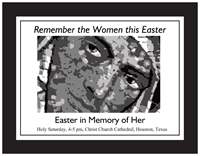
As I wrote the script with Betty, I “stayed” with each woman in her story as it is recorded in the bible, and as I did so I imagined what it would be like to be that woman.
— April D. DeConick, Isla Carroll and Percy E. Turner Professor of Biblical Studies at Rice University, in a blogpost, “Let’s Remember the Biblical Women at Easter“
Throughout the history of Jesus films, the depiction of Mary Magdalene has been disappointing. And that’s an understatement. Some would say that it has been scandalous. It has been absolutely standard to depict her as the repentant prostitute, harmonizing Luke 7.36-50 (anonymous “sinner”) and John 8.1-11 (anonymous woman taken in adultery) with references to Mary Magdalene (Luke 8.1-3, Mark 15.40-41 etc.).
In Jesus Christ Superstar (dir. Norman Jewison, 1973), Mary (Yvonne Elliman) is the repentant prostitute, who now does not know how….
So too in The Last Temptation of Christ (dir. Martin Scorsese, 1988), Barbara Hershey’s Mary Magdalene is depicted in the brothel, and her repentance is part of….
Even Mel Gibson’s Passion of the Christ (2004), which focuses the action solely on the Passion Narrative, manages to insert a flashback to the story of the woman taken in adultery. Monica Bellucci’s Mary is humbled by….
It is therefore a matter of great joy to see The Bible series reflecting the best scholarship on Christian origins and depicting Mary as one who follows Jesus and ministers to him from Galilee (Mark 15.40-41; Luke 8.1-3) all the way to Jerusalem, following him to the cross (Mark 15.40-1, John 19.25), his burial (Mark 15.47) and his resurrection (Mark 16.1-8; John 20.1-18).

There is no part in the story where Mary is made to….
– Mark Goodacre, Associate Professor of Religion at Duke University, teaching and writing about the New Testament and Christian origins, in a blogpost “A Celebration of Mary Magdalene in The Bible series“
Francis washed, dried, and kissed the feet of the young offenders: Muslims and Orthodox Christians, men and women, black and white, even those with tattoos — my stars, apocalypse is nigh — because that’s what Jesus would’ve done….
“By disregarding his own law in this matter, Francis violates, of course, no divine directive,” wrote Canon lawyer Edward Peters, who is an adviser to the Holy See’s top court. “What he does do, I fear, is set a questionable example.”
Indeed, many suspect that the foot-washing will lead to allowing women to be ordained as priests. “This is about the ordination of women, not about their feet,” wrote the Rev. John Zuhlsdorf, a traditionalist blogger. Liberals “only care about the washing of the feet of women, because ultimately they want women to do the washing.” And thus the evil plot is uncovered!
– Katie J.M. Baker, writer, in a blogpost, “All Hell Breaks Loose After Pope Washes Women’s Feet“
RSC’s “African” Julius Caesar
The filmed version of the Royal Shakespeare Company’s version of Julius Caesar set in an (unnamed) modern day African country is now out on DVD. This film is not merely a filmed version of the (well-reviewed) stage production, but a true filmed version with a variety of sets, close-ups of actors, etc.
It was shown last year on BBC Four as part of the RSC World Shakespeare Festival in conjunction with the London Olympics.
The setting may seem gimmicky, but if so, it was a gimmick that worked well. It emphasizes the political thriller aspect of Shakespeare’s Julius Caesar; and made the play seem especially relevant and exciting (in much the same way that the US production of House of Cards was relevant and exciting), rather than in the more traditional presentations which tend to emphasize the hoary Plutarch-ian origins of the play.
I recommend this production.
Note: this release is a region 0 PAL-format DVD. This means that it is not locked to any region, but that it uses the European PAL standard rather than the North American NTSC standard. If you live in the US, Canada, or other NTSC region, you can watch this in either of two ways: (1) Almost all contemporary computers with a DVD-drive can play it; or(2) Any PAL->NTSC converting player (such as the Oppo players) can play it – see here for a list.
Lear’s Indian Daughters
From a blog post by Preti Taneja:
On the eve of International Women’s Day, I sat in the elegant old auditorium of Indraprastra College, an all-women’s institution and one of the oldest colleges in the University of Delhi. With delegates of the conference ‘Revisiting Shakespeare in Indian Literatures and Cultures’, organised jointly with the Shakespeare Society of India, I waited to see what a student devised performance entitled ‘Lear’s Daughters’ might offer. As the lights went down three female dancers dressed in black lycra took the stage. The beats of drum ‘n’ bass music began, and a voiced collage of every abusive curse made against women in ‘King Lear’ reverberated around the auditorium. Spinning and falling, the dancers attempted to fly against an insurmountable male-strom of rage, moving as if every word caused them physical pain. The voices got louder and louder, until the overlapping of ‘tigers, not daughters’ and ‘better thou had not been born!’ and ‘Fie! Fie! Fie! Fie!’ became unbearable to hear. This modern interpretative dance gave way to scenes from the play costumed in the old traditional colonial style of doing Shakespeare – the king in a red robe and crown, the daughters in long skirts, a contrast of old and new. As the acted part of the play ended, this chorus began again; the dancers reappeared, the drum beat swelled and the performance finished as it started. The punchline went to the Fool who sadly told the audience, ‘the rain it raineth every day.’
Listening and watching on such a day, it was impossible to ignore that these students are the peers of a young Indian girl whose rape in Delhi and eventual death from her injuries recently made headlines around the world.[…] The chorus that started and ended this ‘Lear’s Daughters’ commented on a culture of misogyny that forms the background noise to being a woman in India today.[…]
the Cyber Seder
Rabbi Keith Stern of Newton’s Temple Beth Avodah… plans to place computer screens on the Seder table and include his traveling children via Web video connection.

Linda Freeman Goodspeed will also be placing screens on her Seder table this year and firing up the WiFi.

Congregation Shirat Hayam, a Conservative synagogue in Swampscott, is already webcasting — or as they’ve dubbed it, “Shulcasting” — its weekly shabbat services on multiple channels, providing the service free to nursing homes. The temple will also webcast a Seder service Tuesday, featuring Jewish blues musician Saul Kaye.
————
Tikkun Olam: for Sasha, Malia, Osher, the children of Palestine, the Joshua Generation
Speaking in Jerusalem yesterday, U.S. President Barack Obama joked: “Now, I know that in Israel’s vibrant democracy, every word, every gesture is carefully scrutinized.” He surely understands how his every word is going to be scrutinized. Here I only want to highlight what he did, to note who he repeatedly centers in “tikkun olam“:
“my daughters” [Malia and Sasha] and “your daughters or sons.”
Here are a few gestures he made:
Just a few days from now, Jews here in Israel and around the world will sit with family and friends at the Seder table, and celebrate with songs, wine and symbolic foods. After enjoying Seders with family and friends in Chicago and on the campaign trail, I’m proud that I’ve now brought this tradition into the White House. (Applause.) I did so because I wanted my daughters to experience the Haggadah, and the story at the center of Passover that makes this time of year so powerful.
As Dr. Martin Luther King said on the day before he was killed, “I may not get there with you. But I want you to know that we, as a people, will get to the promised land.” (Applause.) So just as Joshua carried on after Moses, the work goes on for all of you, the Joshua Generation, for justice and dignity; for opportunity and freedom.
Here’s what I think about when I consider these issues. When I consider Israel’s security, I think about children like Osher Twito, who I met in Sderot — (applause) — children the same age as my own daughters who went to bed at night fearful that a rocket would land in their bedroom simply because of who they are and where they live. (Applause.)
I’m going off script here for a second, but before I came here, I met with a group of young Palestinians from the age of 15 to 22. And talking to them, they weren’t that different from my daughters. They weren’t that different from your daughters or sons. I honestly believe that if any Israeli parent sat down with those kids, they’d say, I want these kids to succeed; I want them to prosper. (Applause.) I want them to have opportunities just like my kids do. I believe that’s what Israeli parents would want for these kids if they had a chance to listen to them and talk to them. (Applause.) I believe that.
And as the President of a country that you can count on as your greatest friend — (applause) — I am confident that you can help us find the promise in the days that lie ahead. And as a man who’s been inspired in my own life by that timeless calling within the Jewish experience — tikkun olam — (applause) — I am hopeful that we can draw upon what’s best in ourselves to meet the challenges that will come; to win the battles for peace in the wake of so much war; and to do the work of repairing this world. (Applause.) That’s your job. That’s my job. That’s the task of all of us.




Read (and scrutinize) the rest here.
The Persuasive Power of a Mother’s Breast
An interesting paper by Salvador Ryan, The Persuasive Power of a Mother’s Breast: The Most Desperate Act of the Virgin Mary’s Advocacy, discusses the once-popular images of Mary breastfeeding Jesus, or exposing her breast to him, as depicting two forms of Mary’s intercession. I disagree with the “desperation” of his title and thesis, but the two forms of intercession are different in very interesting ways.
The image of the Virgo Lactans (Breast-Feeding Virgin) “which occurs as early as the third century in the catacomb of Priscilla in Rome . . . [became] very popular, particularly in the thirteenth and fourteenth centuries,” particularly on tombs(60).
The prominence of this image on tombs is interesting, in that it represents an acknowledgement of the role of the Virgin at the hour of death – namely, keeping her Son at bay while the rigours of judgement were implemented. While Mary holds Christ in her arms He appears subdued and less likely to exercise His judicial office. Mary, therefore, nurses Christ while her devotees pour into Heaven.
The supposition is that Mary’s breastfeeding Christ either distracts him, soothes him, or awakens mercy in him:
Read the rest over at Gaudete Theology.
Readers here might also be more generally interested in Medievalists.net: Where the Middle Ages Begin, where Ryan’s paper is posted. These good folks post a veritable feast of fascinating stuff every weekend as part of #allrequestsunday on Twitter. (It’s been making it hard for me to keep focused on my schoolwork, I must say: So Much Good Stuff To Read!!!)
Google, how can you retire Reader … ?
Google, how can you retire Google Reader?
I’m an avid Google Reader user. I’m very interested in finding out what other Google Reader users are thinking of switching to ….
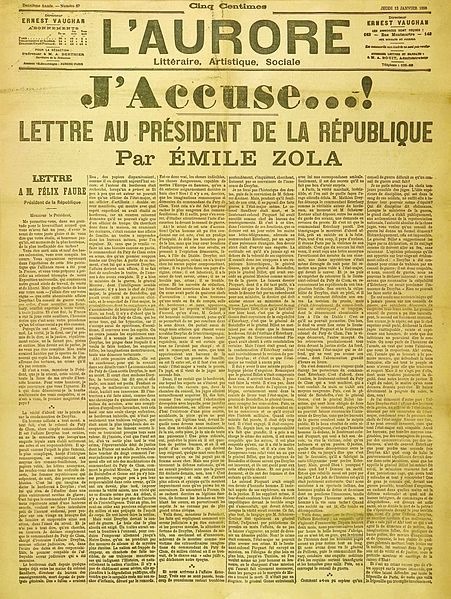
Everybody has heard of “J’accuse”–but ….
Eleanor Levieux begins her 1996 translation of Émile Zola’s writings on the Dreyfus Affair (largely translated from the collection edited by Alain Pagès: L’affaire Dreyfus: Lettres et entretiens inédits) thus:
Everybody has heard of “J’accuse” – but how many people have actually read it?
That is a good question.
“J’accuse” is so well known that the phrase has become a cliché, and yet I cannot recall having ever come across the letter itself in English translation before I read this book. How many of us actually know the arguments – much less the powerful prose – that Zola actually used?
It is a pity that Zola’s polemical work is not more read – especially considering that Zola was forced into exile by an unjust libel conviction.
While I have not read the original French letters, I found Leviuex’s translation to be a powerful work, and I wholeheartedly recommend it.
(Here is a review of the original French collection of letters, and here are two reviews (1, 2) of Levieux’s translation)
Grammatical hypercorrection
I heard an interesting hypercorrection this afternoon. A public television reporter for the PBS Newshour was commenting on the issue of military rape and referred to members of the armed services being “courts-martialed.”
In English, when a two word noun-phrase is in the form <noun-adjective> (the so-called “post-positive adjective” form) the plural is often of the form <plural noun-adjective>, e.g
- attorney general – attorneys general
- battle royal – battles royal
- court martial – courts martial
- forest primeval – forests primeval
- Knight Templar – Knights Templar
- Pound Sterling – Pounds Sterling
- professor emeritus – professors emeritus
etc.
Now, in this case, the reporter must have been eager to show off that she knew the plural of “court martial” is “courts martial” and not “court martials.”
However, when noun is “verbed,” we generally usually take the singular form of the noun, not the plural noun. Thus, a noun is “verbed” but it is not not “verbsed.” People are “impacted” and not “impactsed.” Books, even when written by multiple people are “authored” and not “authorsed.”
So, “courts martialed” is certainly wrong – an awkward overcorrection that probably sounds incorrect to most native English speakers (although a Google search reveals that this particular hypercorrection has been made by many). How do such things get by editors?
Hobbes’ Thucydides
I am re-reading Thucydides, this time working my way through Thomas Hobbes’ translation. My edition has a few notes by David Grene that point out examples where Hobbes mistranslated, condensed the Greek, or where Hobbes’ 1628 English might be misunderstood by the modern reading, but by and large, lets “the Hobbesian Thucydides speak for himself.” I am supplementing my reading with Simon Hornblower’s annotations, the maps from the Landmark edition, and using the Loeb Library as a handy source for the Greek. (I should also mention here Hornblower’s overview of Thucydides, although I read that some time ago.)
What impresses me so much is how lucid and subtle the Hobbes translation is – for a translation that is nearly 400 years old. It is, clearly, far superior to the previous translations I have read, and I am not at all surprised that it remains in print. As far as I can tell, the errors are relatively few (fewer than most modern translations have) and Hobbes seems sensitive to the finespun distinctions made by Thucydides.
I must confess to a fascination to celebrated translations that have a literary life all of their own – I think of Tobias Smollet’s Don Quixote, Thomas North’s Plutarch’s Lives, Chaucer’s [Boethius] Consolation of Philosophy, George Chapman’s Homer – but arguably, all of these have been surpassed by superior translations in the last century (although, in the case of Plutarch, the best recent translations have only been of parts of his work). I’m unconvinced, though, that anyone has improved on Hobbes’ Thucydides.
Make Money Fast
In a quiet Tibetan town three hours drive from Xining, one local describes seeing a missionary throw coins into the air. “This comes from Jesus,” he declared to the astonished crowd. The same Tibetan remembers with an incredulous laugh being told that Christianity brings cash. “All Buddhist countries are poor,” the missionary said. “If you believe in Jesus, you will be rich.”
2 recent Anne Carson works
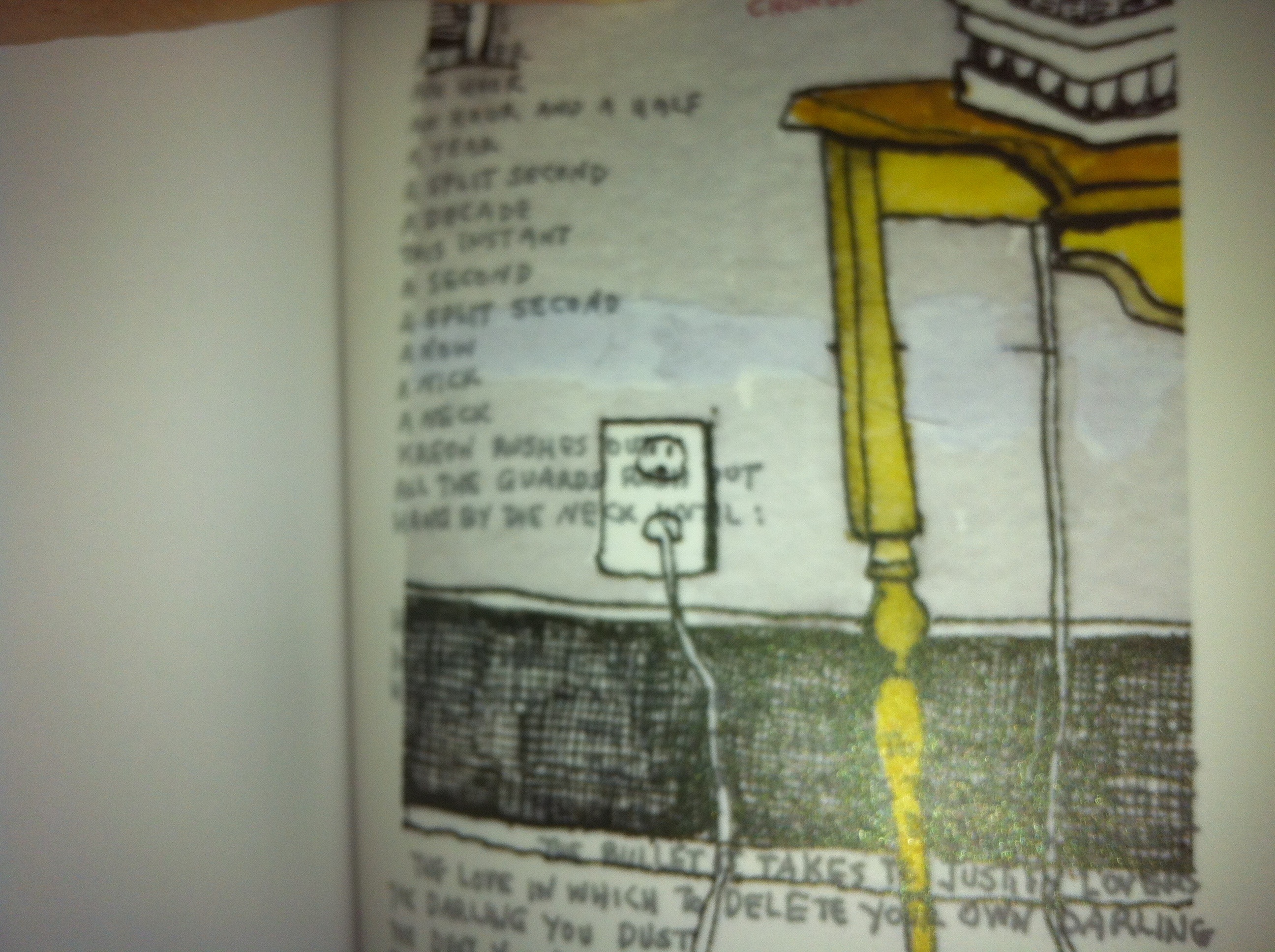
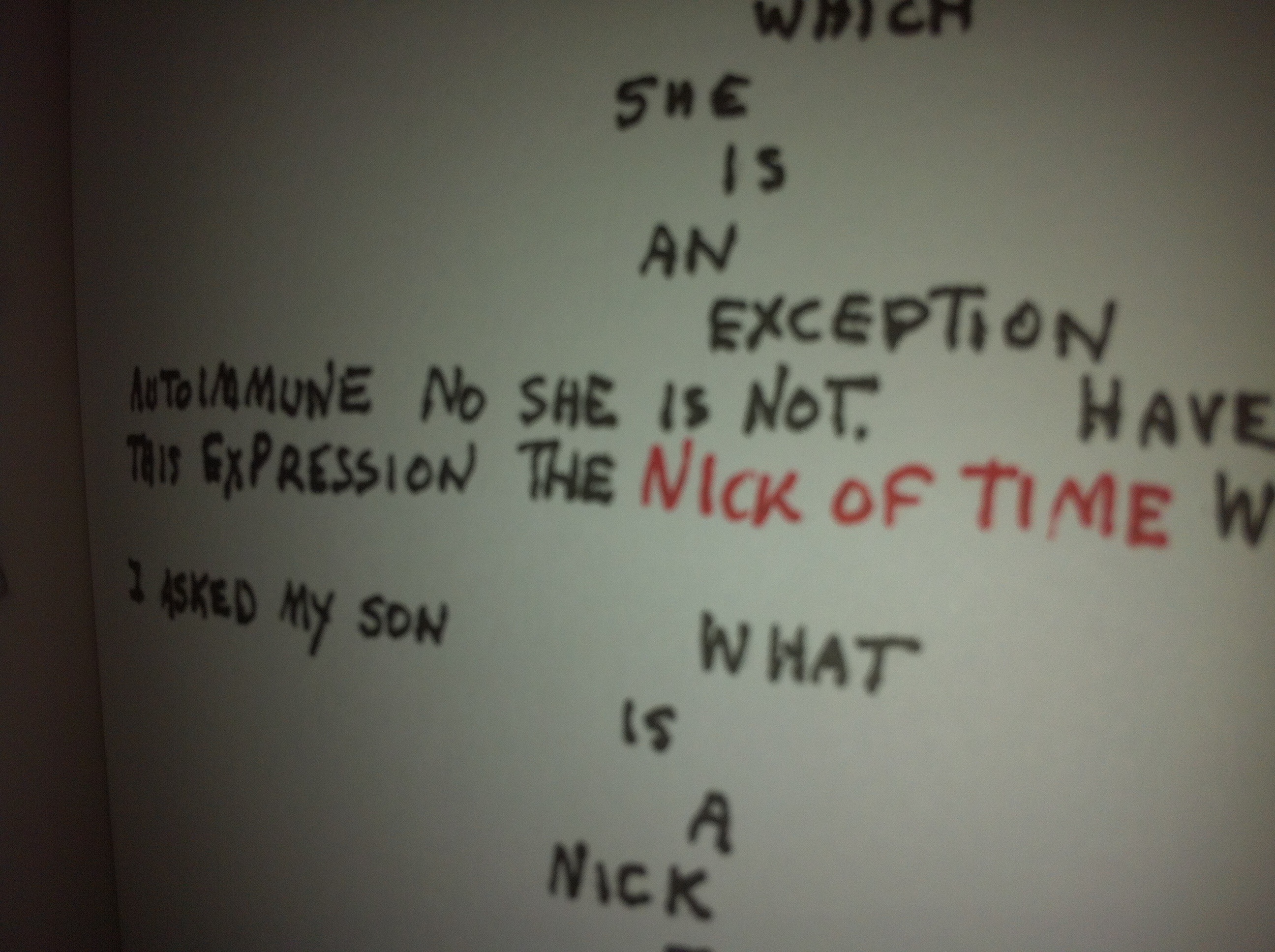
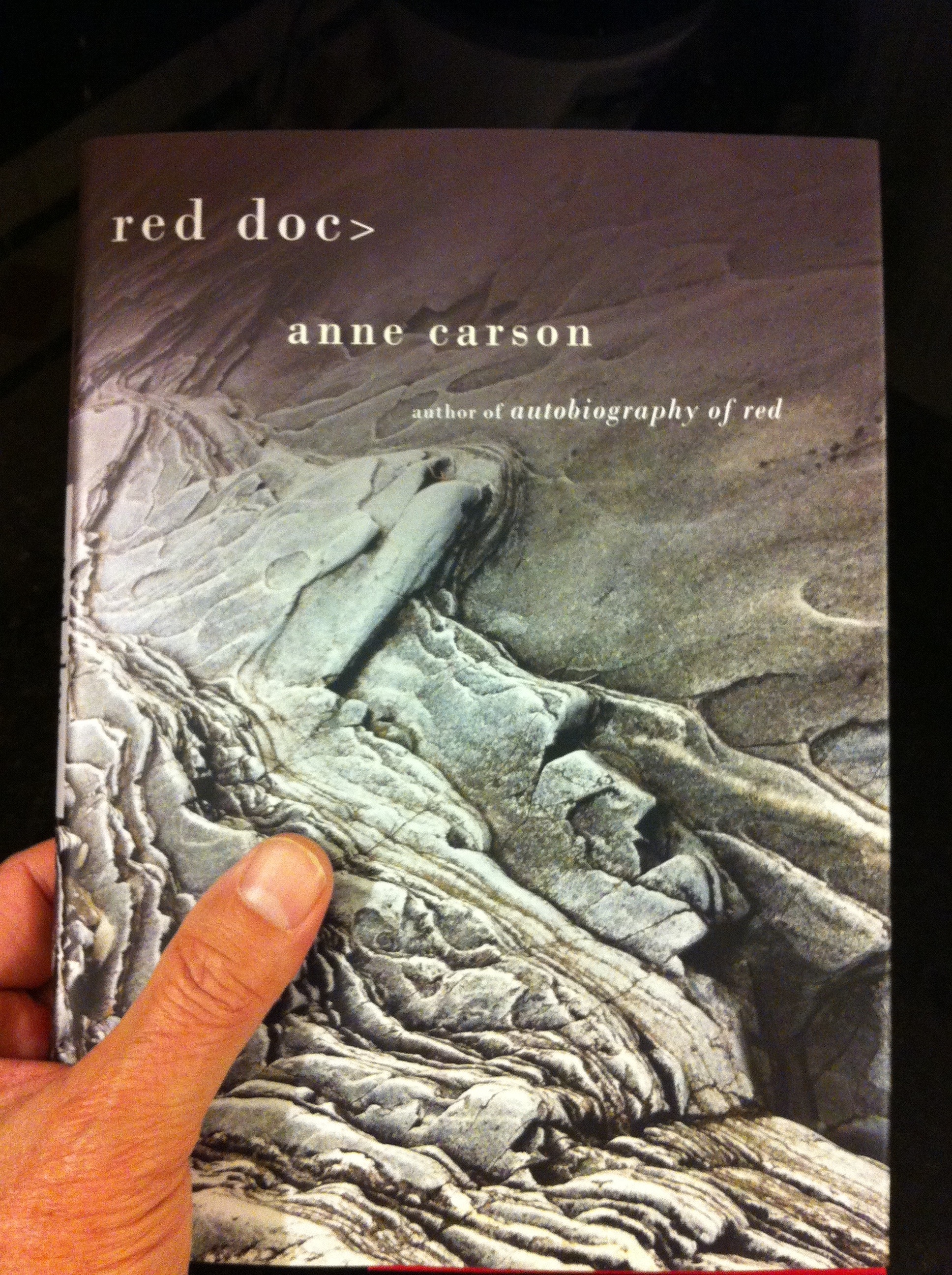
Re-reading Anne Carson’s translation ANTIGONICK and reading her novel red doc> in a single sitting has led me to want to blog here about both. I will be brief. I’m writing/posting via an iPhone as my only connection to the Internet. The former work mentioned is Carson’s rendering of Sphocles’s play. There are no page numbers and there are works of art, paintings by Bianca Stone, rendered on translucent pages that allow the capitalized handwritten words of Carson as the playwright’s to show through. (The words only appear on the right-hand-side pages of the book.) It’s a work of art, and the wikipedia entry on the play shows scads of translations through the years, including all in English, to date, all but this one by Carson. I’m not sure all that says, but I do think that that’s telling. Carson knows ancient Greek better than any classicist or rhetorician or New Testament or Septuagint scholar that I know of. She plays on the English word, “nick.” Antigone, of course, is the titular protagonist of the play. And Nick, she notes in her list of the cast, is “a mute part [always onstage, he measures things]” (her brackets). I mention this detail, as if it’s not obvious to all readers, simply because when you understand the play as a commentary on the lack of agency of females when it comes to the law and to rhetoric, then you get a hint of what Carson the translator means by her title for the work. Once upon a time, Greek men used the little suffix “-ike” or “-ic” to make very technic-al all the things they didn’t understand. Hence from logos came log-ic, from oikos and nomos came econom-ics, from the muse came mus-ic, and this allowed men disparging others to render the other mute. You can find Carson talking in an interview online about this work, but she will never give all of that away. How could she? You must read this book to hear it.
The Autobiography of Red is a Greek novel Carson wrote in verse. And on the dust jacket of this new novel she writes in prose: “Some years ago I wrote a book about a boy named Geryon who was red and had wings and fell in love with Herakles. Recently I began to wonder what happened to them in later life. Red Doc> continues their adventures in a very different style and with changed names. // To live past the end or your myth is a perilous thing.” Style is the key to this novel. Carson writes it as a work of art, with color words. It’s another blank verse novel, and the verse is muscial, or connotes notes of music, with F and G and flat as proper nouns and adjectives. SAD and 4NO (as foreknowledge, as a prophet, as the biblical Isaiah even) and G and Red as names of people. It’s old and new. It’s personal and poetry complicating the differences between poetry and prose. On page 114, “Wife of Brain” (a recurring refrain through the pages) asks, “what is the difference between / poetry and prose you know the old analogies prose / is a house poetry a man in flames running / quite fast through it / or / ….” It really is, rather, a play. It’s a play on words with all sorts of Greek and Latin etymologies explicated, complicating. But red doc> really functions as a play. “… He is / rewriting his play as a / novel given the futility of / theater,” writes Anne Carson on page 147. We her readers might agree that Anne Carson has done it again.
How Sam Raimi made Oz into a sexist screed
L. Frank Baum’s Oz books were charming and wonderful. While they are not my favorite children’s books (that honor is reserved for Carroll’s Alice books) I still own several dozen Oz books, including hardcover copies of all fourteen Baum Oz books, about 30 later Oz books by other authors (including Martin Gardner’s Visitors from Oz), the 1904 comic strip, both the 1973 and 2000 issues of Michael Patrick Hearn’s Annotated Wizard of Oz, and a handful of volumes of criticism.
So, I am certainly going to make of point of not seeing Sam Raimi’s Oz the Great and Powerful which one review describes as
a dispiriting, infuriating jumble of big money, small ideas and ugly visuals.
Oz is too much fun to have Sam Raimi spoil it. In particular, it looks like Raimi has managed to completely eliminate the progressive ideas that L. Frank Baum originally included in the books:
The bigger bummer, though, is that the studio that has enchanted generations with Tinker Bell and at least a few plucky princesses has backed a movie that has such backward ideas about female characters that it makes the 1939 Wizard of Oz look like a suffragist classic. Which it was, in its charming way: L. Frank Baum, who wrote the 1900 book The Wonderful Wizard of Oz and its 13 follow-ups, was the son-in-law of the pioneering feminist Matilda Joslyn Gage, and her influence permeates the Oz books, which take flight with a brave girl who saves her friends and their land. Baum’s second book, The Marvelous Land of Oz, even features a parodic take on the suffrage movement, with a female general, Jinjur, leading an all-girl army equipped with knitting needles.
“Friends, fellow-citizens and girls,” Jinjur declares, “we are about to begin our great Revolt against the men of Oz!” Too bad they didn’t storm Disney next.
If they had, maybe they could have jabbed some sense into the director Sam Raimi, best known for the first Spider-Man movies, and his five male producers, and then used those needles to shred Mitchell Kapner and David Lindsay-Abaire’s script. A little sisterly outrage would have been appropriate because, among other offenses, the filmmakers have thrown over Dorothy — one of the greatest heroines in children’s literature and Hollywood cinema — for prequel about a two-bit magician and Lothario with female troubles. In Baum’s first book and in the 1939 film the witches are powerful forces for good and wickedness in the Land of Oz. In Oz the Great and Powerful, a witch not only falls for the man Oz, she also turns green from envy when he cozies up to a pretty blonde. (Yeah, the baddie is a brunette.)
How insulting to L. Frank Baum’s (and Matilda Joslyn Gage’s) memory.
David Ker on literacy vs. Bible translation
David Ker, of Lingamish, Future Bible, Kanyimbe, and Red Zebra fame, apparently has had a bit of a change of heart.
While David previously was with Wycliffe Bible Translators and an unabashed supporter of Bible translations, even into languages with relatively few readers, now he is focused on improving literacy and getting a broad variety of books into the hands of readers.
In a recent newspaper profile, David accurately diagnoses the problem with the now almost mechanical process of translating the Bible into languages where there are almost no readers:
“I thought it [Wycliffe Bible translation] was a pretty clear process,” Ker said. “I work with Mozambicans to translate the Bible, and then when we’re finished anyone who wants one can have a Bible of their own.”
Now, he knows that’s not usually how the process works. The Bibles get translated, but then the Bible agencies can take years to get them printed, and usually in small numbers. Once they are printed, the Bibles aren’t always distributed in the area where the language is spoken.
“Or people get a copy of the Bible, but do not know how to read it,” Ker said.
Though he still respects what Wycliffe Bible Translators does and considers it to be a great organization, he felt his talents could be used elsewhere.
“As [Ker’s wife] Hilary and I considered how we might best serve in Africa in the coming years, we’ve become convinced that we have a contribution to make in the area of literacy,” Ker said.
[empahsis added]
I’m very supportive of this recent change of heart of David Ker’s – and I absolutely agree that efforts to translate the Bible into small minority languages – where most people are not even literate – simply do not make sense. Instead, I would rather see an effort to build up general and education literacy rates. It simply makes no sense to make more systemized efforts to make mediocre translations of the Bible into language where there are few readers.
As of 2011, the Bible had reportedly been translated into 2,527 languages, with that year seeing only 10 new languages seeing a full translation and 27 seeing a partial translation. Wycliffe rakes in the money big time: although it is just one of several Bible translation organizations, it reports $146 million/year in contributions and $111 million/year in contributions (putting it into the stratosphere of the top 100 US charities) – and yet even if it were responsible for all new Bible translation, it would at best only be able to claim ten full new translations.
This amount of money, with such limited results, raises natural questions.
In Mozambique, the country in which David worked in Bible translation, teacher salaries range from $72 – $243 each month and it has a super-low literacy rate of 56%. Likely most of those 56% percent are among the 50.4% who speak Portuguese – a language with numerous Bible translations. Efforts to translate the Bible into minority languages – where there are almost no readers – are bound to be of dubious value.
Congratulations to David on refocusing his efforts on the big problem: literacy.
Book sales (Eerdmans)
There are some interesting volumes on sale as part of Eerdmans’ Inventory Reduction Sale. The volumes are 60% off list price.
One volume that should have wide appeal is
- Martinez and Tigchelaar’s Dead Sea Scrolls Study Edition (2 volumes) with Hebrew-Aramaic and English translation ($40). This is my go-to transcription of the DSS.
Other DSS titles include
- Hanan Eshel’s Dead Sea Scrolls and the Hasmonean State ($12);
- Davis and Strawn’s Qumran Studies ($12.80);
- Joseph Fitzmeyer’s Guide to the Dead Sea Scrolls and Related Literature ($10.40)
- James Davila’s Liturgical Works ($14.40)
I notice also Dozeman’s commentary on Exodus is on sale for $24; volumes 2 and 3 of Henri Lubac’s excellent Medieval Exegesis is on sale for $20 and $24 (you can pick up volume 1 from bookdepository.com for $35.75 and free shipping worldwide); and volumes 2 and 3 of Alister McGrath’s Scientific Theology are available for $20 each (volume 1 appears to be out of print, but readily available new and used from Amazon sellers.)
For those of you who enjoy reading Nazi literature, there is the infamous mass murder’s Gerhard Kittel’s Theological Dictionary of the New Testament on sale (Kittel died before his Nuremburg trial) on sale.
Eerdmans appears to offer free shipping to the US for orders placed with a credit card.
I might also mention here that the NA27/NET Bible New Testament (Greek-English) diglot is on sale for $25, which I think is the cheapest price I’ve ever seen for a NA27 with full apparatus and appendices. The reason why I like it, though, is that features 20% larger print than standard NA27-28 diglots, and thus is much easier to read.
My co-blogger Suzanne has pointed out some serious shortcomings of the NET Bible translation and notes, particular as relates to issues of gender, so if you are heavily relying on the English translation, you may be better off buying a (more expensive and smaller) RSV-NA27 diglot or NRSV/REB-NA28 diglot instead (Amazon claims that the latter will be released on April 28 – it looks very promising.)
Conversation Piece by Joe Tunmer [and Rex Stewart]!
Here is a fun short film set to the exquisite “vocalizations” of the Rex Stewart (formerly of the Duke Ellington’s band) track “Conversation Piece.”
You can also read the “script” (although it is more to figure out the script yourself) and read more about the film in general here.
Today’s mail brought Haul Taussig’s A New New Testament, yet another new translation that combines Christian canonical scripture with Christian apocryphal works (a notable recent entry in this category is Willis Barnstone’s Restored New Testament.
Hal Taussig is a founding member of the Jesus Seminar. He claims to have been inspired by a suggestion of Robert Funk (who was the founder of the Jesus Seminar and the executive director of the Westar Institute) that a revised canon be suggested. Funk’s suggestion involved both adding and deleting books, but Taussig only added books. Taussig explains:
So, this book is somewhat related to Funk’s initial idea. It is also substantially different. Funk not only proposed adding new documents to the New Testament but also – with ambitions perhaps not unlike those of Martin Luther – wanted to remove some books; this book keeps all of the traditional New Testament in place. Funk’s criteria for inclusion were completely based on the authority of late twentieth-century liberal biblical scholarship. he explicitly denied any church authority in establishing what the contents of his new New Testament would be and at least advertised that he was not interested in its religious use. Funk wanted the new New Testament to debunk conventional Christian authority, to be a vehicle for the truth of scholarship. Hence for him, the project would create the new New Testament, in contrast to this book, which is called A New New Testament and encourages others to actively consider and produce yet further new New Testaments. A New New Testament was formed by the decisions of a group made up of a majority of church authorities and a minority of scholars and non-Christian spiritual leaders. This relates to the central difference between the project Funk envisioned and this one in your hands: this New New Testament is primarily a collection that is meant to act as a resource for the spiritual curiosity and development of a wide public. Those of us who put A New New Testament together acknowledge that it will have scholarly value but have placed the central emphasis on the spiritual value of reading the existing New Testament alongside some of the powerful recently discovered documents.
Taussig took the canonical books of the Christian New Testament, and appointed a council to select the contents of his New New Testament:
To my surprise almost everyone I approached was not simply willing but enthusiastic about participating. Some people were not available on the necessary dates, and a very few did not like the idea at all. Of the four who did not accept my invitation for reasons other than scheduling problems, three were evangelical Christian leaders who opposed the idea of adding material to the New Testament, and one was a liberal Christian church leader who thought that any such book should include documents from all of Christian history rather than just documents from the first two centuries.
I wanted the council to include leaders from a wide range of Christian perspectives. It eventually included Presbyterians (two), Roman Catholics (three), Episcopalians (three), United Methodists (four), United Church of Christ members (two), a Lutheran, two rabbis, and one representative of yogic traditions. Eleven members are ordained clergy and two are women religious. Nine are women and ten are men. Six are people of color. Two are bishops. Two are or were the head of their national denomination, and one is the national executive for a primary office of his denomination. Six are scholars and graduate teacher of New Testament.
And then he surprises us with this:
Perhaps the greatest thrill and ensuing disappointment in this recruiting process was when both a Roman Catholic bishop and a Muslim professor agreed to be the twentieth member of the council and both had to resign for health reasons.
It would be interesting to know which Roman Catholic bishop had agreed to participate.
The final members of the council are Margaret Aymer, Geoffrey Black, Margaret Brennan, Lisa Bridge, John Dominic Crossan, Nancy Fuchs Kreimer, Susan Wolfe Hassinger, Alfred Johnson, Chebon Kernell, Karen L. King (who seems to have played a particularly strong role in this project), Celene Lillie, Stephen D. Moore, J. Paul Rajashekar, Bruce Reyes-Chow, Mark Singleton, Nancy Sylvester, Hal Taussig, Barbara Brown Taylor, and Arthur Waskow.
Taussig includes an appendix listing “67 major writings of the early Christ movement”; the committee considered 43 of these writings (although, on p. 514, there is some confusion over whether this might have been reduced to 39 – both 43 and 39 are listed), whittled down to 19, and then finally ten were selected (from most votes to least votes by the council):
- The Gospel of Mary
- The Thunder: Perfect Mind
- The Gospel of Thomas
- The Odes of Solomon
- The Prayer of Thanksgiving
- The Acts of Paul and Thecla
- The Gospel of Truth
- The Prayer of the Apostle Paul
- The Letter of Peter to Philip
- The Secret Revelation of John
Taussig adds that “three other documents were nearly added: the Treatise on the Resurrection, the Teaching of the Twelve Apostles, and the Secret Revelation of James.” Taussig’s personal list was: “the Teaching of the Twelve Apostles, the Gospel of Mary, the Gospel of Thomas, The Thunder: Perfect Mind, the Odes of Solomon, the Gospel of Peter, the Sentences of Sextus, the Prayer of Thanksgiving, the Prayer of the Apostle Paul, the Treatise on the Resurrection, 1 Clement, and the Reality of the Rules” but only six of these twelve made it.
Taussig includes over a hundred pages of supplementary material at the back (as well as introductions to the canonical and added books. Part of Taussig’s approach can be derived from the title of one of his sections:
Giving Birth to A New New Testament and Retiring the Idea of Gnosticism
(Taussig attributes the “retiring” language of “gnosticism” [Taussig usually puts the term in quotation marks] to Karen King’s book What Is Gnosticism?) Taussig takes a strong, divisive stand that gnosticism is not necessarily heretical at all; rather he maintains that
… it is becoming clearer that the notion of “gnosticism” is so flawed that it is of little or no use in understanding either the recent discoveries [of ancient Christian literature] or Christian beginnings. Indeed, close examination of how the idea of “gnosticism” came to be shows that it is not an accurate way to characterize anything in early Christianity. Rather, according to an increasing range of scholars, it is a modern scholarly invention without sufficient basis in the documents of Christian beginnings.
John Dominic Crossan wrote the Foreword to the book; he seems to suggest that the extended canon is particularly well suited to Eastern Christianity, first referring to the “Grotto of St. Paul” Thekla-Paul-Theoklia frescoes discovered in the 1990s near Ephesus

and then to Eastern icon images of Jesus. He also enters into an extended debate against 1 Timothy 2:11-12, which he sees countered by the figure of Thecla:
The deeper problem for 1 Timothy is not just female pedagogy but ascetic celibacy. That is why it warns, in thoroughly nasty language, about those who “forbid marriage and enjoin abstinence from certain kinds of foods” (4:3). What frightens 1 Timothy’s anonymous author(s) so profoundly is the challenge to Roman normalcy represented by Christian celibacy – especially by female celibates thereby out of male control and, most especially by female teenagers thereby out of parental control. Thecla is the specter that haunts 1 Timothy.
Crossan concludes that it is impossible to understand 1 Timothy (and by extension, the entire canonical New Testament) without understanding those documents excluded from the canon. I do not fully understand whether Crossan embraces the “spiritual” goals for the New New Testament articulated by Taussig; it seems to me that he may view the text rather of primary interest for contrasting with the canonical New Testament.
For further discussion of the philosophy of this book, you may be interested in the following video:
I was particularly interested in the translations that this work used. It relies on a text I was not previously aware – the Open English Bible.
The copyright page indicates the following sources for the translation:
- “Translation of the traditional New Testament (except for the Letter to the Colossians) from the Open English Bible, with permitted revisions by Hal Taussig.”
- “Translation of the Acts of Paul and Thecla, the Gospel of Mary, the Gospel of Truth, the Letter of Paul to the Colossians, the Letter of Peter to Philip, the Prayer of the Apostle Paul, and the Prayer of Thanksgiving by Celene Lillie.”
- “Translation of the Odes of Solomon by Elizabeth Ridout Miraglia.”
- “Translation of the Gospel of Thomas by Justin Lasser.”
- “Translation of The Thunder: Perfect Mind by Hal Taussig, Jared Calaway, Maia Kotrosits, Celene Lillie, and Justin Lasser.”
- “Translation of the Secret of Revelation of John … reprinted from The Secret Revelation of John by Karen L. King.”
What I have not had a chance to do yet is carefully review the translation in this book. It is clear to me that Taussig’s command of English style is not equal to the task of representing the Christian scriptures; but as you will note from the list above, Taussig had only limited involvement with the translation process proper. A quick glance at the text indicates that it is a far less ambitious translation than Barnstone’s Restored New Testament, even it reaches deeper into the Christian apocryphal writings. I hope to supplement this review with a discussion of the translation itself.
As a book, it is clear that Taussig’s work is somewhat divided between the roles of spiritual guidance and trickster. It seems at times that Taussig wishes to startle us (or maybe tweak our noses) and other times Taussig seems much more conventionally spiritually pastoral in tone. To put it in other words, I cannot quite make up my mind yet whether Taussig is really serious or not.
In the text above, I twice reference Barnstone’s translation. We have discussed this translation several times on this blog including here, here, here, here, here, here, here, and here.
Happy Purim: Except You Macedonians
“State Senator Simcha Felder, a Brooklyn Democrat who was once chief of staff to Mr. Hikind,” speaks up in the face of one sad interpretation, and says:
“Purim is a happy time, a happy day, and it should not be at anyone else’s expense.”
This, in the NYTs article which my co-blogger Theophrastus links to in his post here.
Which makes us all wonder what the Jewish community in Alexandria must have been thinking when Esther was translated into Alexander the Great’s language. That’s right, the Alexander from Macedonia. That’s right, the goyish Greek language.
Here’s the Hebrew (and the NRSV English translation of it) first:
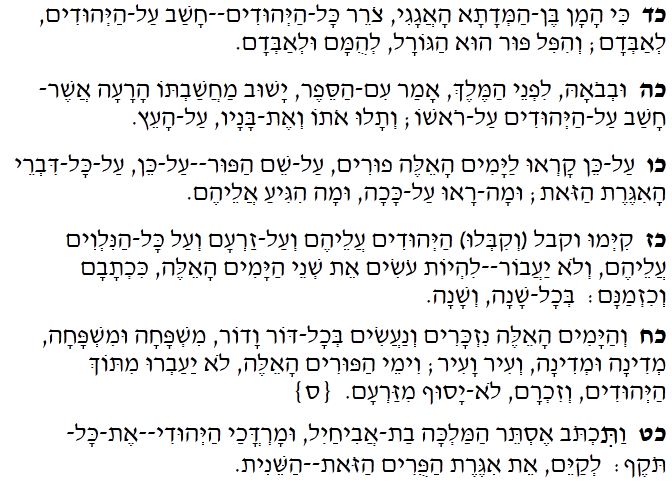
24 Haman son of Hammedatha the Agagite, the enemy of all the Jews, had plotted against the Jews to destroy them, and had cast Pur—that is “the lot”—to crush and destroy them; 25 but when Esther came before the king, he gave orders in writing that the wicked plot that he had devised against the Jews should come upon his own head, and that he and his sons should be hanged on the gallows. 26 Therefore these days are called Purim, from the word Pur. Thus because of all that was written in this letter, and of what they had faced in this matter, and of what had happened to them, 27 the Jews established and accepted as a custom for themselves and their descendants and all who joined them, that without fail they would continue to observe these two days every year, as it was written and at the time appointed. 28 These days should be remembered and kept throughout every generation, in every family, province, and city; and these days of Purim should never fall into disuse among the Jews, nor should the commemoration of these days cease among their descendants. 29 Queen Esther daughter of Abihail, along with the Jew Mordecai, gave full written authority, confirming this second letter about Purim.
Now here’s the Hebraic Hellene, marking Macedonian Greek, giving Haman the face of the true and new villains (and the NRSV English translation of it):
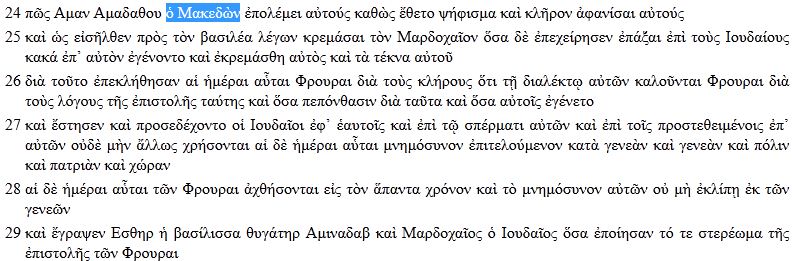
23 So the Jews accepted what Mordecai had written to them 24 —how Haman son of Hammedatha, the Macedonian, fought against them, how he made a decree and cast lots to destroy them, 25 and how he went in to the king, telling him to hang Mordecai; but the wicked plot he had devised against the Jews came back upon himself, and he and his sons were hanged. 26 Therefore these days were called “Purim,” because of the lots (for in their language this is the word that means “lots”). And so, because of what was written in this letter, and because of what they had experienced in this affair and what had befallen them, Mordecai established this festival, 27 and the Jews took upon themselves, upon their descendants, and upon all who would join them, to observe it without fail. These days of Purim should be a memorial and kept from generation to generation, in every city, family, and country. 28 These days of Purim were to be observed for all time, and the commemoration of them was never to cease among their descendants. 29 Then Queen Esther daughter of Aminadab along with Mordecai the Jew wrote down what they had done, and gave full authority to the letter about Purim.
This is no mere “addition” to the whole Megillah, to the Book of Esther, either.
How happy is Purim for all (except for some).
This morning, I was reading Paul Tournier’s of “The World of Things and The World of Persons” in his book Le personnage et la personne. And something caught my attention. Without the original French in front of me, I was reading only in English, the translation by Edwin Hudson entitled, The Meaning of Persons. Tournier is telling a story of a personal translation, of a public speaker saying how he believes that the simultaneous interpreter of the speech into another language has done “an extremely good job” of translating. (In this particular case, Tournier is relating an incident in which he was giving a medical conference talk in Swiss French and the translator was interpreting that into one of the “Scandinavian” languages.)
I don’t know if Tournier ever read Hudson’s translation of this anecdote, but it seems not to be translationese English. The ideas seem expressed well. But was Hudson translating for a specific person, for you, for me, for somebody very much like us?
Here’s the full paragraph:
To become a person, to discover the world of persons, to acquire the sense of the person, to be more interested in people as persons than their ideas, their party labels, their personage, means a complete revolution, changing the climate of our lives. Once adopted, it is an attitude which rapidly impregnates the whole of our lives. While at the Weissenstein conference I had occasion to congratulate one of my colleagues who had made an extremely good job of interpreting a talk I had given earlier in the day. ‘And do you know why?’ he asked me. ‘It had been mentioned to me that one of our Scandinavian friends was finding it very troublesome following the speeches in foreign languages. So I interpreted for him; I never took my eyes off him, watching his face all the time to see if he had understood. And I found that through giving more attention to his person than to the ideas I was translating, I actually found it easier to express the ideas.
Let me just go on to add this. I don’t know much about Edwin Hudson (and do notice that Paul Tournier gives us nothing about this personal interpreter he mentions in the story). Nonetheless, I do know that Hudson acted as Tournier’s interpreter/ translator for an interview allowed to one Alex Mitchell. Mitchell writes up the interview that gets published in the September 1981 edition of ThirdWay.
What’s fascinating about this very personal interview is how Tournier, a widower by this time, is giving his late wife agency. He speaks of Nelly Bouvier, who had passed away seven years earlier, saying:
It was my wife who helped me gain this sense of the personal. It came slowly because men [like us] are [more commonly] afraid of showing their emotions and feelings than women. And while I was quite prepared to teach my wife I didn’t [quickly] realise I had something to learn from her. The most important thing for me has been our meditation together [through the years]. That was really where it started, really listening to each other. I was too fond [at first] of explaining things to her instead of listening.
We readers of Mitchell’s published interview of Hudson’s English translation of Tournier’s Swiss French must imagine. We must picture Hudson listening intently to Tournier while “never taking his eyes off Mitchell, watching his face all the time to see if he had understood.” And when in the interview Tournier spoke of Bouvier, they may have all realized in that moment all that they had learned from her.
Tournier at one point in the interview absolutely resists answering a question on behalf of women. However Hudson interprets that into English for Mitchell, the latter making sure Tournier’s reply gets punctuated with an exclamation point:
Women must discover that [for themselves without my help], not men!
And in response to the question about Tournier’s reaction to Marabel Morgan’s popular evangelical Christian interpretation of the New Testament as saying women should “voluntarily submit” to their husbands, there’s this response (Tournier speaking, Hudson listening and translating looking at Mitchell, Mitchell recording for his readers, for us):
I would not have liked my wife to act like that!
Tournier goes on to give his understanding of “Genesis 3:16 where God tells the woman, ‘your desire shall be for your husband, and he shall rule over you.'” Tournier goes on to explain why, in French, it is women more than men who had been reading his newest book, The Gift of Feeling. Tournier has challenged the masculinist rationalism of Descartes and puts him together with other men (“Pascal, Kierkegaard, and even Marx”) who more clearly demonstrated how “there is masculine and feminine in every human being.”
To hear Tournier speaking more on these subjects in this interview, you may find it via google books here. The photo of Tournier included is as if Hudson is keeping his eyes on us, watching our faces all the time to see if we have understood.
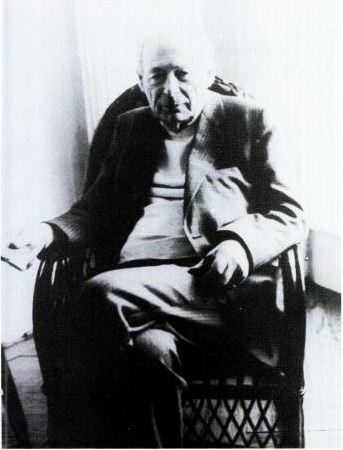

Paul Tournier and Nelly Bouvier. Who learns from whom the personal lessons of listening, of translating?


 BLT
BLT