Up through tomorrow (December 1, 2011), you may send in your entries for the 2012 Willis Barnstone translation prize. Barnstone himself is the judge. The details are posted by The Evansville Review, the journal that sponsors the $1000 prize and that will publish the winning translated poem.
A couple of years ago, Alicia (A. E.) Stallings sent in an entry and won the Barnstone prize. Greg Delanty and Michael Matto also noticed and, the next year, secured permission to publish Stallings’ winning translated poem in their edited volume, The Word Exchange: Anglo-Saxon Poems in Translation. This year, Stallings was one of the recipients of the MacArthur “Genius” Award for more of her work.
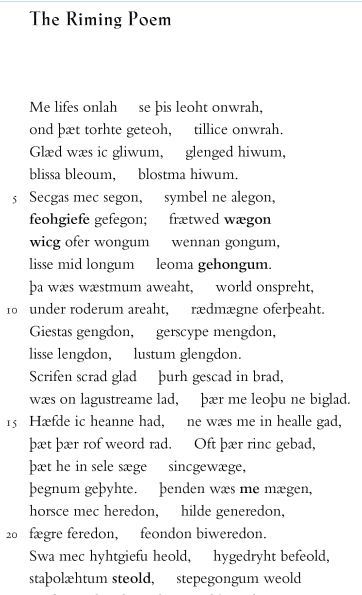
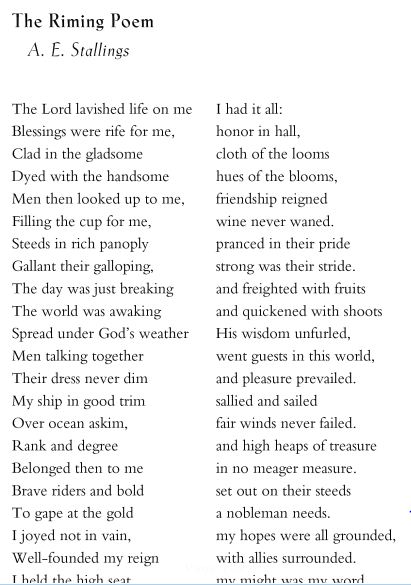
Below are the first few lines and stanzas of the 2010 Barnstone Prize winner, “The Riming Poem,” by A. E. Stallings (as published in the Delanty and Matto volume, with the Anglo-Saxon original on pages facing the translation):
Jewish Annotated New Testament posts
This BLT blog is getting scores of hits from Google (and other search engine) searches for Jewish Annotated New Testament. Here is an index of posts discussing it:
- September 2: An unusual Jewish study Bible
- October 24: Annotated Jewish New Testament first impressions
- October 27: Jewish Annotated New Testament: Hey Jude
- November 29: Marc Brettler and Amy-Jill Levine speak up about the New Testament
- November 29: Jewish Annotated New Testament posts
Joseph Soloveitchik’s “Lonely Man of Faith” revised edition
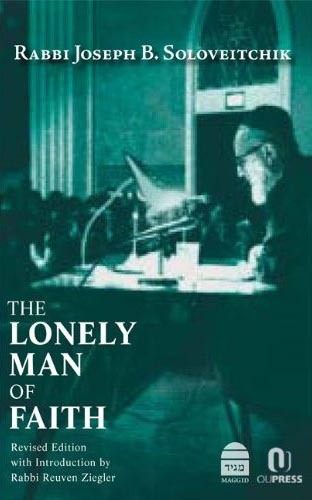 In their ongoing relationship with the Orthodox Union Press, Koren Publisher’s new English imprint “Maggid Books” has reprinted a new edition of arguably Joseph Soloveitchik’s most important work, The Lonely Man of Faith. (The other work often grouped together with The Lonely Man of Faith is Halakhic Man – both are philosophical works.)
This is one of Soloveitchik’s “difficult” works – here is a typical sentence (the final sentence of the first paragraph of section 1A):
In my “desolate, howling solitude” (Deut. 32:10) I experience a growing awareness that, to paraphrase Plotinus’s apothegm about prayer, this service to which I, a lonely and solitary individual, am committed is wanted and gracefully accepted by God in His transcendental loneliness and numinous solitude.
Indeed, this work seems to have been structured in part to show Soloveitchik’s chops as an important intellectual not only within Jewish circles but to a broader audience. and Soloveitchik feels free to draw on a wide variety of sources.
The work originally appeared as an extended essay in Tradition in 1965; but it is worth reading in the second edition because of the improvements, which are advertised as “transliterations and translations of the Hebrew; fully sourced references; restoration of the original chapter divisions; and a new introduction by Reuven Ziegler.”
The introduction by Ziegler is particularly useful. In a few paragraphs, Ziegler summarizes Soloveitchik’s argument.
… Soloveitchik proposes that two accounts of the creation of man (in chapters 1 and 2 of Genesis) portray two types of man, two human ideals. One type, termed Adam the first (or Adam I), is guided by the quest for dignity, which is an external social quality attained by control over one’s environment. He is a creative and majestic personality who espouses a practical-utilitarian approach to the world. Adam II, on the other other hand, is guided by the quest for redemption, which is a quality of the inner personality that one attains by control over oneself. He is humble and submissive, and yearns for an intimate relationship with God and his fellow man in order to overcome his sense of incompleteness and inadequacy. these differences carry over to the type of community each one creates: the “natural work community” (Adam I) and the “covenantal faith community” (Adam II).
God not only desires the existence of each of these personality types and each of these communities, but actually bids each and every person to attempt to embody both of these seemingly irreconcilable types. One must attempt to pursue both dignity and redemption. This analysis of the two basic tasks of man leads to two important conclusions. First, Adam I’s existence is willed by God and therefore his majestic and creative actions have religious value. Rabbi Soloveitchik, accordingly, has a positive attitude towards the extension of human dominion through general scientific and technological progress, the spreading of culture and the development of civilization. However, one must also give Adam II his due, which leads to the second conclusion: Adam II and his quest for redemption have independent value, regardless of whether they aid Adam I’s quest for majesty. Faith (the realm of Adam II) is not subservient to culture (the creation of Adam I); it is a primordial force that has no need to legitimize itself in other terms.
The demand to be both Adam I and Adam II leads to a built-in tension in the life of each person responsive to this dual call; and because one lives with a constant dialectic, a continual oscillation between two modes of existence, one can never fully realize fully the goals of either Adam I or Adam II. Unable to feel totally at home in either community, man is burdened by loneliness. Since this type of loneliness is inherent in one’s very being as a religious individual, Rabbi Soloveitchik terms it “ontological loneliness” (“ontological” relating to being or existence). In a sense, this kind of loneliness is tragic; but since it is willed by God, it helps man realize his destiny and therefore is ultimately a positive and constructive experience.
The contemporary man of faith, however, experiences a particular kind of loneliness, one which is not a built-in aspect of human existence but rather the product of specific historical circumstances; this “historical loneliness” is purely negative phenomenon. Modern man, pursuant to his great success in the realm of majesty-dignity, recognizes only the Adam I side of existence, and refuses to acknowledge the inherent duality of his being. Contemporary society speaks the language of Adam I, of cultural achievement, and is unable or unwilling to understand the language of Adam II, of the uniqueness and autonomy of faith. Worse, contemporary Adam I has infiltrated and appropriated the realm of Adam II, the world of religion; he presents himself as Adam II, while actually distorting covenantal man’s entire message.
From this abstract, it is apparent that Soloveitchik is not merely addressing Jews; this is a work for readers in general. Ziegler comments
… It is evident that the essay’s message is universal. The Lonely Man of Faith refers to any religious faith, not just Judaism; the dilemma of faith in the modern world applies to all religions (or at least to Western religions, which were Rabbi Soloveitchik’s concern)…. References to Judaism and Jewish sources appear [almost always] in the footnotes [only]…. The Lonely Man of Faith originated in a lecture to Catholic seminarians and in a series of lectures, sponsored by the National Institute of Mental Health, delivered to Jewish social workers of all denominations.
Next comes Ziegler’s obligatory apology for Soloveitchik’s 1965 language conventions
… The Lonely Man of Faith addresses men and women equally; nowhere in the book does Rabbi Soloveitchik distinguish between them. The word “man” in the title, and indeed throughout the work, should therefore be understood as “person.”
I hope that this publication, which is clearly annotated to be maximally informative to a broad group (not just Orthodox Jews who form the primary readership of Tradition.)
And there is a possible aid in understanding the book in the form of a recent movie, now out on DVD, also called The Lonely Man of Faith. (I hope to address the movie in a forthcoming review.) The movie has substantial biographical material, but then Soloveitchik’s essay is also somewhat auto-biographical, if only because it is written in such a personal manner and because of the constant descriptions of the human condition as being lonely and melancholy.
For now, it seems to me that this book (and in particular this more accessible edition of this book) deserves a large readership.
Marc Brettler and Amy-Jill Levine speak up about the New Testament
Specifically, they are referring to that new and “unusual study Jewish study Bible.” But respectively to BrandeisNOW and the New York Times, they have spoken more generally.
“I wanted more Jews to read the New Testament and understand the majority religion in America,” Brettler said. “It also is important for Jews to know their history, and the New Testament is important to that, since the first Christians were Jews.”
“The more I study New Testament,” Dr. Levine said, “the better Jew I become.”


The Ambrose Bierce Boom
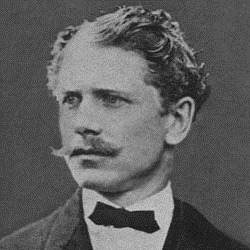 Well, this seems to be the season of Ambrose Bierce, that strange chronicler of the Civil War. Probably most of you have read his “Occurrence at Owl Creek Bridge” and his Devil’s Dictionary. A bevy of books and shows have recently appeared by Bierce:
- A comprehensive three-volume set of Bierce’s short fiction was published by University of Tennessee Press. (You can view individual titles in the set and other Tennessee Bierce volumes here.) This is the most comprehensive set of Bierce stories I have seen: it collects 249 of his short stories with textual notes; in contrast the Library of America volume mentioned below only has 66 of his stories (plus the Devil’s Dictionary and a Sole Survivor: Bits of Autobiography.)
- The Library of America volume on Bierce. Although this volume was edited by S. T. Joshi, who was on three editorial teams: (1) of the University of Tennessee Press three-volume short story collection, (2) of University of Georgia’s extended Unabridged Devil’s Dictionary, and (3) of the University of Tennessee Press edition of A Sole Survivor: Bits of Autobiography of this version does not use either of them. However, the cheap Amazon price ($22) and the relatively generous selection of works makes this the best current edition for a broad overview of Bierce. By Library of America policy, no opening essay is available in this book, so it is worth reading Joshi’s interview on the topic and his introduction to A Sole Survivor: Bits of Autobiography.
- Walker and Co. has produced a mangled version of “A Little Blacklist of Literary Faults” as Ambrose Bierce’s Write It Right: The Celebrated Cynic’s Language Peeves Deciphered, Appraised, and Annotated for 21st-Century Readers. I cannot recommend this volume because the editor is in war with Bierce and has no sympathy for his views on language.
 A small new publisher in Berkeley, Bart Schneider’s Kelly’s Cove Press is presenting heavily abridged editions: The Best of the Devil’s Dictionary and Civil War Stories.
- Both S. T. Joshi and Bart Schneider will reportedly have an interview on a local public radio program, KQED’s Forum on November 29th at 10 Pacific, and the interview should be available later.
- Bart Schneider also has written a one-man show (performed by Felix Justice) on Bierce that is appearing. I’m not so sure it is good, though. A blurb for the show claims:
Ambrose Bierce made himself at home in many forms of writing, and in the world, from whose surface he seemed to disappear in 1913. Now the infamous San Francisco writer is back, and black, as embodied by Felix Justice in a one-man show called Bierce Returns, written by Bart Schneider. Interesting that in the span of nearly a century, Bierce hasn’t aged at all. Then again, neither has his wit. "War is God’s way of teaching Americans geography," he once observed, and, well, here we are.
The problem is that Bierce never made that statement. However, if you want to watch the show anyway, performance details are here. - The 2002 opera (libretto: Mac Wellman, score: David Lang), The Difficult of Crossing a Field based on the Ambrose Bierce story was first produced in San Francisco with accompaniment of the Kronos Quartet. I attended the world premier performance, and I found it outstanding, although a local newspaper published a negative review. It was recently restaged by the Long Beach Opera, to a more favorable review. The libretto has been published.
 In other Ambrose Bierce opera news, Rodney Waschka II’s Saint Ambrose and Thea Musgrave’s Occurrence at Owl Creek (recorded by the BBC) are now available on CD.


Downloading NPR–Marian McPartland’s Piano Jazz (and other NPR shows)
[This post is wildly off-topic for this blog, but in the hopes that others might find it useful I decided to post it nonetheless. It is also a convenient bookmark for me.]
 Since 1978, pianist Marian McPartland has been hosting a show called Piano Jazz, and the last year has featured broadcasts or re-broadcasts with guests as varied as Willie Nelson, Bill Evans, Dr. John, Dave Brubeck, Bela Fleck, Chick Corea, Herbie Hancock, etc. You can search for particular artists here or read through the archives here. Almost all shows features an hour-long musical interview, with plenty of selections played by the artist and McPartland (or guest host.)
The show is produced by the South Carolina Educational Radio Network and distributed by NPR (National Public Radio.)
 But how can you download these shows? NPR only offers an “NPR Media Player” flash implementation, that does not seem to allow direct download.
Fortunately, there is a shortcut for downloading the MP3s (which are usually nicely encoded at 128kbps) – you can simply navigate your browser directly to the file
http://pd.npr.org/anon.npr-mp3/npr/pj/YYYY/MM/YYYYMMDD_pj_01.mp3
where YYYY is the year of broadcast, MM is the month of broadcast (as a two digit number, beginning with a zero for January through September), and DD is the day of broadcast (as a two digit number, beginning with a zero for the first through the ninth of the month). Once it is playing in your browser, you can simply “save file” to save the MP3 on your computer.
Thus for example, the current Piano Jazz show featuring Herbie Hancock was broadcast on November 25, 2011, as we can determine from its web page; and we can find the MP3 at
http://pd.npr.org/anon.npr-mp3/npr/pj/2011/11/20111125_pj_01.mp3
and the show on Billy Childs was broadcast on February 4, 2011; and we can find the MP3 at
http://pd.npr.org/anon.npr-mp3/npr/pj/2011/02/20110204_pj_01.mp3
No shortage of interesting musical selections to browse!
(The exception I have found to the above rule are
- the January 7, 2011 broadcast of the second set of the “Generations in Jazz” concert – because this was broadcast in parts, NPR classified it at http://pd.npr.org/anon.npr-mp3/npr/pj/2011/01/20110107_pj_02.mp3
- the Marian Petrescu interview, which should have been on December 25, 2009, but went out a day early,
http://pd.npr.org/anon.npr-mp3/npr/pj/2009/12/20091224_pj_01.mp3 - the Les Paul interview
http://pd.npr.org/anon.npr-mp3/npr/pj/2009/08/20090813_pj_lespaulspecial.mp3 - the 2008 Holiday special
http://pd.npr.org/anon.npr-mp3/npr/pj/2008/12/20081212_pj_christmas.mp3 - the Paul Winter interview
http://pd.npr.org/anon.npr-mp3/npr/pj/2008/11/20081107_pj_02.mp3 - the Johnny Frigo interview
http://pd.npr.org/anon.npr-mp3/npr/pj/2008/01/20080117_pj_01.mp3 - the Anat Cohen interview
http://pd.npr.org/anon.npr-mp3/npr/pj/2008/01/20080103_pj_01.mp3
However, these are the only irregular URLs I have found to date of Piano Jazz.)

In general, if you are interested in downloading a program or concert from the NPR Media Player, you can discover its source URL through this method (which I adapted from here). Frankly, there are a fair number of steps here, but it always works for me:
NPR uses a Flash front end to play media files, but you can find out which files the player is requesting. You will need a web browser that is capable of showing you what URLs are being requested, or a plugin that does the same. The examples here involve Google Chrome.
- In Chrome, open the NPR home page. In a new tab, open Chrome’s Internal Network Tools by entering chrome://net-internals in the address (URL) bar.
- Click the Events tab in the Tools window.
- Enter npr in the filter box.
- Switch back to the NPR home page and find the audio you want to download. Click the link that opens the media player with the content you want to download.
- Switch back to the Tools-Events window. The log should be full of requests to various NPR servers. You are looking for a URL that looks like this: http://api.npr.org/query?id=xxx&fields=titles,audio,show&sort=assigned&apiKey=xxx (other information will appear where xxx is indicated in this URL). Copy the URL and open a new tab and paste it in.
- You will see an XML file appear. About halfway down, you’ll find an audio container with a link to an MP3 in it. This is the program you want to download. The URL will look like this: http://pd.npr.org/anon.npr-mp3/npr/xx/xxxx/xx/xxx.mp3?orgId=xxx&topicId=xxx&aggIds=xxx (again, the xxxs will be replaced with actual program information). You can ignore the entries after the question mark.
- Copy and paste the MP3 URL into another tab. Chrome’s MP3 player will start to load the audio and play it.
- Right click in the background area of the player and choose Save As…, give the file a descriptive name and press Save. The download appears in the status bar. You can close the MP3 player or keep listening.
- Once the download is complete, you will have your copy of the program. Load it into your favorite software or hardware player and you can listen any time you want without being connected to the Internet.
Confirmation bias and inconvenient facts
Libertarian Daniel Klein (George Mason) received a great deal of notice for his startling Wall Street Journal Op-Ed and study claiming that knowledge of basic economic facts was (a) not correlated to attending college; and (b) was correlated with political ideology (with conservatives doing better than liberals).
Sharp criticism over the nature of his study caused him to do a second study, which revealed rather different results. I’ll let Klein tell his story from his latest mea culpa piece in The Atlantic Magazine:
Back in June 2010, I published a Wall Street Journal op-ed arguing that the American left was unenlightened, by and large, as to economic matters. Responding to a set of survey questions that tested people’s real-world understanding of basic economic principles, self-identified progressives and liberals did much worse than conservatives and libertarians, I reported. To sharpen the ax, The Journal titled the piece “Are You Smarter Than a Fifth Grader?”—the implication being that people on the left were not.
The op-ed set off fireworks. On The Journal’s Web site, the piece peaked at No.2 in most-e-mailed for the month it was published. The Examiner, in Washington, D.C., ran two opinion pieces in response, one approving and one critical. (The latter noted, correctly, that conservatives were “happily disseminating the results across the right-wing blogosphere.”) The Washington Times reported, “Liberals Livid Over Economic Enlightenment Gauge.” My inbox exploded with messages haranguing me for cynically rigging my results or blessing me for providing proof of a long-suspected truth.
The Wall Street Journal piece was based on an article that Zeljka Buturovic and I had published in Econ Journal Watch, a journal that I edit. In short order, more than 10,000 people downloaded a PDF of the scholarly article. The attention, while slightly unnerving, was also pleasing, and I’ll confess that I found the study results congenial: I’m a libertarian, and I found it easy to believe that people on the left had an especially bad grasp of economics.
But one year later, in May 2011, Buturovic and I published a new scholarly article reporting on a new survey. It turned out that I needed to retract the conclusions I’d trumpeted in The Wall Street Journal. The new results invalidated our original result: under the right circumstances, conservatives and libertarians were as likely as anyone on the left to give wrong answers to economic questions. The proper inference from our work is not that one group is more enlightened, or less. It’s that “myside bias”—the tendency to judge a statement according to how conveniently it fits with one’s settled position—is pervasive among all of America’s political groups. The bias is seen in the data, and in my actions….
Shouldn’t a college professor have known better? Perhaps. But adjusting for bias and groupthink is not so easy, as indicated by one of the major conclusions developed by Buturovic and sustained in our joint papers. Education had very little impact on responses, we found; survey respondents who’d gone to college did only slightly less badly than those who hadn’t. Among members of less-educated groups, brighter people tend to respond more frequently to online surveys, so it’s likely that our sample of non-college-educated respondents is more enlightened than the larger group they represent. Still, the fact that a college education showed almost no effect—at least for those inclined to take such a survey—strongly suggests that the classroom is no great corrective for myside bias. At least when it comes to public-policy issues, the corrective value of professional academic experience might be doubted as well.
Discourse affords some opportunity to challenge the judgments of others and to revise our own. Yet inevitably, somewhere in the process, we place what faith we have.
Ouch. “The corrective value of professional academic experience might be doubted.”
It is worth reading the full Atlantic piece to see the details of how Klein went down the academic primrose path of confirmation bias (in Klein’s case, that libertarians knew more about economics than liberals). (However, Klein hardly went far enough. A more careful analysis of his questions would have revealed that a large number of them had at least some ambiguity, and that his sampling technique was lacking, raising fundamental doubts about his survey and his method of “discovering truth.”)
And Klein did a half-self-serving and half-apology interview with WNYC’s On the Media (MP3 download link).
Rick Mansfield’s “Spiderman” sermon
Blog friend Rick Mansfield has sadly slowed down with his posting (averaging just two posts a month in the last five months), but fortunately his local church has posted the audio of his sermon today. He begins with an amusing personal anecdote.
Retranslating the “i” in “iPod”
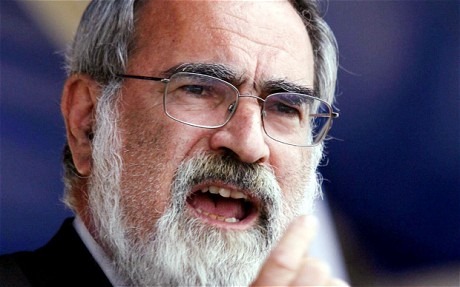
In a rather nasty little sermon in front of the British Queen, Jonathan Sacks, a major rabbi in the UK, has mocked Steve Jobs:
The Chief Rabbi [Jonathan Sacks]’s comments are likely to raise eyebrows because he singled out for blame Jobs – the co-founder of Apple who died last month – by likening his iPad tablet computers to the tablets of stone bearing the Ten Commandments given by God to Moses. Speaking at an interfaith reception attended by the Queen this week, Lord Sacks said:
“People are looking for values other than the values of a consumer society. The values of a consumer society really aren’t ones you can live by for terribly long. The consumer society was laid down by the late Steve Jobs coming down the mountain with two tablets, iPad one and iPad two, and the result is that we now have a culture of iPod, iPhone, iTune, i, i, i. When you’re an individualist, egocentric culture and you only care about ‘i’, you don’t do terribly well.”
Now it seems to me that one can reply to Sacks in five ways:
- (a) on the basis of grammar [I will leave this criticism as an exercise for the reader];
- (b) on the basis of Jewish law;
- (c) on the basis of content,
- (d) on basis of the meaning of “i” in “iPod,” “iPhone” etc., and
- (e) on the basis of his hypocrisy.
For responses (b) [Jewish law] and (c) [content], Tzvee has already written a criticism:
Oy, oy, oy. The rabbi maybe should have retired last year, not next year. He’s got it wrong, oy, oy, oy….
There is nothing at all about Apple products that is any more selfish or materialist than any other consumer market product. iPad has Torah apps! What is the man talking about?…
You are not permitted to mock the dead. They cannot answer. The rabbis remind us that one who mocks the dead is like one who insults his creator. It’s based on a verse in the bible about the poor and weak, only it is applied to the dead. Proverbs 17:5 is the verse that is invoked in this regard, לועג לרש חרף עושהו “One who mocks the poor affronts his Maker.” The rabbi ought politely to have raised issues about Jobs’ actions as a person during his life…. For the rabbi to attack the iPad and insinuate that it is a source of the world’s unhappiness — that is silly talk.
For (d) [meaning of “i” in “iPod”], it is enough to remember that the iPod was named after the iMac
The iPod name was offered up by Vinnie Chieco, a freelance copywriter who lives in San Francisco. Chieco was recruited by Apple to be part of a small team tasked with helping figure out how to introduce the new player to the general public, not just computer geeks. During the process, Jobs had settled on the player’s descriptive tag line – “1,000 songs in your pocket” – so the name was freed up from having to be descriptive. It didn’t have to reference music or songs. While describing the player, Jobs constantly referred to Apple’s digital hub strategy: The Mac is a hub, or central connection point, for a host of gadgets. This prompted Chieco to start thinking about hubs: objects that other things connect to.
The ultimate hub, Chieco figured, would be a spaceship. You could leave the spaceship in a smaller vessel, a pod, but you’d have to return to the mother ship to refuel and get food. Then Chieco was shown a prototype iPod, with its stark white plastic front. “As soon as I saw the white iPod, I thought 2001,” said Chieco. “Open the pod bay door, Hal!” Then it was just a matter of adding the “i” prefix, as in “iMac.”
Chieco declined to mention any of the alternative names that were considered. A source at Apple confirmed Chieco’s story.
And what does the “i” in “iMac” stand for? It stands for Internet – it does not stand for the personal pronoun.
For (e) [hypocrisy] it is sufficient to note that Jonathan Sacks issued a statement admitting that he “uses an iPhone and an iPad on a daily basis,” [although, one hopes, not on the Jewish sabbath.]
The “Iliad” as if in “clear and eloquent (musical) English” contest
Somebody at Simon & Schuster, Inc. has dreamed up “The ‘Iliad Greek Translation’ Contest.” In short, the contest is to produce the “best translation of Iliad, 3.380-420” in English. The “Grand Prize winner will receive copies of The Iliad, translated by Stephen Mitchell . . . and one Skype session with Stephen Mitchell (up to 60 minutes in length), based on his schedule and availability.” The losers may just purchase the book for themselves, which may be the intention of the contest, or they may check out the local library’s copy, or may ask for it as a gift.
To submit your entry, you must have email, must be “14 years of age or older,” and must not be an employee or a relative of an employee of the publisher or even someone living in the household of an employee or an employee’s relative. If you meet those qualifications (and a geographical qualification that I note at the end of this post), then you have until “11:59:59 pm ET on May 15th, 2012.”
Your entry “will be judged by Stephen Mitchell on or about May 16, 2012.” He will judge it “based on the following equally-weighted judging criteria: (a)adherence to original version of the Translation, (b) eloquence and (c) artistic quality.” You “are not required to have knowledge of the Greek language to participate (though it may be helpful),” and your translation into English “may be as free or literal as [you one of the] entrants wish.” Or, as the promotional announcement says, Mitchell will evaluate your entry “on the basis of the clarity and eloquence (music of the English).”
If that’s not entirely clear to you, well then just go to the official rules of the contest and then back to the promotional announcement rules. Be careful when following the first step of the official rules (i.e., “1. How to Enter. Log onto http://www.iliadbook.com [‘Site’]“) because at the moment the iliadbook.com site is redirecting would-be entrants strangely to the American Tourister luggage website. And be careful when visiting the promotional announcment rules because, although much Greek help is given to those who don’t know Greek, at the moment the translation given at the end (i.e., “2] Literal translation”) does not quite end with all of the passage that is to be translated for the contest (i.e., 418-420 for the “literal translation” is not yet shown for the Iliad, 3.380-420, which is the entire bit to be translated).
HT to rogueclassicism, who notes: “Sadly (and somewhat bizarrely to me, given that the prize is a class Skype session), the contest is only open to people in the 50 states of the US and DC.”
Scorcese’s “Hugo” (spoilers)
[This blog post contains spoilers. If you have not seen the Scorcese film Hugo and plan to, best to postpone reading this post.]
I got around to seeing Martin Scorcese’s Hugo (3D). The movie is great fun for film nerds (with quotations or references to Harold Lloyd’s Safety Last, Lumière’s Arrivée d’un Train à La Ciotat, Blake Edward’s Pink Panther, Scorcese’s Goodfellas, a ton of Georges Méliès’s films, Jean Renoir’s La Bête Humaine, the 1895 derailment at Gare Montparnasse, etc.) It also contains by far the most virtuosic use of stereoscopic filming used in any commercial film that I have seen, with one particularly unsettling scene where Sacha Baron Cohen (as an Inspector Clouseau-ish character) breaks through the stereo “fourth wall.”

(For those who have seen the film – do you know if the footage of WWI troops was taken from some early stereo film? Or was the stereo effect artificially created? I thought I knew all of the pre-1950 stereo films, but I did not know this scene.)

As a story for kids, I’m not so sure about this movie. There is nothing particularly offensive in this film (the closest it gets to foul language it gets is a sworn French malédiction), but I’m not actually sure it would be interesting to children (or, normal children.) The plot is predictable at points (as soon as the Ben Kingsley “Georges” character and the young “Hugo” meet, it becomes an obvious movie cliché that by the end of the film they will be friends) and there are all sorts of unnecessary complications (what was the point of having the elder Cabret’s notebook in the plot? In the end Hugo does not need it to repair the automaton.) I’d be interested in your impressions – especially if there were children in the theater at the showing you attended.

Norwich’s entertaining history of the papacy
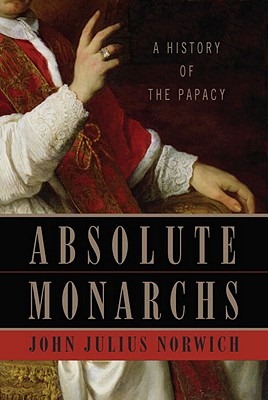 John Julius Norwich is best known as the popular author of a trilogy of histories about Byzantium. While his historical work is not scholarly (which is an advantage in many ways – it means that he does not feel obliged to offer new theories), it is entertaining and well-written. His latest book, Absolute Monarchs: A History of the Papacy is no exception to this rule. Norwich (who holds the rank of second viscount and CVO in Britain) writes as a non-Roman Catholic and a non-religious writer.
Although Norwich writes a complete overview (focusing on social and political impact of the papacy), he sometimes takes most delight in naughty stories. Thus he devotes an entire chapter to the cross-dressing “Pope Joan” who reportedly was discovered when she gave birth. He gives as evidence an account of the chaise percée reportedly developed in response to this scandal, quoting Felix Haemmerlein’s De Nobilitate et Rusticitate Dialogus:
up to the present day the seat is still in the same place and is used at the election of the pope. And in order to demonstrate his worthiness, his testicles are felt by the junior cleric present as testimony of his male sex. When this is found to be so, the person who feels them shouts in a loud voice, “He has testicles!” And all the clerics present reply, “God be praised!” Then they proceed joyfully to the consecration of the pope-elect.
Norwich goes a bit too far in his discussion of this point (he believes he may have identified the exact chair in question in the Vatican Museum) :
It has indeed a hole in the seat, cut in the shape of a huge keyhole; more curious, however, is the angle of the back, some forty-five degrees to the vertical. One would indeed sit on it “as though lying down”; it could not possibly serve as a commode. One explanation that has been put forward is that it was originally intended as an obstetric, or “birthing” chair (“closing and opening, binding and loosing”?) and that it was used in the coronation ceremony to symbolize the Mother church. It cannot be gainsaid, on the other hand, that it is admirably designed for a diaconal grope, and it is only with considerable reluctance that one turns the idea aside.
Norwich covers various schisms and anti-popes with admirable focus; and argues for the Pope as a social and political leader in the West. He gives a chilling account of Pius XII’s refusal to speak out against the Nazi’s mass murder – even during the transport of the Jews of Rome to the death camps.
Norwich’s book is serious, but also filled with entertaining passages. It is certainly a distracting weekend read.
Eisenstein’s Ivan the Terrible
Although vodcasts seem good in theory, who has the time to watch them? One vodcast that I do make time for is one by Richard Brody (of the New Yorker magzine): DVD of the Week. In this three-minute weekly vodcast, Brody selects a few scenes from some film available on DVD (sometimes it is a little hard to track down, though) and uses them to illustrate some point about film history or film theory. It is a little bite-sized lesson, perfect for the Internet era.
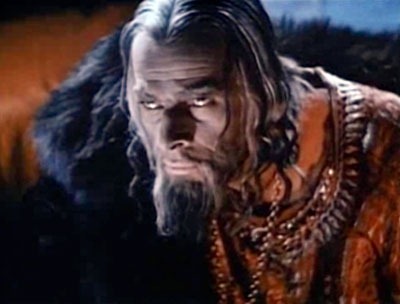
This week’s vodcast is on Eisenstein’s two-part epic: Ivan the Terrible.
In the blurb for the three minute vodcast, Brody writes:
Sergei Eisenstein’s production of movies was sharply curtailed by Stalin’s regime, but during the Second World War, when the U.S.S.R. was under horrific siege, he made “Ivan the Terrible,” which I discuss in this clip. The film is a quasi-operatic tribute to the sixteenth-century Tsar Ivan IV, a modernizer and unifier of Russia: the founder of Russia’s standing Army, commander of major military victories, and ruthless opponent of the power of the landed aristocracy. As Ivan, Nikolai Cherkassov gives one of the most colossal performances in the history of cinema. He captures the character’s audacity and his world-historical vision—and, in the second part of the film (which Stalin banned), he also captures the besieged ruler’s increasingly unhinged, paranoid, violent response to his enemies.
Eisenstein’s silent films are famous for their use of editing—which he theorized, in teachings and writings, as “montage,” a principle of association that he considered constitutive of the cinema. But far from opposing the coming of sound, he looked forward enthusiastically to the use of sound in movies. He considered that its contrapuntal application to images would once again revolutionize the art, and he wrote that the soundtrack would give rise to a new, inner dimension to filmmaking, the internal monologue. In effect, he anticipated the first-person, modernist cinema, and even if, in making “Ivan the Terrible,” he didn’t have entirely free rein to put his theories to work, the soundtrack is as notable as the graphically potent, titanic images: he created a symphony of voices, blended with original music by Sergei Prokofiev, that conjures both the deliverance and the derangement of power. The director understood them well—he was at the receiving end of both.
Action sequences. Political intrigue. Casts of thousands. Prokofiev soundtrack. Censored. Giddy color sequences. What more could you hope for in a Russian film?
Jonathan Rosenbaum describes it as “the greatest Flash Gordon serial ever made as well as a showcase for the Russian master’s boldest graphics”:
I recently had occasion to show Ivan the Terrible in a course on forties world cinema I’m teaching at Chicago’s School of the Art Institute, and found it more mind-boggling than ever. This has always been the Eisenstein feature that’s given me the most pleasure—the greatest Flash Gordon serial ever made as well as a showcase for the Russian master’s boldest graphics. But ever since I first saw it in the 1960s, this is a pleasure I’ve often had to apologize for, thanks to the vagaries and confusions of cold-war thinking. This thinking maintained that Eisenstein caved into Stalinist pressures, denounced the montage aesthetic that was central to his best work, and turned out an archaic, made-to-order glorification of a dictator.
Part of the problem has been reconciling the film’s multiple paradoxes—how much it functions as Eisenstein’s autocritique and apologia as well as an attack and glorification of Stalin, meanwhile combining elements of both high and low art at virtually every instant with its tortured angles and extreme melodrama. (Though portions of Part II could be termed inferior toPart I, the moment the film switches to color, using Agfa stock seized from the Germans during World War II, it moves into dizzying high gear—see the video clip below—reminding us that Walt Disney was one of Eisenstein’s favorite filmmakers.) Some critics did take a slightly more nuanced view of things in Part II, but even a few of these writers, such as Dwight Macdonald, wound up adding homophobic invective to their charges, maintaining that Eisenstein’s homosexuality distorted his view of history—a dubious complaint that, as I later discovered, tended to oversimplify Eisenstein’s (bi)sexuality as well as the historical record. At least Orson Welles’s two mixed reviews of Part I—written in 1946, when he was a newspaper columnist and saw the film without subtitles at a special United Nations screening—placed proper emphasis on what might be called Eisenstein’s visual rhetoric, which tends to drown out most other considerations.
Thanks to the remarkably detailed scholarship of Joan Neuberger and Yuri Tsivian, … we now know that Ivan, far from being any sort of ideological collapse, was in fact Eisenstein’s most courageous gesture, above all in its highly ambivalent and often critical treatment of Stalin. Part I, which was milder overall, may have garnered the Stalin prize, but Part II, whose sexual and stylistic delirium went much further, was banned for a dozen years, following a now legendary February 1947 Kremlin meeting of Eisenstein and his lead actor, Nikolai Cherkasov, with Stalin, Molotov, and Zhdanov. It appears that Eisenstein agreed to make some cosmetic changes but then edited the film to suit himself, and died just afterward—having already vowed in his diary to work himself to death, after apparently being more appalled than pleased by Stalin’s initial endorsement of his project (according to Russian film scholar Leonid Kozlov).
Even if he never got around to shooting more than a few fragments of Part III (now lost, apart from a test), what Eisenstein left behind in the preceding two parts is surely one of the most complexly nuanced works in cinema history, simultaneously celebrating, critiquing, and analyzing Ivan, Stalin, and himself. What struck me most of all watching it this time was its shameless embrace of excess on all these fronts, registering both as a giddy kind of pop art and as a morbid exercise in medieval history. Despite its discarding of Eisenstein’s earlier montage aesthetic, I don’t think he ever made anything else in his career that was more personal or more expressive.
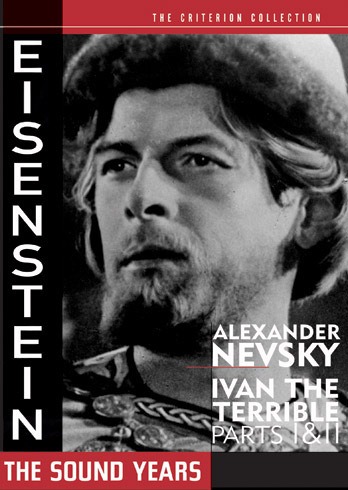
This is one over-the-top intense film. And it is available in many different versions (including free versions [1, 2] for those who have Amazon Instant Video). But my favorite version is available on a Criterion Collection box set (together with Eisenstein’s Alexander Nevsky.)
So, if you have three minutes, go take a gander at Brody’s brief visual essay and see if you don’t have a yen to watch (or re-watch) Ivan the Terrible.
Thanksgiving literature
Rachel Barenblat aka The Velveteen Rabbi has posted Thanksgiving poems by Lee Rudolph, by Bruce Weigl, by Harriet Maxwell Converse “Translated from a traditional Iroquois prayer,” and by Heid E. Erdrich. Here’s one today by Reb Zalman Schachter-Shalomi.
Barenblat has inspired me to post something today. I’ve been reading Annie Dillard’s works, and below I post a bit from her (originally from her Pilgrim at Tinker Creek, which is excerpted in the Annie Dillard Reader).
What’s your favorite literature around the American Thanksgiving holiday? I’m not sure you even have to be from or in the USA to appreciate it.
Here is Dillard’s thanksgiving literature:
There is the wave breast of thanksgiving — a catching God’s eye with the easy motions of praise — and a time for it. In ancient Israel’s rites for a voluntary offering of thanksgiving, the priest comes before the altar in clean linen, empty-handed. Into his hands is placed the breast of the slain unblemished ram of consecration: and he waves it as a wave offering before the Lord. The wind’s knife has done its work. Thanks be to God.
….
In addition to the wave breast of thanksgiving, in which the wave breast is waved before the Lord, there is another voluntary offering, performed at the same time. In addition to the wave offering of thanksgiving, there is the heave shoulder. The wave breast is waved before the altar of the Lord; the heave shoulder is heaved. What I want to know is this: Does the priest heave it at the Lord? Does he throw the shoulder of the ram of consecration — a ram that, before the priest slew and chunked it, had been perfect and whole, not “Blind or broken, or maimed, or having a wen, or scurvy, or scabbed . . . bruised, or crushed, or broken, or cut” — does he hurl it across the tabernacle, between the bloodied horns of the altar, at God? Now look what you made me do. And then he eats it. This heave is a violent, desperate way of catching God’s eye. It is not inappropriate. We are people; we are permitted to have dealings with the creator and we must speak up for the creation. God look at what you’ve done to this creature, look at the sorrow, the cruelty, the long damned waste! Can it possibly, ludicrously, be for this that on this unconscious planet with my innocent kind I play softball all spring, to develop my throwing arm? How high, how far, could I heave a little shred of frog shoulder at the Lord? How high, how far, how long until I die?
….
Emerson saw it. “I dreamed that I floated at will in the great Ether, and I saw this world floating also not far off, but diminished to the size of an apple. Then an angel took it in his hand and brought it to me and said, ‘This must thou eat.’ And I ate the world.” All of it. All of it intricate, speckled, gnawed, fringed, and free. Israel’s priests offered the wave breast and the heave shoulder together, freely, in full knowledge, for thanksgiving. They waved, they heaved, and neither gesture was whole without the other, and both meant a wide-eyed and keen-eyed thanks. Go your way, eat the fat, and drink the sweet, said the bell. A sixteenth-century alchemist wrote of the philosopher’s stone, “One finds it in the open country, in the village and in the town. It is in everything which God created. Maids throw it on the street. Children play with it.” The giant water bug ate the world. And like Billy Bray I go my way, and my left foot says “Glory,” and my right foot says “Amen”: in and out of Shadow Creek, upstream and down, exultant, in a daze, dancing, to the twin silver trumpets of praise.
1974
Muppets, puppets, marionettes, bunraku, wayang, and actors
Hooray, hooray, there is a new Muppet movie on the way.
But why do we like puppet theater? For example, the core repertoire of the (human) Kabuki theater is based on the Japanese (puppet) Bunraku theater. But Bunraku continues to be popular, challenging the popularity of human performance. Given the greater expressiveness possible with a human actor how can both forms co-exist?
And what accounts for the exhaustive evening-long performances of Wayang in Indonesia?
And I must admit that during Mozart’s 250th anniversary celebration, I did go to some effort to watch the Salzburg Marionette Theater versions of his most famous five operas. (Unfortunately, the video below has quite a few imperfections)
What accounts for the continued popularity of puppet theater? Perhaps there is joy in the fantastic elements of puppets – movements not possible with real humans – but I also think that a significant part of puppetry is the fact of less expressiveness. Puppet presentations force us to focus on specific elements of a performance – and thus hide both human imperfections (a twitch of the eye) and inessential elements. In this way, puppet performance is appealing in the same way that harpsichord performance is appealing – even though a piano is more expressive than a harpsichord, the harpsichord causes us to focus more on the structural compositional elements of a piece (which is why J. S. Bach’s keyboard music often sounds particularly good on a harpsichord.)
Even computer animation sometimes “works” because it mimics puppetry
a more biblical, more scriptural, more theological, more Jewish Bible
Theophrastus usually gets me thinking by lots of things he says. This is especially true when he wrote:
“Judaism usually views itself as having no theology at all;”‘
This makes me ask, What is Judaism, and what is theology? Then I wonder about the Bible, the Hebrew scriptures and their Greek translation by diaspora Jews in an Egyptian kingdom in the Alexandrian Empire. I’m re-reading some things Adele Berlin wrote. She says this (and I just have more questions):
“So, we may conclude that the Septuagint is, on one hand, more biblical than the Masoretic Text, but on the other hand it is more Hellenistic, both in respect to Jewish identity and practice and in respect to Hellenistic storytelling.”
It’s not just the Septuagint but the version of Esther in this Bible that presents the questions. Are these anomolies really? Listen to a little more from Berlin:
Making Esther More Biblical
The Greek versions, especially the Septuagint, have a different tone and reflect a different view of the Jewish characters from the Masoretic Text. David Clines (The Esther Scroll: The Story of the Story), who believes that the religious elements were originally absent and were added in the Septuagint, has perceptively argued that the Septuagint added the religious dimension in order to “assimilate the Book of Esther to a scriptural norm.”
That is, the Septuagint sought to make the book sound more biblical, more like the books of Ezra, Nehemiah, and Daniel, where God’s presence is felt in the events that unfold and where the characters engage in religious activities (praying and invoking God’s name). Mordecai’s dream and its interpretation is also similar to what we find in Daniel. And thirdly, the inclusion of the contents of the edicts also resembles the practice in Ezra, Nehemiah, and Daniel, which include what purports to be verbatim copies of Persian documents. We have discussed above how the Masoretic Text of Esther sought to fashion itself, in part, on the model of earlier biblical writings, now we see that principle carried further, for different effect, in the Septuagint.
We’re not even getting to how Esther in either Hebrew or Greek deserves a feminist re-reading. Now read the rest of what Berlin proposes here. Is Esther, in Greek, more biblical, more scriptural, more theological, more Jewish? What is the Bible? What is theology? What is Judaism usually? Are you scratching your head as much as I am?
Cursing the Christians?
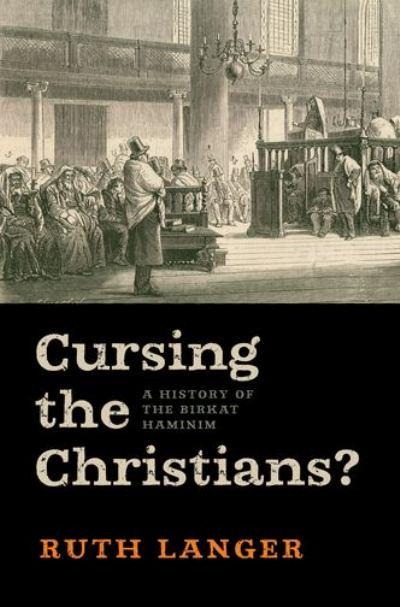 Ruth Langer (Boston College) has written a fascinating piece of liturgical history: Cursing the Christians?: A History of the Birkat Haminim.
This extensively documented liturgical history reviews an ancient (dating back to the first century of the Common Era) Hebrew prayer, Birkat Haminim – part of the silent prayer (Amidah) said at every traditional Jewish prayer service – that in its early form appears to have been a curse on apostates, Christians, sectarians, enemies of Israel (a reference to imperial powers) as delaying the appearance of the messiah. This prayer became highly controversial, and was ultimately censored by Christian authorities during the early modern period. The ethical implications also caused internal distress within Judaism. Langer’s thesis is that increasing integration of Jews within European culture created tensions, and the evolution of the prayer over time reflects that. Liberal Jewish movements have had a wide variety of responses to the prayer.
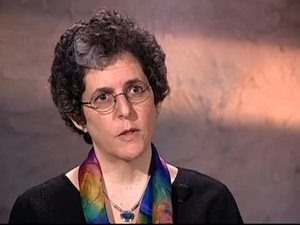 Langer examines the prayer in late antiquity, during the Geonimic period (drawing particularly on evidence from the Cairo Geniza, during the high middle ages, during the early modern period (facing Christian censorship), and then through the modern period; tracking particular responses on groups ranging from the Kabbalists and key members of the Hassidic movement to contemporary liberal movements. The history occupies about 180 pages. A further approximately 70 pages documents changes to the prayer, documenting the Geniza texts, the Pre-Sephardic texts from the Muslim world, medieval European texts, censored texts dating from 1550 to the present, and texts of the liberal movements. Documentation (notes,glossary, bibliography, etc.) fills up 120 pages.
This is a fascinating microcosm of Jewish-Christian relations; I have reading my copy most of today and have found it hard to tear myself away even long enough to make this post.
Ars Combinatoria (Sefer Yetzirah, Leibnitz Derrida, Culianu, Eco, Idel) – from Kabbalah to European culture
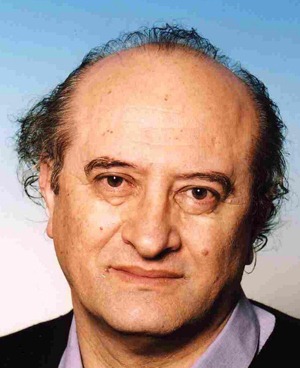 The Romanian-Israeli scholar Moshe Idel (Hebrew University) gave a series of three lectures at Oxford last February on Ars Combinatoria, Gottfried Leibniz’s theory (based on his doctoral dissertation) on combining letters arbitrarily into words, and words arbitrarily together in combinatorially many combinations to achieve an alphabet of human thought to ultimately achieve characteristica universali, the universal pure language of science.
This type of thought was central to Abraham Abfulia’s project (which predated Leibniz) to find hidden names of God, and ultimately achieve ecstatic union with the Divine, through meditation on permutations of the letters. Recently, Abfulia’s efforts at what we now call Ars Combinatoria has recently achieved wide attention through sources as varied as Umberto Eco’s bemused The Search for the Perfect Language to Myla Goldberg’s mystico-horror novel Bee Season (a book in which I identified with all four of the major characters.)
Alan Brill, whose blog post brought these lectures to my attention, speculates that these lectures are quite revelatory of Idel’s personal thought, and wonders “Can we reread the entire Idel project as disconnected from mysticism and see that it was originally language and magic (as well as esotericism and ecstatic techniques)?”
Idel’s lectures are difficult and somewhat strange (because Idel is, at least to some degree, a true believer in Ars Combinatoria as a method of generating knowledge) but may be of interest to those who are interested in the mainstreaming of magic and prophecy.
- Lecture 1: Sefer Yetzirah and its Commentaries: A major source for Ars Combinatoria
(audio only link) - Lecture 2: Ars Combinatoria in Modern Times: Jacques Derrida, Umberto Eco, and Ioan P. Culianu
(audio only link) - Lecture 3: The Transition of Ars Combinatoria from Kabbalah to European Culture: Ramon Llull, Pseudo-Llull, and Giovanni Pico della Mirandola
(audio only link)
This is the second hat tip in two days that I owe to the remarkable Alan Brill (and this second one is really a double hat tip, since it incorporates a link from Alan’s post on the Museum Rietberg’s exhibit on comparative mysticism.


 BLT
BLT 