Tation, daughter of Straton
It was not only Christian women who acted as patrons and benefactors but also Jewish. Phil Harland has posted this inscription. (Ross Kraemer writes about Tation here.)
Tation daughter of Straton, son of Empedon,
having built the building (or: house; oikos) and the open-air enclosure from her own resources,
granted them to the Judeans. The synagogue of the Judeans honored Tation daughter of Straton, son of Enpedon,
with a gold crown and with the front seats.Τάτιον Στράτωνος τοῦ Ἐν|πέδωνος
τὸν οἶκον καὶ τὸν πε|ρίβολον τοῦ ὑπαίθρου κατασκευ|άσασα ἐκ τῶ[ν ἰδ]ίων ||
ἐχαρίσατο τ[οῖς Ἰο]υδαίοις.
ἡ συναγωγὴ ἐ[τείμη]σεν τῶν Ἰουδαί|ων Τάτιον Σ[τράτ]ωνος τοῦ Ἐνπέ|δωνος
χρυσῷ στεφάνῳ | καὶ προεδρίᾳ.
Like Opramoas, Tation was granted “front row seats” and like Junia Theodora “a gold crown.” Being a benefactor was a recognized role which crossed ethnic and religious boundaries and gender lines.
Being a benefactor transcends religion and sex. It is about the strong giving for the weak, the haves for the havenots, in whatever way we are rich, whether in material goods, or in our occupations, or any other resource, wealth or benefit that we may bestow on others. When we think of God as our benefactor, and we think of how to emulate that, we do not need to concern ourselved with a gendered God or with gendered behaviour. We simply assess that way in which we are rich and give out of that to others.
Old book smell

To John Piper
I have edited the title of this post, but the post itself remains intact.
I have been thinking a lot about why it bothers me so much that the interpretation of the bible has so much variation on the subject of women and homosexuals. There is more than one way to respond to this. Here are a few possible positions.
1) The Bible consistently restricts the agency of women and gays, and we accept this as universal moral law.
2) The The Bible consistently restricts the agency of women and gays, and we don’t accept this as universal moral law.
3) The Bible does not restrict the agency of women and we accept this as universal moral law.
4) The Bible does not restrict the agency of women and gays, and we accept this as universal moral law.
I actually can’t accept any of these positions. In fact, probably few people do in reality. Surely most people, everyone, sees the differences between the status of women in different parts of the text. But this is often explained away.
However, the problem that I have been profoundly affected by is that some leaders alter the interpretation of certain passages in order to amplify restrictions on women and gays. Changing Junia to Junias is one example, but trivial in comparison to the interpretation of the expression “other flesh” σαρκὸς ἑτέρας in Jude verse 7. This is often translated as “unatural desire” and interpreted as refering to homosexual relations. But, of course, it has no relation to that, but refers to intercourse with angels or demons or some such thing.
The entire association between Sodom and homosexuality is bizarre, as if God only punishes cities that rape men, and not those tribes like Benjamin that kidnap and rape women. As if we want a God who detests the rape of men but does not destest the rape of women. Don’t get me started!
No the destruction of Sodom was about something else altogether, about a culture foreign to us, where offering virgins to strangers is no big deal, but attacking guests is not to be tolerated. Especially if they are angels.
So, the problem is, one the one hand there are, in my view, passages which restrict the activity of women and homosexuals. On the other hand, there are people today who take passages which do not restrict women and gays, and change the interpretation of those texts to the detriment of women and gays. Then all the protests about how this is what the bible teaches becomes hollow. We know the desire to restrict others is human generated.
In my view, the bible is inconsistent – it is a collection of writings from different ages and by different people, and each and every book has been edited to a certain extent. There are some passages where women are told to marry and others where they are told to remain celibate. Some passages where the purpose of women is procreation, and other passages where Jesus denies this.
And there are certain passages whose meaning is obscure, and some take those passages and turn them into amunition to further restrict women and gays. So, this is my question – if God did not inspire these passages with the intent of restricting women or gays (the meaning is unrelated to these topics), but the passages have been altered by humans in order to do this, what does this tell us about the intent of some teachers and leaders towards women and gays? These additonal restrictions are NOT inspired by God – they are the product of human heterophobia. People dislike, distrust and seek to restrict those who are not like themselves. And then they blame God for it. And this is really painful for some of us. I live with the knowledge that all those teachers and leaders altered the interpretation of the bible in order to pile up restrictions on women that aren’t there. They were not content with the ones that were there.
I was particularly dismayed by this comment by John Piper, “Pretending that [marriage] can exist between people of the same sex will send ripple effects of dysfunction and destruction in every direction, most of which are now unforeseen,” and there follows as story about a photographer who refused to photograph a same sex marriage.
Let me recount my perspective. I believe that the “vow to obey” on the part of a wife creates an untenable marriage. First it promotes sex in a hierachical relationship, which our contemporary society highly discourages, for example between professor and student, doctor and patient, employer and employee, or across the ranks of an army. But with the vow to obey, sex and hierarchy are integral, not happenstance – it seems really, truly warped to me. Next, a woman in our society is equally responsible under the law for children, debts, investments, and property about which she has limited decision-making authority. Now I accept that most complementarian marriages are for the most part pragmatically egalitarian, so it usually works out. But the vow to obey, if taken seriously, makes a mockery of women and the law, as well as the concept of consensual sex.
However, and this is what I want to say to John Piper and the photographer. While I believe the vow to obey is immoral, I attended a wedding with such a vow last weekend. I bought a dress, high heels, helped prepare the rehearsal dinner, went, sat, smiled, hugged, and gave a wedding present. I did not create an awful fuss. So, if I can play nice for the sake of loving friendship and community, for the sake of civility and polite society, so can others. Don’t cry persecution when you are asked to behave in a civil manner with those who disagree with the way you interpret the bible to suit your own set of tastes.
This is a guest post by Ann Nyland:
Last year the Guardian UK ran an article which said that trans women were excluded at a Dianic tradition ritual in honor of Lilith at the PantheaCon, a significant annual pagan gathering in February. The article said, and I quote, “Many of the defenders of this position – the veteran witch Z Budapest, for example – argue from an essentialist position (“you have to have sometimes in your life a womb, and ovaries and moon bleed and not die”) but also by an appeal to tradition.” (Why won’t pagans accept trans women?)
This year’s ritual at PantheaCon was for “genetic women only.” This month, gender issues sparked a major split within Dianic tradition. The Amazon Priestess Tribe, Lady Rosmarinus Stehlik, and the Living Temple of Diana split from Z Budapest’s Dianic tradition and renamed themselves as “Pan-Dianic.”
Lady Yeshe Rabbit on behalf of The Amazon Priestess Tribe released a Press Release which noted in part, “We offer our reverent thanks for the wit, writings, and wisdom Z Budapest has offered us and the world, while acknowledging that we nonetheless find ourselves at theological and ethical crossroads with some core practices of her lineage.
“Namely, we cannot support a policy of universal exclusion based upon gender at our Goddess-centered rites, nor can we condone disregard or insensitivity in communications regarding the topic of gender inclusion and Goddess-centered practice. We feel it inappropriate to remain members of a lineage where our views and practices diverge significantly from those of the primary lineage holder.”
The “genetic women only” policy in Goddess worship shows, at the very least, a blinkered approach to history. The Greek goddess Aphrodite gave birth to her son Hermaphroditos, obviously the source of our word hermaphrodite. Diana’s nymph Salmacis saw Hermaphroditos bathing and instantly desired him. She prayed to the gods to join her with the unwilling Hermaphroditos. Her prayer was granted and thus the two merged into one. Surely this was Diana’s time to intervene if she had such a problem with trans gendered people.
Let us also look at Lilith as the ritual was in her honor. Historically there is a dearth of information about her, but the information we do have provides no evidence that she would have a problem with any trans woman.
Isaiah 34:15 states, “The wild animals of the desert will meet with the howlers, and the hairy goat demon (se’irim) will cry to its fellow. Lilith will settle there and find for herself a resting place.”
In the Jewish Kabbalah, Lilith is the wife of Sammael – an important angel in both Talmudic and post-Talmudic literature – and both are seen as evil. However, the concept of evil was developed by Rabbi Isaac ben Jacob ha-Kohen in Spain in the later thirteenth century.
In 1927, Gershom Scholem published “A Treatise on the Left Emanation,” Rabbi Isaac’s treatise on evil. This book was the first in Jewish work to say that Sammael and Lilith were husband and wife. This idea was later adapted into the Zohar.
The Talmud literature has Lilith as a danger to babies.
The main source of legends about Lilith is the Alpha Betha of ben Sira. In 1977, a scholar named Eli Yassif studied this text as part of his doctorate. He found that it existed in two versions: an earlier version closer to the original, and a later version dated to around the eleventh century which had many additions by a later writer.
The early version says that God created Adam and created a woman for him from the earth and named her Lilith. He brought her to Adam, but the two began to fight. Lilith uttered the holy name and flew away. Adam prayed for God to bring her back. God then told three angels to ask Lilith to come back, and if she refused, to bring her by force. The three angels caught up with her at the Red Sea. They told her to come with them or they would drown her.
Lilith replied that God created her only to harm male babies from birth to eight days old and female babies from birth to twelve days old. The angels would not leave her alone until she swore by God’s name that whenever she saw any of them or their names on the amulet, she would not harm the baby. (The names of the angels were Sanoi, Sansanoi, and Samanglof, which current scholarship believes were invented names.)
The later writer added to this part of the story, perhaps as an attempt to explain why the angels left Lilith alone. The writer reversed the part about Lilith and the babies, and the angels’ threat to drown her. The writer then has Lilith say that she cannot return to her husband due to the Torah, for she has been defiled, as she slept with The Great Demon.
The Great Demon did not appear in Jewish literature prior to this writer’s invented addition to the ancient text. An even later editor decided that The Great Demon’s name was Sammael, as he was already associated with the Garden of Eden.
Rabbi Isaac then said that Grand Old Lilith is the mate of Sammael, and the Younger Lilith is the mate of the powerful demon Asmodeus. The evidence suggests that Rabbi Isaac invented this story and alleged it to be myth.
Thus we have no evidence to suggest Lilith would have a problem with trans women.
It is interesting that that Z Budapest’s branch of paganism and modern Christianity as a whole have gender-based biases.
When The Source, my New Testament translation, first came out, Christian women’s groups embraced it wholeheartedly. When my Study Bible for Gay, Lesbian, Trans and Bi came out, these very same groups were outraged, refused to stock The Source, asked for their endorsements on The Source to be withdrawn, and started hate campaigns against my work, even to the extent of organising prayer groups to pray against me.
When The Source first came out, complementarian Christians (those who believe that God divinely sanctioned women to have subordinate roles to men in the home and church) attacked me, saying I, being a woman, put it out to suit my own agenda.
When the GLBTIQ Bible came out, I received frequent hate email which included statements such as, “You group of gay men will burn in hell for twisting God’s Word to suit your own perverted lifestyle.” Trouble is, I am not a group; I am not a man; I am not gay. I soon found out that not all feminists are fast to embrace social justice for others.
The Bible in the original languages does not say anything against homosexuality. Where the Bible speaks of going after “different flesh” or “strange flesh,” the reference has been assumed to be to homosexuality. However, the reference is to the Watchers, a class of angel, coming to earth and getting it on with human women. This is stated explicitly in the Old and New Testaments as well as in other ancient literature – it was a common belief of the times.
The Bible also explicitly blames the acts of the Watchers for the flood, and for the destruction of Sodom.
It is the general belief that the Bible is anti-gay. However, just because the majority of Christians think something, does not mean it is factual. The large majority of Christians believe that there were three wise men who visited Jesus as a newborn baby, and they also think that it is wrong to be gay and Christian. Yet no Bible version in any language says there were three wise men or that they visited Jesus when he was a newborn baby. The number of men is not mentioned. There happened to be three different types of gifts, and perhaps that is where this misapprehension came from. Nowhere does it say Jesus was a baby, but instead the Bible said they visited Jesus in a house, and also says that Herod ordered that all the children under the age of two be killed. The reason for this is that it took the wise men all that time to get to Herod, and then to find Jesus. He was not a newborn baby at the time.
Now the Three Wise Men Error (that is, that they were present just after Jesus’ birth) is not even a result of mistranslation; it is there for anyone to see in any Bible version. Mistranslation of the Bible makes the situation even worse. For example, these men were not even wise men; they were astrologers and sorcerers. English Bible translators have censored this. Magoi were in fact astronomers, astrologers, dream interpreters and spellcasters. One of the titles given to Daniel was “Chief of the Magoi” (“Chief of the magicians, magoi, Chaldeans, and astrologers.”)
In the Hebrew Bible/Old Testament, being gay was on the same level as planting two different crops in the same field, breeding two different types of cattle together, wearing two types of fabric at the same time. These days, most people do not have a problem with wearing cotton and nylon clothes at the same time, or owing a mixed breed of dog – well, hell, the whole cattle industry is ritually unclean by that standard.
It is a shame that “genetic women only” were the only ones seen fit to be at the ritual in honor of Lilith. I myself consider that an anti-feminist viewpoint. I also find it not a little disturbing that certain paths of paganism can take the same course as the gender-exclusive biases of “Religious” Christianity. Seems as if any sort of “Religion” with a capital R can be gender-biased.
Junia in the Patrologiae
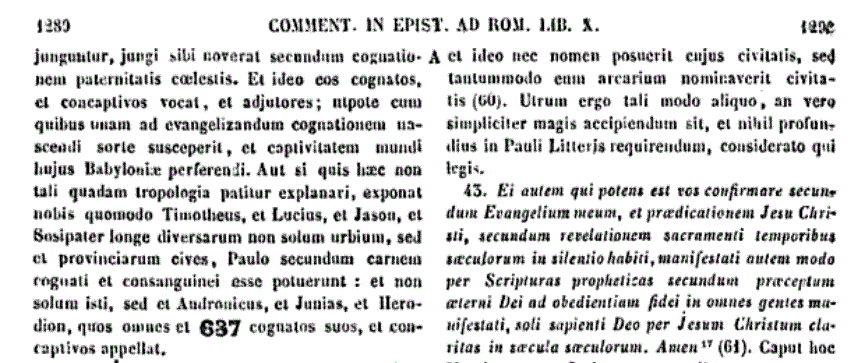 I can’t track down all the references mentioned in different articles and books about Junia, but I am getting close. I feel the need to see for myself every bit of evidence and evaluate it with my own eyes. One of the reasons is that people have a tendency to create evidence. As humans, we have the faculty of imagining and coming to believe in something as real, when it is not, when it was simply suggested to us. This happens as often in biblical interpretation as in any other area of life. Have you ever said, “I know I put my glasses down right here!” But no, they’re sitting by the bathroom sink. The brain completes messages, and fills in blanks with logical options which we come to accept as reality. But the brain supplies information which we are programmed to accept as logical or likely. And then our belief in the reality of this information is rock solid. I have experienced this myself. This is one reason why we should not accept biblical interpretation as absolute truth. We have to accept it as ideas filtered through the wishful thinking of the human authors.
In this image we can see a reference to Junias, and not Junia. This is from the Patrologiae, volume 14 page 1289, published in 1862. According to Epp, it prints the text of a 12th century manuscript of a Latin translation of Origen’s commentary on Romans, written originally in Greek. However, other manuscripts and earlier citation from Origen’s commentary indicate that originally Junia was feminine. I haven’t seen this yet but it is in Caroline Hammond Bammel’s critical text of Origen’s commentary on Romans, translated by Rufinus.
There is also a reference to Junias in the works of Aegidius, a 13th century bishop. In Greek, there is one mention of Junia, in the accusative where the gender is ambiguous, but there is a masculine pronoun. I haven’t seen either of these. But, as far as I know, there are no other occurrences of the name Junias. All three of these references are to the person mentioned in Romans. They do not provide evidence that there was another individual who had the name Junias. They are not evidence that the name Junias existed outside of the epistle to Romans.
However, in this article, we read,
On the one hand, no instances of Junias as a man’s name have surfaced to date in Greek literature, while at least three instances of Junia as a woman’s name have appeared in Greek. Further, Junia was a common enough Latin name and, since this was Paul’s letter to the Romans, one might expect to see a few Latin names on the list. But even the data on this score can be deceptive, for the man’s name Junianas was frequent enough in Latin and Greek writings (and, from my cursory examination of Latin materials, the nickname Iunias also occurred as a masculine name on occasion2)
The note reads,
This tentative conclusion is contradicted by older studies that are presently inaccessible to me. Nevertheless, the database I am using is the CD from the Packard Humanities Institute, certainly more comprehensive than anything examined previously.
To date, as far as I am aware, nobody has published any other occurence of any Junias – other than the apostle – of a Junias for whom the name actually was a nickname for Junianus or the fictive Junianas. What does “on occasion” mean? Or “cursory?” I can only conclude that Wallace had seen one occurence of Junias, this one in the Patrologiae, and that he honestly believes that somewhere in his perusal of the Latin materials on his Packard CD there are other occurences. However, with the information we have at present we have to believe these other occurences do not exist. (Okay, as I write this, I am wondering if Wallace is thinking of the name Junius! Perhaps he has mixed Junius with Junias, just as he has confused Junianus with Junianas.) In any case, nobody has cited any other Junias in all of Latin or Greek materials – so far. So we must assume that Wallace has not seen them either.
My interest in this is not so much about Junia as an apostle, or whether she was female, but about how our mind plays tricks on us, all of us. This is the nature of human knowledge, and all our knowledge about God is human knowledge, it is not divine.
Here is another example. Yesterday a commenter emailed me a link to the webpage where I found this article on bible.org. The author writes,
Dad must take the lead. But what is involved in properly managing a family? For one thing it means taking the lead in providing physical necessities, such as food, clothing, shelter, and medical care. Paul used masculine pronouns in referring to these kinds of things when he said, “If anyone does not provide for his relatives, and especially for his immediate family, he has denied the faith and is worse than an unbeliever” (1 Tim. 5:8, NIV).
The thing is that I don’t disagree entirely with the sentiment expressed here. But, there are no masculine pronouns in the Greek! This man has a Th. D. from Dallas seminary. He probable can read Greek. The fact is that our minds are open to suggestion. We believe things that we are predisposed to believe, and if information is missing, our brains can create that information and fill in gaps in our actual perception.
Perhaps it is because of the frailty of the human mind that so often software searches are touted as more accurate and more reliable than previous studies. But the human brain interprets these software searches. Introducing the word “CD” “database” or “software” into an article does not impress me. I am really not sure how we can avoid this kind of thing. First, don’t live by a biblical interpretation that doesn’t sit right in the gut. And ask to view the evidence – just out of curiosity. You still don’t want to follow a biblical interpretation that doesn’t feel right to the conscience.
Was Jephthah’s daughter sacrificed?
Its been a long time since I have browsed the bible blogs, but these long summer days allow for this indulgence. Thanks so much, Brian, for your list of recommendations! I would very much like to think that Jephthah’s daughter was not sacrificed, but I have been persuaded that the Hebrew implies that she was. The same language is used for Jephthah’s daughter in Judges 11:31 as was used for Isaac in Gen. 22: 2.
וְהַעֲלֵהוּ לְעֹלָה
veha’alihu leolah
And offer him for a burnt offering
וְהַעֲלִיתִיהוּ, עֹלָה
veha’alitahu olah
I will offer it up for a burnt offering
This commentator convincingly argues that the notion that Jephthah’s daughter lived out her life as a virgin is a Medieval construct, one which reflected a common Christian practice of that era. However, in Judges there was no practice of dedicating a girl to celibacy. (Hebrew text thanks to Mechon Mamre.)
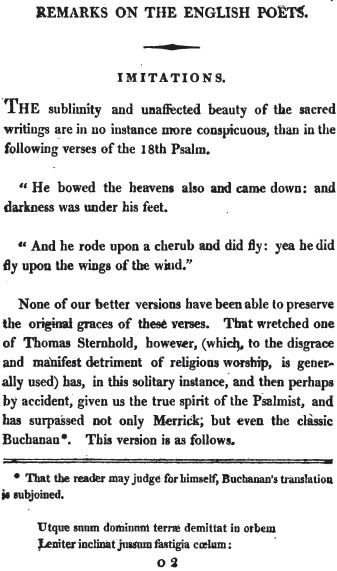
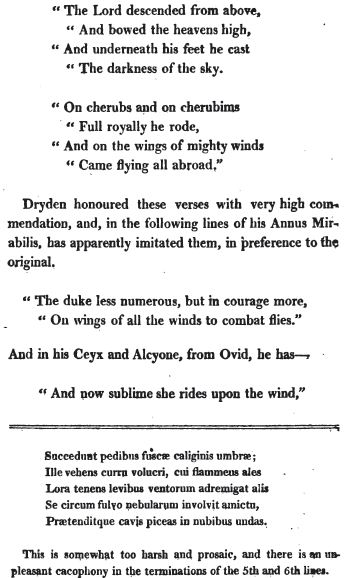
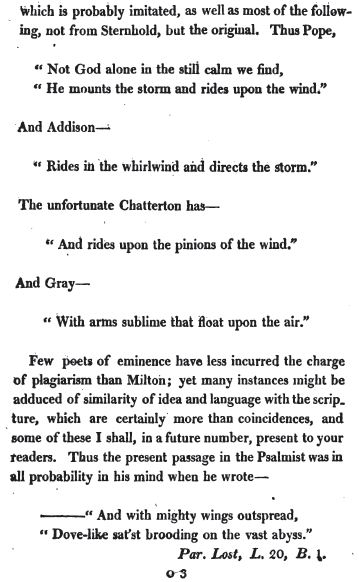
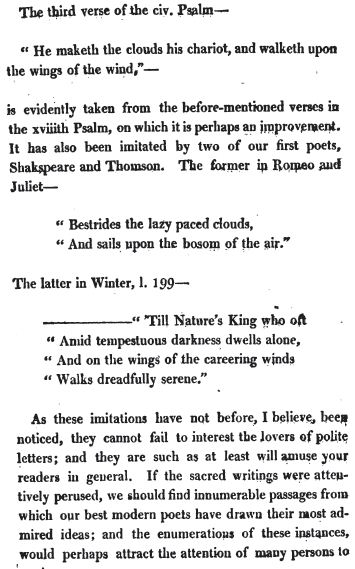
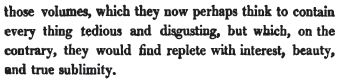
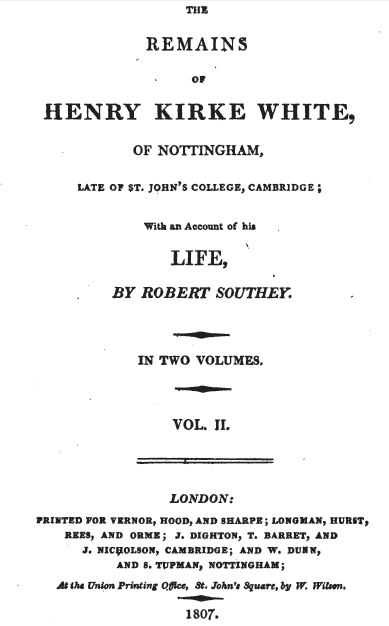
The following very short essay, written by H. K. White, offers his remarks on the best poetic translations of two verses of the 18th Psalm and certain lines they inspired.
Is God a Boy Rock or a girl pebble in the Bible?
“Returning to the ‘masculine feel’ of Christianity discussion, [started by John Piper],” writes Tony Reinke this week in a blogpost at Piper’s blog,
“it may be worthwhile to address one prominent point in the debate. While God the Father is spirit, and therefore is not a sexual being nor is he ‘male,’ he chooses to predominantly reveal himself in masculine language in Scripture…”
“In his book Our Father in Heaven: Christian Faith and Inclusive Language for God, John Cooper published the conclusions … of [one of] his major discoveries … [that] while feminine metaphors for God’s activity are sometimes used [in the Bible], and used to illustrate the tender nurturing character of God, none of these references include feminine titles for God.”
In wonderful response to Reinke’s post, Joel Hoffman asks at his blog, “Is God a boy god or a girl god in the Bible?”
What Hoffman rightly finds fascinating is Reinke’s would-be infallible conclusion:
“Most interesting is Reinke’s explanation: ‘That explains why in Scripture we find many many masculine titles for God: Lord, Father, King, Judge, Savior, Ruler, Warrior, Shepherd, Husband, and even a handful of metaphorical masculine titles like Rock, Fortress, and Shield..'”
So Hoffman asks:
“What would make ‘Rock’ a ‘metaphorical masculine title’? Not that it matters, but the word itself is feminine in Hebrew (at least one of the words, eh-ven) and in Greek (petra). Similarly, what makes ‘lord,’ ‘savior’, ‘ruler,’ etc. masculine? Certainly nothing intrinsic to the words.”
So I ask, “Is God a Boy Rock or a girl pebble in the Bible?” And I offer you the Flintstones’s daughter and the Rubble’s son as an illustration of the problem here:

So let’s continue with Hoffman’s brilliant insights, as he says the following with some appropriate humility and wise understanding about language and gender and gendered language in the Bible about God:
“I think that Reinke and Cooper are going about this the wrong way. The gender of the words used to describe or identify God is irrelevant.
Rather — as in so many other instances — I think the key to understanding the language here is knowing how imagery works.”
The rest of Hoffman’s post can be read here. If you’re interested in the conversation, then please feel free to join in.
Turning the dial on the kaleidoscope
I recently read 1491 by Charles Mann and have been browsing through the author’s interaction with reviewers on the Amazon forum for his book. It’s fascinating and deals with many questions I had. I haven’t used this resource much in the past, but will try to remember to check into these forums more in future. Here is one comment that provides a great metaphor for this book,
I have few criticisms to pass on to you, but I wanted to tell you (in case you check back in here) that I just finished the book and have been telling everyone I know to read it. I think you have admirably presented all sides of some of the more controversial material, and you’ve synthesized the specialist research and literature in a very readable fashion. I am a teacher, and I sometimes use the metaphor of a tube kaleidescope with my students, telling them to not get stuck in looking at a set of data only one way, but to turn the dial on the kaleidescope to see a completely different set of possiblities. That is the effect your book had on me, and I thank you for writing it. My only possible complaint is that it’s not a few hundred pages longer to go into more detail on the U.S. Southwest Indian cultures, the Pacific Northwest, and the puzzle of original immigrations to the hemisphere. But perhaps that’s for another book.
It’s important to read books that turn the kaleidoscope, shift us out of our presuppositions, and offer a new perspective. We don’t have to swallow every detail uncritically, but a book like this points to information that the lay person is not usually exposed to. I was familiar with some of the material, but it was certainly worth reading. Mann’s thesis is that pre-Columbian America was a) more populated that we used to think (this changed about 30-40 years ago, I believe, so not that relevant), b) possibly populated 30,000 years ago, and not 12,000 years ago, c) was more technologically advanced that we previously believed, and d) inhabitants altered their ecosystems in significant ways, both for better and worse.
I am having some technical difficulty accessing Amazon.com as I am constantly being redirected to Amazon.ca. On the former there are over 300 reviews and on the latter 11. The author forum is also on Amazon.com.
Junia in the Vamva Bible
I realised that there is no link to the Vamva Bible on my home blog, and want to make sure I don’t lose this. Kurk found it a while ago. The Vamva Bible is a 19th century revision of the original Greek. Here is Junia in the Vamva Bible,
Ασπάσθητε τον Ανδρόνικον και Ιουνίαν,
τους συγγενείς μου και συναιχμαλώτους μου,
οίτινες είναι επίσημοι μεταξύ των αποστόλων,
οίτινες και προ εμού ήσαν εις τον Χριστόν
While others were masculinizing Junia, the Archbishop Vamva simply assumed that she was a female among the apostles. It seems obvious to me to check Greek scholarship on basic linguistic issues. Naturally there are some things that have been lost to antiquity, but I assume that Greek commentary is worth referencing. However, I seem to be alone on this. Not that I can read modern Greek fluently – I can’t. But one can always ask. Anyway, here is the link for the Vamva Bible.
I would be interested in hearing theories from others on why this Bible is not usually mentioned in English scholarship. I think Bible software should include this one along with the Pagninus, Erasmus Latin and Vulgate.

Philadelphia July 3d. 1776
Had a Declaration of Independency been made seven Months ago, it would have been attended with many great and glorious Effects . . . . We might before this Hour, have formed Alliances with foreign States. — We should have mastered Quebec and been in Possession of Canada …. You will perhaps wonder, how such a Declaration would have influenced our Affairs, in Canada, but if I could write with Freedom I could easily convince you, that it would, and explain to you the manner how. — Many Gentlemen in high Stations and of great Influence have been duped, by the ministerial Bubble of Commissioners to treat …. And in real, sincere Expectation of this effort Event, which they so fondly wished, they have been slow and languid, in promoting Measures for the Reduction of that Province. Others there are in the Colonies who really wished that our Enterprise in Canada would be defeated, that the Colonies might be brought into Danger and Distress between two Fires, and be thus induced to submit. Others really wished to defeat the Expedition to Canada, lest the Conquest of it, should elevate the Minds of the People too much to hearken to those Terms of Reconciliation which they believed would be offered Us. These jarring Views, Wishes and Designs, occasioned an opposition to many salutary Measures, which were proposed for the Support of that Expedition, and caused Obstructions, Embarrassments and studied Delays, which have finally, lost Us the Province.

All these Causes however in Conjunction would not have disappointed Us, if it had not been for a Misfortune, which could not be foreseen, and perhaps could not have been prevented, I mean the Prevalence of the small Pox among our Troops …. This fatal Pestilence compleated our Destruction. — It is a Frown of Providence upon Us, which We ought to lay to heart.
But on the other Hand, the Delay of this Declaration to this Time, has many great Advantages attending it. — The Hopes of Reconciliation, which were fondly entertained by Multitudes of honest and well meaning tho weak and mistaken People, have been gradually and at last totally extinguished. — Time has been given for the whole People, maturely to consider the great Question of Independence and to ripen their judgments, dissipate their Fears, and allure their Hopes, by discussing it in News Papers and Pamphletts, by debating it, in Assemblies, Conventions, Committees of Safety and Inspection, in Town and County Meetings, as well as in private Conversations, so that the whole People in every Colony of the 13, have now adopted it, as their own Act. — This will cement the Union, and avoid those Heats and perhaps Convulsions which might have been occasioned, by such a Declaration Six Months ago.
But the Day is past. The Second Day of July 1776, will be the most memorable Epocha, in the History of America
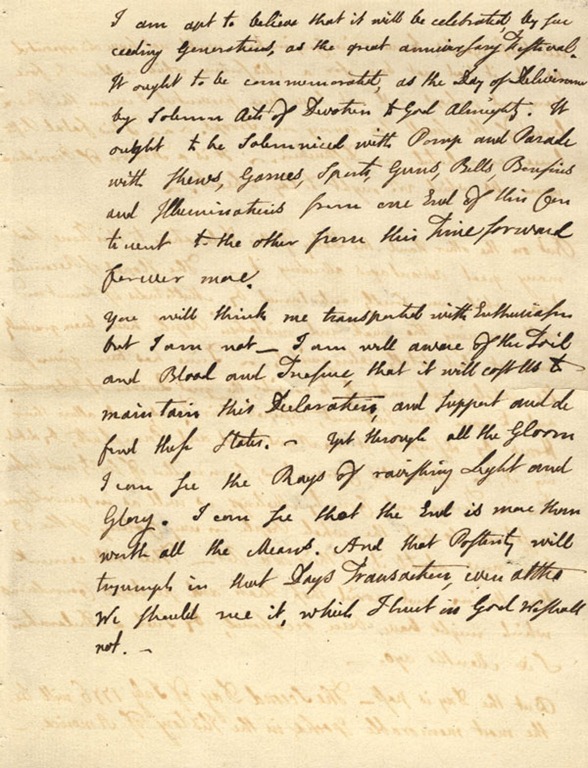
I am apt to believe that it will be celebrated, by succeeding Generations, as the great anniversary Festival. It ought to be commemorated, as the Day of Deliverance by solemn Acts of Devotion to God Almighty. It ought to be solemnized with Pomp and Parade, with Shews, Games, Sports, Guns, Bells, Bonfires and Illuminations from one End of this Continent to the other from this Time forward forever more.
You will think me transported with Enthusiasm but I am not. — I am well aware of the Toil and Blood and Treasure, that it will cost Us to maintain this Declaration, and support and defend these States. — Yet through all the Gloom I can see the Rays of ravishing Light and Glory. I can see that the End is more than worth all the Means. And that Posterity will tryumph in that Days Transaction, even altho We should rue it, which I trust in God We shall not.
(See here for more transcriptions of the John and Abigail correspondence)
The National Anthem and Yankee Doodle
Let’s watch Laurie Anderson explain the merits of the National Anthem and its B-side, “Yankee Doodle”:
Let’s look at the “Yankee Doodle” lyrics:
- Yankee Doodle went to town,
- Riding on a pony;
- He stuck a feather in his hat,
- And called it macaroni
The term “macaroni” refers to a hair style current in 18th century Britain. Here is an exhibit from Yale on the hairstyle. Here are some macaronis:
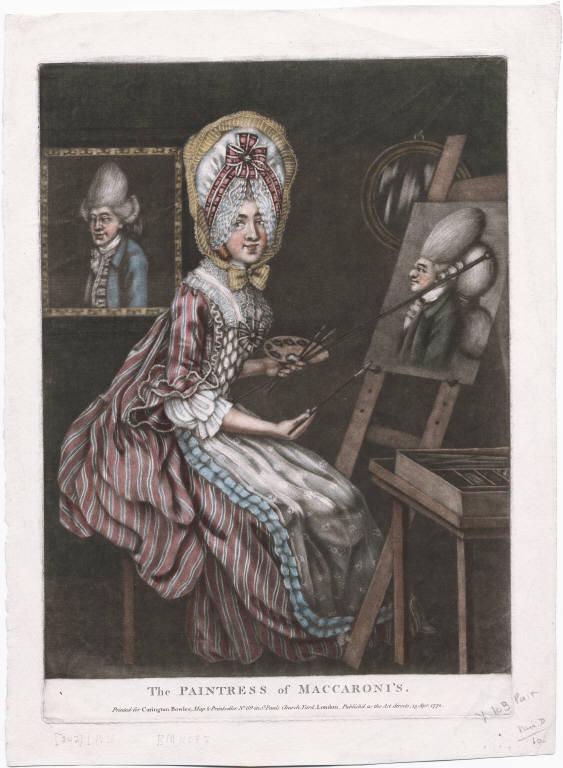

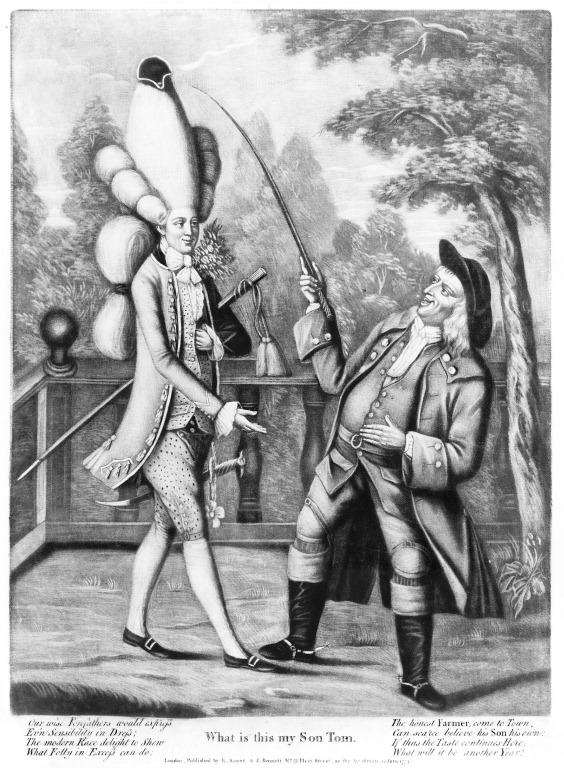
Thank goodness Yankee Doodle just stuck a feather in his hat rather than visiting the hair salon.
biblical studies blog carnival
Michael Kok has up the latest “Biblical Studies Carnival” and links to a number of interesting articles. He’s kindly included some links to a few BLT articles; thanks!
Junia in the manuscripts
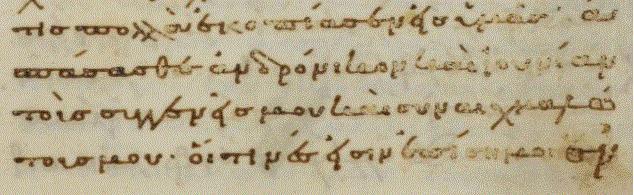 Even though it is exciting to see the real thing, it really is better, much better to be able to view manuscripts online. Now, I can sit in any coffee shop and practice reading Byzantine Greek. This is Romans 16:7, a familiar passage, starting with the last letter of the first line.
ἀσπάσασθε Ἀνδρόνικον καὶ Ἰουνίαν
τοὺς συγγενεῖς μου
καὶ συναιχμαλώτους μου,
οἵτινές εἰσιν ἐπίσημοι ἐν [τοῖς ἀποστόλοις,
οἳ καὶ πρὸ ἐμοῦ γέγοναν ἐν Χριστῷ.]
This is from MS 5116 in the British Library, where it has been since the latter part of the 18th century. (Also mentioned in this book published in 1802.)
Belonged to the monastery of Constamonitou on Mount Athos (ff 162-165): + Ἡ παροῦσα βίβλος ὑπάρχει ἐκ τῆς μονῆς τοῦ Κώνσταντος καὶ εἴ τις ἀποξενώσει αὐτὴν ἐχέτω τὰς ἀρὰς τῶν τιη’ (πατέρων) καὶ τοῦ ἁγίου Στεφάνου. Νεόφυτος ἱερομόναχος (monocondyle? signature). Belonged to the physician and collector Richard Mead (1673-1754), and to the physician, classical scholar and collector, Anthony Askew (1722-1774). Purchased at Askew’s sale, 15 March 1785.
In order to read this easily, you really need to look at Greek Letter Forms and Letter Combinations. It’s even better to look at the convoluted fonts in Erasmus 1519 and 1521 and Stephanus 1550 printed Greek New Testaments. 
 It’s hard to believe that these were fonts and not calligraphy!
 And if you want to complain that I am writing about Junia again, it is a concession, to make these fonts easier to read. We know what to expect, so the foreign letters make some sense. The character that resembles a triple omega in ἀσπάσασθε is actually a sigma and pi combination. The pi looks like an omega with a line across the top. However, in the word ἀποστόλοις, in the second image, the pi has the shape we have come to expect with the omicron attached as a subtle loop. But then the sigma and tau are combined in the stigma.
The Evangelical Text Criticism blog has just announced a NT Manuscript app. I have downloaded it but don’t find it that useful as it doesn’t offer enough information about the contents of the manuscripts. I think I must be missing something. I don’t know the manuscripts by number well enough to pick one out. Also from the British Library, here is Junia in the Codex Sinaiticus, at the end of the second line. (A new book on the Codex Sinaiticus advertised here.) In this manuscript the final nu is represented by the superline. 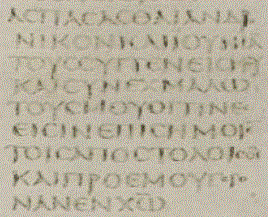
One final detail is the annotation which accompanied Erasmus text and Latin translation. 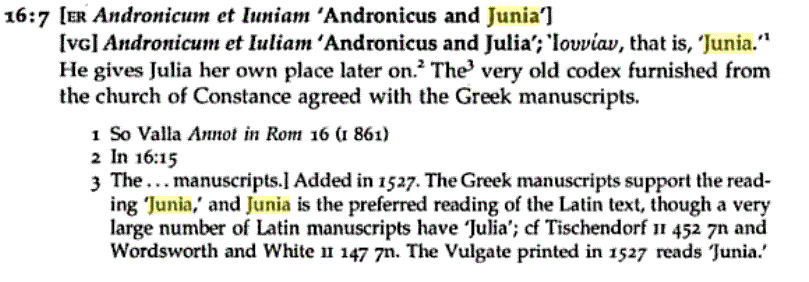

Grammar Girl? “Dipthong”? Can we revoke her license?
 While browsing on the Web the other day, I came across across a “Grammar Girl” post on “w” being used as a vowel. This is always a fun topic to me, since words such as “cwm” that entered English through Welsh use “w” as a vowel.
Unfortunately, this particular “Grammar Girl” post (which was guest written by Sal Glynn, who has a biography posted identifying him as an editor at Ten Speed Press”) was full of fundamental errors in linguistics. Even worse, it was hardly grammatical. Among the most painful of errors was the repeated misspelling of “diphthong” (with two “h” characters) as “dipthong” (with one “h” – as if was was about to take a dip in a thong). This misspelling occurred once in a section heading:
What Is a Dipthong?
 The worst thing about spelling “diphthong” as d-i-p-t-h-o-n-g is that when one spells it with only one “h,” it almost always indicates a mispronunciation. “Diphthong” is pronounced, according to the OED, as /ˈdɪfθɒŋ/ in IPA. As is usual in American pronunciation, /ɔ/can be substituted for /ɒ/, so /ˈdɪfθɔŋ/ is also an acceptable pronunciation. But someone who spells the word as “dipthong” is probably mispronouncing it as /ˈdɪpθɔŋ/. (In you do not read IPA, think [dif-thawng] and [dip-thawng].)
Now all of this is normally forgivable (everyone misspells and mispronounces words from time to time), but this was supposed to be an expert. How can we tak seriously a “Grammar Girl” post when it (a) is not grammatical; and (b) is not written by a girl?
I wish grammarians were licensed by the state so we could revoke “Grammar Girl’s” license.
Happy birthday Tom Stoppard
Today is Tom Stoppard’s 75th birthday. I consider him to be one of the major British playwrights – while the post-war period saw a number of talented British playwrights (a very incomplete list: Alan Ayckbourn, Noël Coward, Caryl Churchill, Pam Gems, Hanif Kureishi, Mike Leigh, Harold Pinter, Dennis Potter, J. B. Priestly), Tom Stoppard is by far my favorite recent British playwright.
Tom Stoppard’s plays – which while always entertaining, are certainly full of word-play and literary references – are a testament to tradition of excellent writing outside the traditional educational stream. Stoppard, like Shakespeare and several Nobel Prize literature prize winners (including Joseph Brodsky, Winston Churchill, William Faulkner, Harry Edmund Martinson, George Bernard Shaw, and José Saramago) does not have a college degree. Instead, Stoppard received his training as a writer working as a journalist.
Works by Stoppard such as Rosencratz and Guildenstern are Dead, Jumpers (which seems to me to be a direct descendent of Aristophanes’s The Clouds), Every Good Boy Deserves Favor, Arcadia, and The Coast of Utopia trilogy show a stunning range of knowledge. Arcadia, in particular, is in the running as the single best English language play since Waiting for Godot.
Not every production by Tom Stoppard is a complete hit (Stoppard has been called in more than once to rescue mediocre Hollywood scripts, such as Shakespeare in Love), but by-and-large, his output has been of amazingly high quality.
Nathan Englander’s Haggadah redux
We talked about Nathan Englander’s New American Haggadah way back in February and March.
The latter post attracted 42 comments; in the very last comment co-blogger J. K. Gayle pointed to a review by Leon Wieseltier from the Jewish Review of Books. But I must have been busy at the time J. K. made his comment, because I didn’t actually read Wieseltier’s review until just today. Shame on me.
I read Wieseltier’s review today. It is remarkably harsh. Wieseltier not only complains about the quality of Englander’s prose and translation; Wieseltier also complains that Englander betrays the Jewish tradition of learning of itself; and he pointedly quotes I. L. Peretz: “It is not enough to speak Yiddish, you must have something to say.”
I read Wieseltier’s review today because today I saw a discussion of it in the letters to the editor section of the latest Jewish Review of Books. Several readers take Wieseltier to task for his shrillness, but Wieseltier is unrepentant: “Presenting a new version of a central text of Judaism, and making large claims for its superiority to previous versions, is not a trifling matter, and the standard by which it must be judged is not Maxwell House, unless of course everything Jewish is to be prized mainly for its ethnic cuteness. Nathan Englander is no more ‘defenseless’ than any writer or translator who puts a book before the public. Indeed, too many American Jewish readers are defenseless against his mistakes and misrepresentations.”
Perhaps the most striking part of Wieseltier’s response is his lengthy response to Gilah Goldsmith, who explains that she has relatively little knowledge of Judaism and who finds Englander’s translation “refreshing and thought-provoking.” Wieseltier responds (emphasis added):
Gilah Goldsmith’s letter includes two sentences that take my breath away and make me tremble for my brethren. The first is this: “Of course, as a woman, it would have been rare at any time in Jewish history for me to have known much more than I do now.” This, after she has admitted to "no knowledge of Hebrew.” But she is not living then, she is living now. If, now, after the re-establishment of Hebrew as a living language, and in a Jewish community in which Hebrew instruction is not too hard to find, a Jewish woman, a woman who takes pride in her Jewishness, knows no Hebrew, then she has only herself to blame. It can only be because she does not wish to know Hebrew, and believes that as a Jew she can do without it. Misogyny, religious or secular, is no longer what stands in her way. Goldsmith now excludes herself with the memory of exclusion. This is a chosen exclusion.
Like many American Jews, Goldsmith is very charitable about her Jewish shortcomings. And so she writes, in her second unforgettable sentence: “Admittedly Judaism lite, but mine such as it is.” I wonder if she is so blithe and self-forgiving about her other passions and obligations. Against such relaxation, I would remind her of the following. This deep and beautiful tradition of ours has made it all the way to us after a journey of over two thousand years. It was not inevitable that this would be so. It was an agonizing journey. Many forces tried to prevent the tradition from surviving this far, or at all. But the persecutions of the Jews did not prevail against the preservationist genius of the Jews. They preserved their tradition because they prized it, not because they were persecuted. We are the custodians of what they, our ancestors, recent and ancient, preserved. We hold it in trust for those who will come after us. We claim to revere it, and to be its beneficiaries. So by what right, by what arrogance and ingratitude, do we condemn large portions of it, with our ignorance and our indifference, to oblivion? The Jewish tradition, the Jewish God too, is not owed blind obedience, even according to some canonical accounts of Jewish faith: Over the centuries many elements of the tradition have been rejected, or made obsolete by internally justified reform. But you cannot reject or reform what you do not know. Dissent must be literate for it to have a strong claim on the inherited ways. Otherwise it is just glibness or scorn. The stubborn historical truth is that the primary instrument of Jewish preservation and Jewish development has been Jewish knowledge, attended (but not always) by Jewish practice. So “Judaism lite” is Judaism weightless, and losing gravity; Judaism attenuated and abandoned; our very own race to the bottom. I would not boast about it.
While I cannot agree with Wieseltier’s astringent tone, I do think he has an important point, and one that can be universalized. Religion is not merely a matter of ethnicity; but demands its followers to master a certain body of knowledge. It is not enough to follow the fashion of a pop singer, and merely wear a crucifix or Star of David on a necklace (or a red string on the wrist.) It requires mastery and learning.
I was reminded of a line one P. G. Wodehouse’s Jeeve’s novels, Joy in Morning, quoted this last weekend in an amusing column on “Is Philosophy Literature?” In it, Bertie Wooster runs into one of his (many, many, many) near-miss fiancées, Florence Craye, who is a serious author. They run into each other in a book shop (Craye is surprised that Wooster even visits one, “of all places” and asks “What are you buying? Some trash, I suppose.” and Wooster replies
“Oh, rather,” I said, with an intellectual flick of the umbrella. “When I have a leisure moment, you will generally find me curled up with Spinoza’s latest.”
If our goal is merely to impress Florence Craye, it may be enough to buy a copy of a book by “Pop Spinoza.” But if we actually want to engage him, we need to read his books!
Your Kindle reads you
Here is a disturbing story about how iPads, Kindles, Nooks, and other eReaders monitor your reading behavior and report it back.
Excerpt:
For centuries, reading has largely been a solitary and private act, an intimate exchange between the reader and the words on the page. But the rise of digital books has prompted a profound shift in the way we read, transforming the activity into something measurable and quasi-public.
The major new players in e-book publishing—Amazon, Apple and Google—can easily track how far readers are getting in books, how long they spend reading them and which search terms they use to find books. Book apps for tablets like the iPad, Kindle Fire and Nook record how many times readers open the app and how much time they spend reading. Retailers and some publishers are beginning to sift through the data, gaining unprecedented insight into how people engage with books.
In a related feature, interactive fiction publisher Coliloquy (yes, it really does have that spelling) describes the “perfect man,” as divined from monitoring its romance-novel readers, but that description is simply too silly to quote.
The Dead Sea Scrolls exhibit in Fort Worth
I have no plans to go to Texas this year, and more’s the pity, because there appears to be an above-average Dead Sea Scrolls exhibition at Southwestern Baptist Theological Seminary. The part of the exhibition that impresses me is the line up for the accompanying lecture series, featuring Larry Schiffman, an all-star team from Hebrew University (Emanuel Tov, Yosef Garfinkel, Shalom Paul, Amnon Ben-Tor) and the director general of the Jordanian Department of Antiquities. I can only hope that some of the lectures will be recorded for those of us unable to make it.
Also on display are the Gabriel Stone and St. John’s Bible.
Jim Davila properly questions a newspaper account that claims that the exhibition will include “the Isaiah scroll, the Habakkuk Commentary, the Manual of Discipline, and the full Copper Scroll” – in fact, a press release informs us that those particular items are all facsimiles.


 BLT
BLT 