Men without hats: Anachronism in Daniel 3:21
May 23, 2012
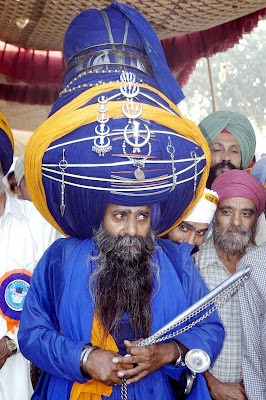 The footnote I quoted here got me wondering how different translations handle וְכַרְבְּלָתְה֖וֹן in Daniel 3:21. Sadly many of them use “hats” – although we can be sure that the headgear worn in the Babylonian Captivity most certainly was not a hat.
- hats: ESV, GW, KJV, NAB (1970 & 2011)), NEB, NJPS, NRSV, RSV.
- caps: D-R, GNT, NASB95.
- turbans: Amplified, Lexham, NCV, NET, NIrV, NIV (1984 & 2011), NLT, NKJV, TNIV, YLT.
- headdresses: Inclusive, REB.
- Other choices:
CEV (“all of their clothes still on, including their turbans”),
HCSB (“head coverings [footnote: the identity of these articles of clothing is uncertain]”),
NJB (“headgear”). - Avoids the issue:
ASV (“their hosen, their tunics, and their mantles, and their other garments”),
CEB (“still dressed in all their clothes”),
Darby 1890 (“their hosen, their tunics, and their cloaks, and their garments”),
Emphasized (“their trousers、 their tunics, and their cloaks”),
JPS 1917 (“their cloaks, their tunics, and their robes, and their other garments”),
Living Bible (“fully clothed”),
Message (“fully dressed from head to toe”).
7 Comments
leave one →


 BLT
BLT 
I was hoping that you would provide an answer 🙂
Funny, the LXX translators (both in the Theodotion translation and the Old Greek) use for this Hebrew noun the Hellene, τιάρα (transliterated tiara). Sadly, Timothy McLay translating the Greek into English for the NETS renders the Hellene into English as “hats.” Brenton, for his Englishing of the LXX, has “caps.” For Xenophon’s uses of τιάρα (tiara), English translators of his Greek have tended to use either use “tiara” or “turban.” For Plato’s Republic, I’ve only seen English translators call it “tiara.” For Chariton’s first-century Greek novel Callirhoe, G. P. Goold translates τιάρα as “turban” and includes the footnote, “The distinctive headdress of the Persian kings (cf. Xenophon, Cyropaedia 8.3.13); later affected by Alexander”). Seems the LXX translators of the Hebrew (if not their English translators) did just fine.
Jerry Jacques — thanks for visiting — I like your blog.
Kurk — true, the LXX translators did fine — but was it even theoretically possible for them to make a mistake here? Is there a word in Koine for “hat”? (I now cannot shake the mental image of the three men wearing Princess-Di style tiaras.)
Note the theory of Chaim Halberstam (the founder of the Sanz Chassidic dynasty) that Abraham wore Chassidic garb. According to Halberstam, the KJV translators made the right decision, because each person sees the great figures of the past at his or her own level.
Theophrastus — the LXX translators did not make a mistake. The word they chose was not Greek really but a Hellene transliteration of a word that is a Persian word. It’s rare in the literature before the Septuagint; and each and every time it’s used, the careful writers give allusion to Persian royalty wearing the τιάρα. See Xenophon’s Anabasis (Book II chapter 5, section 23, line 3) and Cyropaedia (Book III ch1 sect. 13 line 2 and Book VIII ch3 sect. 13 lines 2 and 6); and look at Plato’s Republic (Book VIII sect. 553c line 6).
And it seems the word, further transliterated into English as tiara retained this Persian meaning purely for a long time. The OED initial definition is as follows:
You are correct that “hat” is an anachronism, that Koine may not have had this sort of generic headdress word that our English does. I don’t know my ancient Greek phrase for hats history. I do know that there were some hats of various types in Greece way back, like this one:
http://en.wikipedia.org/wiki/Petasos
All of this reminds me of the children’s book Go Dog Go! by P. D. Eastman, in which the characters ask one another, “Do you like my hat?!”