How Chinese poetry and biblical poetry sound good in English
When Theophrastus observed that in America, all-too-commonly, “Chinese poetry is taught as literature, and Biblical poetry is taught as semantics,” he also said, “This notion that sound is at the heart of poetry is a point that should be emphasized in Biblical studies.” These are important insights. The best translators understand how Chinese poetry and biblical poetry can sound good in English. Such translators include Tony Barnstone, Chou Ping, and Everett Fox. They help us out. They pay attention to the literary signals of sound and the meaningful effects of poetry.
They even treat us to clear explanations and wonderful illustrations of their own practice of translation. For example, below are two excerpts that provide us with expert insights. Pay attention to the focus on the sounds, to the significance of the signs of sound in the translated texts as illustrations.
The first excerpt is from the “Preface” of Tony Barnstone’s and Chou Ping’s The Anchor Book of Chinese Poetry: From Ancient to Contemporary, The Full 3000-Year Tradition.
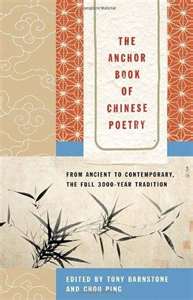
— quote —
In these thoughts on translation, I [Barnstone] wish to discuss ways I’ve found of negotiating between Chinese and English-language poetic paradigms, and to touch on the aspects of English that have proved compatible with the Chinese poem, which has been a part of Western poetic traffic since the early years of modernism. . . . There is always something ephemeral about the knowledge behind a poem, about the inspiration that creates it — or that creates a translation. To find a poem in translation we need to discover what I call “the poem behind the poem.” Sometimes we can’t find it just by looking; we also have to see. Sometimes we can’t find it by trying; it comes to us while we’re doing something else.
Let’s take as an example the following poem, “River Snow” by Liu Zongyuan — translated by Chou Ping and me. But before discussing it, let’s take a moment to read it out loud, slowly. Empty our minds. Vizualize each word.
A thousand mountains. Flying birds vanish.
Ten thousand paths. Human traces erased.
One boat, bamboo hat, bark cape — an old man
alone, angling in the cold river. Snow.
“River Snow” is considered a prime example of minimum words/ maximum message and has been the subject of numerous landscape paintings. It is terrifically imagistic; the twenty Chinese characters of the poem create a whole landscape, sketch an intimate scene, and suggest a chill, ineffable solitude. To get this poem across in translation, we strove to reproduce the sequential way the characters unfold in the reader’s mind. The syntax is particularly important because it is perfectly constructed. We walk into this poem as if walking into a building, and the spaces that open up around us an the forms that revise themselves at each step unfold according to the architect’s master plan.
The first two lines create a fine parallelism: birds passing though the sky leave no trace, just as human traces are effaced in the mountain paths. It makes me think of the Old English kenning for the sea: “whale path.” Here the sky is a bird path. In the second line, it’s clear that the snow is the active agent in erasing humanity from the natural scene, yet snow is never mentioned. After the last trace of humanity disappears with the word “erase,” a human presence is rebuilt in this landscape, character by character, trace by trace: “One boat, bamboo hat, bark cape” and — the sum of these clues — “an old man.” These first two lines sketch a painterly scene: the vast emptiness of the sky above and the snowy solitude of the landscape below have the same effect on the reader as a glance at a Chinese landscape painting. And then the tiny strokes that create a man in the third line direct our imagination deeper into the poem, as if we had discovered a tiny fisherman’s figure on the scroll. The next line tells us what the old man is doing. He is alone and fishing in the cold river. The Chinese word for fishing is “hooking,” so we used “angling” for its specific meaning of “fishing with a hook.” We see the man fishing the river, almost fishing for the river. Silence. We take in the last character, which sums up the entire poem: “Snow.”
Snow is the white page on which the old man is marked, through which an ink river flows. Snow is the mind of the reader, on which these pristine signs are registered, only to be covered with more snow and erased. the old man fishing is the reader meditating on this quiet scene like a saint searching himself for some sign of a soul. The birds that are absent, the human world that is erased, suggest the incredible solitude of a meditating mind, and the clean, cold, quiet landscape in which the man plies his hook is a mind-scape as well. Thus, there is a Buddhist aspect to the poem, and Liu Zongyuan’s old man is like Wallace Steven’s “Snow Man,” whose mind of winter is washed clean by the snowy expanse. He is “the listener, who listens in the snow, / And, nothing himself, beholds / Nothing that is not there and the nothing that is.”
“River snow” is a perfectly balanced poem, a tour de force that quietly, cleanly, easily creates its complexly simple scene. To merely paraphrase it in translation is to ignore the poem behind the poem. The translator must discover the poem visually, conceptually, culturally, and emotionally, and create a poem in English with the same mood, simplicity, silence, and depth. Each word is necessary. Each line should drop into a meditative silence, should be a new line of vision, a new revelation. The poem must be empty, pure perception; the words of the poem should be like flowers opening, one by one, then silently falling. As William Carlos Williams was fond of saying, a poem is made up of words and the spaces between them.
If this technique is taken to extremes [by the poet or the poet’s translator], it can create a poem that sounds too choppy. The magical economy of “River Snow” lies in the unfolding of visual clues in a meditative sequence of discrete images, but with too many dashes, colons, or periods, the poem can seem fragmented. Alternatively, a translation that fills in the gaps between images can seem wordy and prolix, with prepositions and articles that make the lines fluid but dilute them in the process. The addition of a few parts of speech or an unfortunate choice of punctuation can significantly alter the translation and affect the reading experience.
— end quote —
The second excerpt is from the “Translator’s Preface” of Everett Fox’s The Five Books of Moses : Genesis, Exodus, Leviticus, Numbers, Deuteronomy : A New Translation With Introductions, Commentary, and Notes.
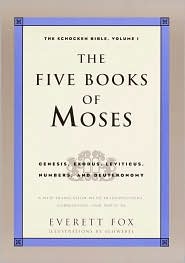
— quote —
This translation is guided by the principle that the Hebrew Bible, like much of the literature of antiquity, was meant to be read aloud, and that consequently it my be translated with careful attention to rhythm and sound. The translation therefore tries to mimic the particular rhetoric of the Hebrew whenever possible, preserving such devices as repetition, allusion, alliteration, and wordplay. It is intended to echo the hebrew, and to lead the reader back to the sound structure and form of the original. . . .
One cannot suggest that the Bible is a classic work of oral literature in the same sense as the Illiad or Beowulf. It does not employ regular meter or rhyme, even in sections that are clearly formal poetry. The text of the bible that we possess is most likely a mixture of oral and written materials from a variety of periods and sources, and recovering anything resembling original oral forms would seem to be impossible. This is particularly true given the considerable chronological and cultural distance at which we stand from the text, which does not permit us to know how it was performed in ancient times. . .
So the Bible, if not an oral document, is certainly an aural one; it would have been read aloud as a matter of course. But the implications of this for understanding the text are considerable. The rhetoric of the text is such that many passages and sections are understandable in depth only when they are analyzed as they are heard. Using echoes, allusions, and powerful inner structures of sound, the text is often able to convey ideas in a manner that vocabulary alone cannot do. A few illustrations may suffice to introduce this phenomenon to the reader; it will be encountered constantly throughout this volume.
Sound plays a crucial role in one of the climactic sequences in Genesis, Chapters 32-33. Jacob, the protagonist, has not seen his brother Esau for twenty years. Now a rich and successful adult, he is one his way back to Canaan after a long exile. He sends messengers to forestall Esau’s vengeance — for twenty years earlier, Jacob had stolen the birthright and the blessing which Esau felt were rightly his own. when jacobe finds out that his brother “is already coming . . . and four hundred men are with him” (32:7), he goes even further, preparing an elaborate gift for Esau in the hopes of appeasing his anger. The text in vv.21-22 presents Jacob’s thoughts and actions (the translation is taken from the New English Bible):
for he thought, “I will appease him with the present that I have sent on ahead, and afterwards, when I come into his presence, he will perhaps receive me kindly.” So Jacob’s present went on ahead of him. . . .
This is an accurate and highly idiomatic translation of the Hebrew, and the reader will notice nothing unusual about the passage as it reads in English. The sound of the Hebrew text, on the other hand, gives one pause. it is built on variations of the word panim, whose basic meaning is “face,” although the Hebrew uses it idiomatically to encompass various ideas. (Note: in Hebrew, the sound p is pronounced as ph under certain circumstances.) If the text is translted with attention to sound, its quite striking oral character emerges (italics mine):
For he said to himself:
I will wipe (the anger from) his face (phanav)
with the gift that goes ahead of my face; (le-phanai)
afterward, whin I see his face, (phanav)
perhaps he will lift up my face! (phanai)
The gift crossed over ahead of his face. . . . (al panav)
Comparison of these two English versions is instructive. In the new English Bible, as in most other contemporary versions, the translators are apparently concerned with presenting the text in clear, modern, idiomatic English. For example, they render the Hebrew yissa phanai as “receive me kindly.” The N.E.B. translates the idea of the text; at the same time it translates out the sound by not picking up on the repetition of panim words.
What does the reader gain by hearing the literalness of the Hebrew? And what is lost by the use of its idiomatic meaning? As mirrored in the second translation, it is clear that our test is signaling something of significance. The motif of “face” (which might be interpreted as “facing” or “confrontation”) occurs at crucial points in the story. The night before his fateful meeting with Esau, as he is left to ponder the next day’s events, Jacob wrestles with a mysterious stranger — a divine being. After Jacob’s victory, the text reports (32:21):
Yaakov called the name of the place: Peniel / Face of God,
for: I have seen God,
face to face,
and my life has been saved.
The repetition suggests a thematic link with what has gone before. One could interpret that once the hero has met and actually bested this divine being, his coming human confrontation is assured of success. Then upon meeting Esau at last, Jacob says to him (33:10):
For I have, after all, seen your face, as one sees the face of God,
And you have been gracious to me.
It could be said that in a psychological sense the meetings with divine and human adversaries are a unity, the representation of one human process in two narrative episodes. This is accomplished by the repetition of he word panim in the text.
The above interpretation depends entirely one sound. Once that focus is dripped, either through the silent reading of the text or a standard translation, the inner connections are simply lost and the reader is robbed of the opportunity to make these connections for himself. Clearly there is a difference between translating what the text means and translating what it says.
— end quote —
Norton does King James
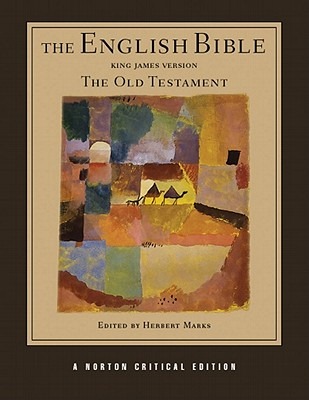
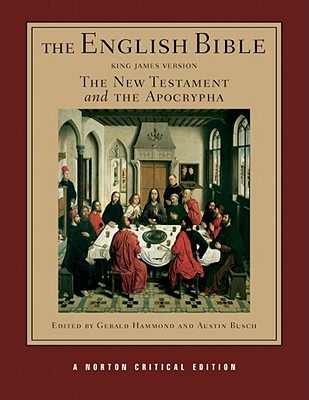
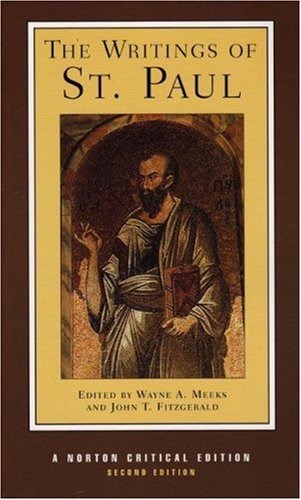
Although I have not seen it yet, I am cautiously optimistic about the new Norton Critical Edition of the English Bible (KJV) forthcoming later this year (ISBN 039397507X and 0393927458). Perhaps you are familiar with the Norton Critical Edition series — it is a standard series of annotated volumes used in literature classes. The editors working on these volumes are top-notch, and the blurbs are impressive at least:
Robert Alter: “The Norton Critical Edition of The English Bible, King James Version, appearing on the four hundredth anniversary of the great translation, is a real gift to the English-reading world, making this classical version freshly accessible. The introductions to the different biblical books are apt and often illuminating; the generous annotation clarifies archaic terms, corrects translation errors, and provides insight into the texts; and the appended critical and historical materials give readers a wealth of relevant contexts for both Old and New Testament.”
Harold Bloom: “Herbert Marks demonstrates in this work that he is now the foremost literary exegete of the King James Bible and of the Hebrew Bible that it translates.”
If the work is up to the standard of the better volumes in the Norton Critical Edition series, I expect this will become the standard secular teaching text on the King James Bible, and because of its explanation of archaic terms and phrases, may prove useful for ordinary readers as well.
(I should mention that additional materials and notes included in the Norton Critical Edition of the Writings of St. Paul [ISBN 0393972801] make it the best secular one-volume guide to the subject, although it uses the TNIV translation of the Epistles and Acts and Elliott’s translations [ISBN 0198261810] of the apocryphal works related to Paul.)
(Reposted from here.)
Why is Chinese poetry better taught than Biblical poetry in America?
Short answer: because Chinese poetry is taught as literature, and Biblical poetry is taught as semantics.
But I am getting ahead of myself. I want to start when I was a child. I loved to read, and eventually, my eyes came across some collections of Chinese poetry. I have to say that I did not appreciate it. Sure, there was the occasional poem that I could appreciate, like the wonderful (and slightly naughty) 18th century Yuan Mei (袁枚) poem quoted by Kafka in his letters to Felice Bauer:
In the Dead of Night
Bent over my book in the cold night I forgot to go to bed in time.
The perfumes of my gold embroidered quilt have evaporated already,
the fireplace is extinct.My beautiful mistress, who hitherto has struggled to control her wrath,
snatches away the lamp,And asks: Do you know how late it is?
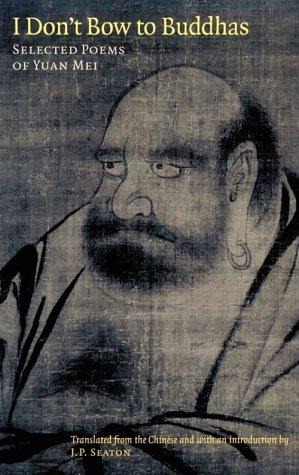 But this poem is super-accessible and human, like so much of the poetry of Yuan Mei. Most Chinese poetry was simply inaccessible to me – I couldn’t understand what the excitement was.
Then, as a young adult, I made a serious study of Japanese and Chinese. And it began to come together for me. And today I am simply in awe in the learning materials available for these languages. A spectacular introductory volume is edited by Zong-Qi Cai (Urbana-Champaign) and published by Columbia University Press: How to Read Chinese Poetry.
Let’s start with some of the advantages. First, this is an unusual textbook, with chapters from seventeen different scholars (there are eighteen chapters, but Cai wrote two of them) including Robert Ashmore (Berkeley), Grace Fong (McGill), William Nienhauser (Bloomington), Wendy Swartz (Columbia), and Paula Varsano (Berkeley). This is already an advantage, in the same way that a classic Lecutra Dantis (exposition of Dante’s hundred cantos in the Divine Comedy) compiled from multiple authors allows us to see the many different approaches to poetry.
More important, each poem is presented multiple ways – typically in Chinese characters, English translations, Romanized pronunciation (which includes when appropriate [e.g., recent-style shi poems and the end rhymes of ci poems] the entering-tone characters typical of Middle Chinese and still found in Hakka and Cantonese), as mp3 audio-files, a character-for-word transliteration, and a stress pattern (different from the tonal pattern indicated in the Romanization).
In some cases, there is more than one translation of a given poem, allowing one to see a contrast of the translator’s art – thus Sui Palace is translated by Ashmore:
Purple Spring palace halls lay locked in mist and haze;
he wanted to take the “ruined city” as a home of emperors.
The jade seal: if not because it returned to the sun’s corner,
brocade sails: they would have arrived at heaven’s bounds.
To this day, the rotting grass is without fireflies’ flash;
through all time, the drooping willows have sundown crows.
Beneath the earth, if he should meet the Latter Lord of Chen,
would it be fitting to ask again to hear “Flowers in the Rear Courtyard”?
and also by Cai:
Purple Spring’s palace halls lay locked in the twilight mist;
He wished to make the Overgrown City a home of emperors.
The jade seal: if it had not somehow become the Sun-horn’s,
Brocade sails, then, would have reached heaven’s end.
To this day the rotten grass is without fireflies’ flash,
From antiquity lie the drooping willows, with the sunset crows.
Beneath the earth, if he would run into the Latter Lord of Chen,
How could it be fitting to ask about “Rear Courtyard Flowers”?
 The style of the book is not rushed, with full and careful explanation – allowing coverage of about 143 poems in 400 pages. As Lucas Klein notes in mostly favorable review, the book does give short shrift to both translation traditions (thus, Ezra Pound is only mentioned once in the book, and Sanskrit poetics are only mentioned as semantics, and not in terms of form.) But as an introduction, this book equips the reader – even the reader who does not have a background in Chinese language, to begin to understand Chinese poetry.
In particular, this volume recognizes that poetry is not simply about “meaning” – it is also about form, sound, and cultural interaction. By integrating all of these elements, a foreign reader begins to sense what is going on in Chinese poetry.
If you have ever attended Italian (or any other foreign) opera, you may understand what I mean. Even if you speak no Italian, it immediately becomes clear that sound of the words and the meter is as important as their meaning. By presenting poems in so many different forms: Chinese characters, Romanization, English translation, audio files, stress maps, and transliteration, the book enables the reader – no matter what her background in Chinese language, to grasp much of what is going on.
This notion that sound is at the heart of poetry is a point that should be emphasized in Biblical studies. The Masoretic text of the Hebrew Bible includes a full cantillation – something that you’ve immediately notice if you have ever attended a Sabbath service at a synagogue serving observant Jews. It is hard not to be moved by the cantor’s recitation – even if you have only a limited understanding of the underlying Hebrew. Yet most attempts at Biblical translation (or expositions of Biblical texts) ignore issues of cantillation except in those limited cases where it sheds light on the semantics of the Hebrew. The underlying belief is that somehow all that counts is what the Bible “means” – not how it sounds. And yet, to the Masoretic scribes, the “sound” of the Bible was so important that they devoted great energy to recording it precisely.
Think about the book that you learned from Psalms (or Job, or any other poetic book) from. Did it include Hebrew, an English translation, a Romanization, a stress map, and linked audio files? Don’t you think that might have aided you in learning Biblical poetry?
I wish that there were guides to Biblical poetry that were as good as Cai’s introduction to Chinese poetry. I am not arguing here for an agnostic reading of the Bible – rather I am arguing for a reading of the Bible as true literature in addition to its religious meaning. Doesn’t David-the-King deserve to be treated as well as Yuan Mei?
not overruling the man
Theophrastus has introduced a discussion of 1 Tim. 2:12 already, so I thought I would take up this passage with a post rather than just a comment.
I am not too worried about how to translate 1 Tim. 2:12, but fall back on the Vulgate in this case. It has the advantage of being a translation backed by tradition, not always a bad thing. Oh, and not motivated by feminism either,
Docere autem mulierem non permitto, neque dominari in virum: sed esse in silentio.
But to teach I permit not unto a woman, nor to have dominion over the man, but to be in silence. Douay Rheims 1610.
Jerome has used dominari in two other contexts so we have some idea what he meant by it. Here is 1 Peter 5:3 and Gen. 3:16,
neque ut dominantes in cleris, sed forma facti gregis ex animo.
neither as “overruling” the Clergie, but made examples of the flock from the hart. DR 1582
et sub viri potestate eris, et ipse dominabitur tui.
thou shalt be under thy husband’s power and he shall have dominion over thee. DR 1609
It is hard not to suppose that the translators of the Douay-Rheims regarded “to have dominion” as a positive thing, and “overruling” as a negative thing. (I won’t suggest a feminist agenda for these translators.) A man could have dominion over a woman, but not the reverse. However, the “Clergie” is not to be overruled!
Just think what it would be like if 1 Tim. 2:12 had said that the woman was not to “overrule” the man. And should a man overrule a woman? What did they think on that score? The clergy is not to be overruled by the bishops (?), in spite of their relative positions, so why should a man overrule a woman?
I am becoming a little curious as to who translated the Douay-Rheims, and how they were able to suggest that the clergy should not be overruled. What was the power dynamic that this translation was intended to challenge or reinforce? I’d be interested in any ideas on this account.
My citations are from the facsimile version of the Douay Rheims, accessed through the Look Higher website, under “Historic Bibles (graphic.) One of the constants in my blogging has been, and will continue to be, to rediscover historic Bible translations and understand them within their context. And one of the benefits of group blogging is accountability, making sure that one’s references are reliable. That’s where the facsimile Bibles come in handy.
Happy Labor Day: Take on the Yoke
It’s Labor Day here in the USA. Here’s a little history from a US Department of Labor webpage.
And here’s a big notice from the Jewish Funds for Justice (JFSJ), “a national public foundation guided by Jewish history and tradition,” of a “Labor Day program, ‘Jewish Values at Work,’ [which] is a component of the nationwide Labor in the Pulpits program, in which thousands of Jewish, Muslim and Christian congregations participate.” The Labor Day program is a several-day study to focus on “domestic labor.” And it’s an applied, action-oriented study: “Some congregations are planning to follow up with house meetings, in which employers of housekeepers, nannies, and caregivers for aging or disabled relatives can share experiences and ideas for how to be sure that the traditional Jewish values of equity and respect are observed in these work relationships.” (I’m excited because this is going on in LA, where my eldest daughter is starting her undergraduate studies tomorrow.)
And here’s some Jewish Bible on labor, for Labor Day:
Come to me, all who labor and are sorely burdened,
And I will give you rest. [Jer. 31:25]
Take my yoke upon you and learn from me
Because I am gentle and humble in heart,
And you will find rest for your souls
For my yoke is easy and my burden is light.
You recognize these verses, don’t you? It’s Yeshua (aka Joshua of Nazareth) talking. It’s Mattityahu Chapter 11 verses 28, 29, and 30. It’s the English translation of the New Covenant by Willis Barnstone. Notice how the new is a development of the older, how Barnstone’s footnote [which I’ve put in brackets above] alludes to the Hebrew verse which in English can be rendered: “For I have satiated the weary soul, and every pining soul have I replenished.” The original Jewish concept of a Labor Day and of rest is very old indeed. In what we call today the 1st century, Yeshua’s articulation of this Hebrew concept was translated into written Greek. With some editing, that went something like this:
Δεῦτε πρός με πάντες οἱ κοπιῶντες καὶ πεφορτισμένοι,
κἀγὼ ἀναπαύσω ὑμᾶς.
Ἄρατε τὸν ζυγόν μου ἐφ’ ὑμᾶς καὶ μάθετε ἀπ’ ἐμοῦ,
ὅτι πρᾷός [or possibly πραΰς] εἰμι καὶ ταπεινὸς τῇ καρδίᾳ·
καὶ εὑρήσετε ἀνάπαυσιν ταῖς ψυχαῖς ὑμῶν.
Ὁ γὰρ ζυγός μου χρηστός,
καὶ τὸ φορτίον μου ἐλαφρόν ἐστιν.
The curious thing is what Mattityahu [aka ΜΑΤΘΑΙΟS, or possibly ΜΑΘΘΑΙΟS, aka Matthew] could have possibly intended by his twice used word, ζυγός [aka zygos or zugos]. He never uses it again, and none of the other gospel writers ever use it once in their gospels. John does use the word once for his Apocalypse [aka The Book of Revelation] in Chapter 6, verse 5 for a sort of instrument, like scales, to measure weight; or is that an entirely different Greek word? Luke uses the word in Acts 10:15 to translate something Peter said accusingly in Hebrew Aramaic to some of the Pharisees, who were putting this thing (i.e., the ζυγός) on the necks of the apprentices in the new Jewish sect, requiring penis circumcision of the men who were goyim converts. And Paul used the Greek word once in writing to the half-Greek and half-Jew Timothy, of whom he required circumcision, and Paul used the word once again in writing to the Greek readers in Galatia, both times referring, it seems, to the context of metphorical enslavement and freedom from slavery.
Quite literally, not so figurally or dynamically or necessarily functionally, certain LXX translators of Torah make the Hebrew word עֹל [aka al] mean the Greek word ζυγός. So maybe that’s what Mattityahu is doing too, and maybe Yeshua was saying something literally like the Hebrew Aramaic equivalent to the Hebrew which the gospel writer puts in literally equivalent Greek.
If we read Numbers 19:2 and Deuteronomy 21:3, then the image conveyed by the Hebrew and literally-equivalent Greek word is something like this:

If we read Genesis 27:40 and Leviticus 26:13 and Deuteronomy 28:24, then the image conveyed by the Hebrew and the literally-equivalent Hebraic Hellene is something a bit more human (but not at all humane), like this:


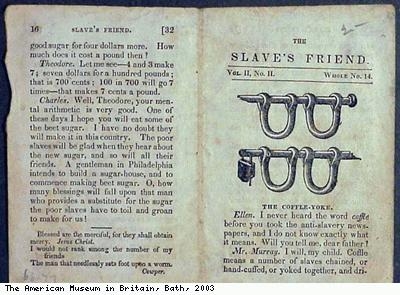
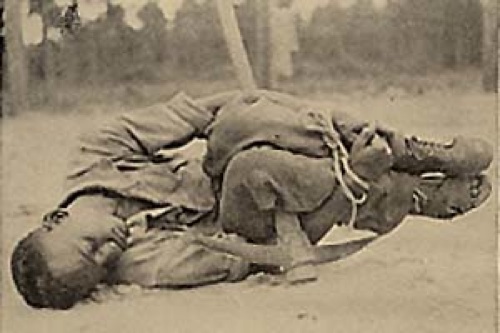
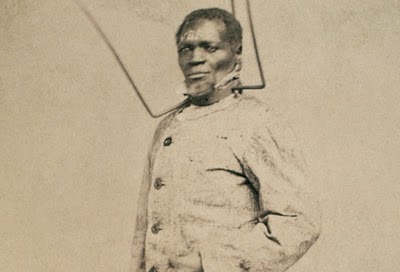

Some of these images you get by reading the admittedly horrible Greek translation from the original Hebrew (the translator himself admits it’s bad Greek for originally good Hebrew), when you read ΣΟΦΙΑ ΣΕΙΡΑΧ (aka SOPHIA SEIRACH or Wisdom of Sirach or Sirach or Siracides or Ecclesiasticus, translated by Jesus, aka Joshua or Yeshua, the son of Sirach). Take a look at Chapters 28, 33, 40, and 51.
In Chapter 51, verses 26 and 27, we see something a little more positive. For all of the misogyny and the slavery that one finds in Ecclesiasticus earlier, here we finally have a reprieve. What we see has that Labor Day feel with an emphasis on lightening the load, on helping one’s neighbor out, on giving and on having a bit of rest from time to time. It’s something suspiciously close to Mattitayhu’s translation of his Yeshua. The earlier Yeshua (aka the earlier Jesus) had translated into Greek something that Wisdom was saying. She, Wisdom herself, was saying,
τὸν τράχηλον ὑμῶν ὑπόθετε ὑπὸ ζυγόν,
καὶ ἐπιδεξάσθω ἡ ψυχὴ ὑμῶν παιδείαν.
ἐγγύς ἐστιν εὑρεῖν αὐτήν.
ἴδετε ἐν ὀφθαλμοῖς ὑμῶν ὅτι ὀλίγον ἐκοπίασα,
καὶ εὗρον ἐμαυτῷ πολλὴν ἀνάπαυσιν.
The Revised Standard Version bible translation team has rendered that Greek into this fairly literal English:
Put your neck under the yoke,
and let your souls receive instruction;
it is to be found close by.
See with your eyes that I have laboured little
and found myself much rest.
The cultural pattern here is an ancient one, a Jewish one, one that favors all humans, women and men, of all cultures, races, religions, and languages.
—-
Now, what if the translator from Hebrew or from Aramaic into Greek had not followed the original written or spoken words so literally.
Or what if the translator from Greek into English had not understood the Jewish literary contexts and the Hebrew history and the Semitic patterns of culture here?
Simple. Then we’d get something pretty different from this recognizably Jewish literature:
Come to me, all who labor and are sorely burdened,
And I will give you rest. [Jer. 31:25]
Take my yoke upon you and learn from me
Because I am gentle and humble in heart,
And you will find rest for your souls
For my yoke is easy and my burden is light.
Instead, we’d get something like this:
Are you tired? Worn out? Burned out on religion? Come to me. Get away with me and you’ll recover your life. I’ll show you how to take a real rest. Walk with me and work with me—watch how I do it. Learn the unforced rhythms of grace. I won’t lay anything heavy or ill-fitting on you. Keep company with me and you’ll learn to live freely and lightly.
Or something like this:
Come to me, all of you who are frustrated and have had a bellyful, and I will give you zest, Get in the harness with me and let me Leach you, for I am trained and have a cooperative spirit, and you will find zest for your lives. For my harness is practical, and my assignment is joyful.
Or even something in natural and perhaps more demotic English like this:
If you are tired and weighed down, come to me and have a rest! Harness up with me at the reins, and learn from me. I am gentle and kind, and you will have a break from work. I harness you up with kindness and don’t weigh you down.
The “Burned out on religion?” translation is Eugene Peterson’s “The Message.” The “all of you who are frustrated and have had a bellyful” translation is Clarence Jordan’s “Cotton Patch” translation. And the “Harness up with me at the reins” translation is Ann Nyland’s “Source New Testament” translation. Peterson is trying to make the Greek readable for children. Jordan is trying to imagine the Greek if the whole context were shifted to the Southern United States during and before the Civil Rights conflicts there. And Nyland is hoping to show how the Greek word ζυγός is associated with the Greek word ἵππος (aka hippos, or horse) in Greek literature (such in as the works of Hesiod, of Homer, of Xenophon, and of Sophocles). Do these translations work? Of course they do. They also work to rid the Jewish literature (albeit in Greek translation to begin with) from all its Jewishness.
And each one loses the absolute terror and horrors and abuses implied by the metaphors of Yeshua as translated by Mattityahu and of Wisdom as translated by Yeshua. Which translation of the Jewish literature on labor and rest quoted here do you think speaks more to universal liberty and shabbat?
Deduction and Tom Wright’s Translation of 1 Timothy 2:11-12
Deduction is an amazing tool. In physics, its reign is absolute — along with real experimental results:
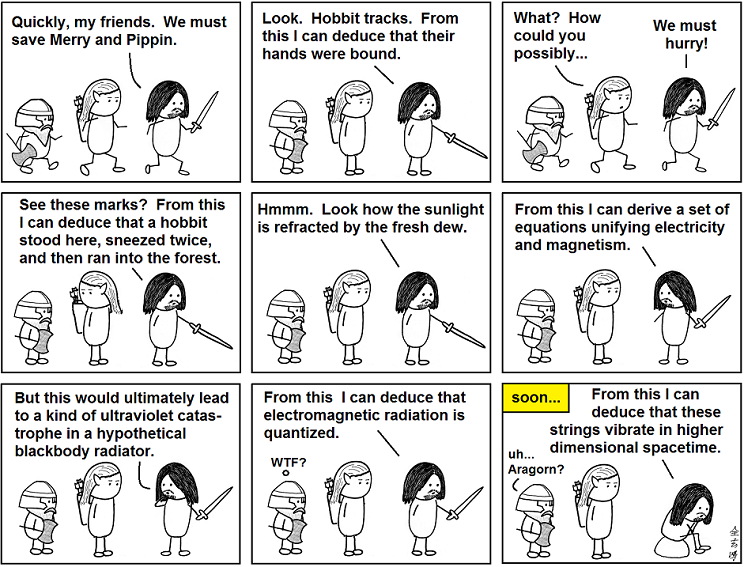
Of course, this is funny, but in fact frames five to eight of this comic (original link here) give a highly condensed version of the discovery of quantum theory, combining the theoretical insights of Maxwell and Planck (if you want the details, this page is a fine place to start.)
A well-known derivation in Jewish Law is the extension of the Biblical law against cooking a kid in its mother’s milk (in Exodus 34:26 and Deuteronomy 14:21) to the general prohibition in kosher cooking against mixing meat and milk (בשר בחלב). There are many places to read about this – Wikipedia is as good a place to get an overview as any.
Of course, it is also legitimate to use logical derivation to understand verses in the Christian New Testament. Perhaps no verse in the Christian Testament has been more misinterpreted than 1 Timothy 2:11-12.
Here is how the ESV translates it:
Let a woman learn quietlywith all submissiveness. I do not permit a woman to teach or to exercise authority over a man; rather, she is to remain quiet.
Here is how the NIV2011 translates it:
A woman*should learn in quietness and full submission. I do not permit a woman to teach or to assume authority over a man;** she must be quiet. [Notes: *Or wife; also in verse 12. **Or over her husband].
Here is how The Inclusive Bible translates it:
Women are to be quiet and completely submissive during religious instruction. I don’t permit a woman to teach or have authority over a man. She must remain silent.
And here is how Tom Wright reportedly translates it in his forthcoming translation, Kingdom New Testament (already in print in the UK; based on his earlier translation of the Pastoral Epistles):
They [women] must be allowed to study undisturbed, in full submission to God. I’m not saying that women should teach men, or try to dictate to them; rather, that they should be left undisturbed.
Now, we may wonder – how did Tom Wright reach the conclusion that this verse should be translated this way? Fortunately, Wright gave a rather extensive discussion of his reasoning in translating the passage this way (pp. 24-26):
… There are several passages in the Bible which deal with the roles of men and women, and many people in modern Western culture don’t like them. They accuse the biblical writers of being ‘patriarchal’, that is, of assuming that men should always run everything and that women should do what they’re told, and of reinforcing this view in their writings. And this passage, particularly verse 12, is often held up as a prime example. Women mustn’t be teachers, the verse seems to say; they mustn’t hold any authority over men; they must keep silent. That, at least, is how many translations put it; indeed, this is the main passage people quote when they argue that the New Testament forbids the ordination of women. I was once reading these verses in a church service and a woman near the front exploded in anger, to the consternation of the rest of the congregation (even though some agreed with her). The whole passage seems to be saying that women are second-class citizens. They aren’t even allowed to dress prettily. They are the daughters of Eve, and she was the original troublemaker. The best thing for them to do is to get on and have children, to behave themselves and keep quiet.
That’s how most people in our culture have read the passage. I acknowledge that the very different reading I’m going to suggest may sound, to begin with, as though I’m trying to make things easier, to tailor this bit of Paul to fit our culture. But there is good, solid scholarship behind what I’m going to say, and I genuinely believe it may be the right interpretation.
When you look at strip cartoons, B-grade movies, and Z-grade novels and poems, you pick up a standard view of how ‘everyone imagines’ men and women behave. Men are macho, loud-mouthed, arrogant thugs, always fighting and wanting their own way. Women are simpering, empty-headed creatures, with nothing to think about except clothes and hairstyles and jewelry. There are “Christian” versions of this, too: the men must make the decisions, run the show, always be in the lead, telling everyone what to do; women must stay at home, bring up the children and get the food ready. If you start looking for a biblical back-up for this view, well, what about Genesis 3? Adam would never have sinned if Eve hadn’t yielded first. Eve has her punishment, and it’s pain in childbearing (Genesis 3:16).
Well, you don’t have to embrace every aspect of the women’s liberation movement to find that interpretation hard to swallow. Not only does it stick in our throat as a way of treating half the human race; it doesn’t fit with what we see in the rest of the New Testament, where women were the first witnesses of the resurrection (in other words, the first apostles); where Paul speaks of women as apostles and deacons (Romans 16); where he expects them to be praying and prophesying in the assembly (1 Corinthians 11), where “there is neither Jew nor Greek, slave nor free, no male and female, since you are all one in Christ Jesus?” (Galatians 3:28). In particular, it doesn’t fit with the practice of Jesus himself. In one telling little story (Luke 10:38–42) Mary of Bethany is sitting at Jesus’ feet; in other words, she is joining the men in becoming a disciple, a learner, with a view to becoming a teacher in her turn. That’s the main reason Martha was cross with her; no doubt she’d have liked some more help in the kitchen as well, but Mary’s real offence was to cross a hidden barrier that, up to then, had kept women in the background and left education and leadership to the men.
The key to the present passage, then, is to recognize that it is commanding that women, too, should be allowed to study and learn, and should not be restrained from doing so (verse 11). They are to be “in full submission;” this is often taken to mean “to the men,” or “to their husbands,” but it is equally likely that it refers to their attitude, as learners, of submission to God—which of course would be true for men as well. Then the crucial verse 12 need not be read as “I do not allow a woman to teach or hold authority over a man” (the translation which has caused so much difficulty in recent years). It can equally mean: “I don’t mean to imply that I’m now setting up women as the new authority over men in the same way that previously men held authority over women.” Why might Paul need to say this?
There are some signs in the letter that it was originally sent to Timothy while he was in Ephesus. And one of the main things we know about religion in Ephesus is that the main religion—the biggest temple, the most famous shrine—was a female-only cult. The Temple of Artemis (that’s her Greek name; the Romans called her Diana) was a massive structure which dominated the area. As befitted worshippers of a female deity, the priests were all women. They ruled the show and kept the men in their place.
Now if you were writing a letter to someone in a small, new religious movement with a base in Ephesus, and wanted to say that because of the gospel of Jesus the old ways of organizing male and female roles had to be rethought from top to bottom, with one feature of that being that the women were to be encouraged to study and learn and take a leadership role, you might well want to avoid giving the wrong impression. Was the apostle saying that women should be trained up so that Christianity would gradually become a cult like that of Artemis, where women did the leading and kept the men in line? That, it seems to me, is what verse 12 is denying. The word I’ve translated “try to dictate to them” is unusual, but seems to have the overtones of “being bossy” or “seizing control.” Paul is saying, like Jesus in Luke 10, that women must have the space and leisure to study and learn in their own way, not in order that they may muscle in and take over the leadership as in the Artemis-cult, but so that men and women alike can develop whatever gifts of learning, teaching and leadership God is giving them.
What’s the point of the other bits of the passage, then?
The first verse (8) is clear. The men must give themselves to devout prayer, and must not follow the normal stereotypes of “male” behavior: no anger or arguing. Then verses 9 and 10 follow, making the same point about the women. They must be set free from their stereotype, that of fussing all the time about hairdos, jewelry and fancy clothes—but they must be set free, not in order that they can be dowdy, unobtrusive little nobodies, but so that they can make a creative contribution to the wider society. The phrase “good works” in verse 10 sounds bland to us, but it’s one of the regular ways people used to refer to the social obligation to spend time and money on people less fortunate than oneself, to be a benefactor of the community through helping public works, the arts and so on.
Why then does Paul finish off with the explanation about Adam and Eve? Remember that his basic point is to insist that women, too, must be allowed to learn and study as Christians, and not be kept in unlettered, uneducated boredom and drudgery. Well, the story of Adam and Eve makes the point: look what happened when Eve was deceived. Women need to learn just as much as men do. Adam, after all, sinned quite deliberately; he knew what he was doing, he knew that it was wrong, and he deliberately went ahead. The Old Testament is very stern about that kind of action.
What about the bit about childbirth? Paul doesn’t see it as a punishment. Rather, he offers an assurance that, though childbirth is indeed difficult, painful and dangerous, often the most testing moment in a woman’s life, this is not a curse which must be taken as a sign of God’s displeasure. God’s salvation is promised to all, women and men alike, who follow Jesus in faith, love, holiness and prudence. And that includes those who contribute to God’s creation through childbearing. Becoming a mother is hard enough, God knows, without pretending it’s somehow an evil thing.
Let’s not leave any more unexploded bombs and mines around for people to blow their minds with. Let’s read this text as I believe it was intended, as a way of building up God’s church, men and women, women and men alike. Just as Paul was concerned to apply this in one particular situation, so we must think and pray carefully about where our own cultures, prejudices and angers are taking us. We must do our best to conform, not to any of the different stereotypes the world offers, but to the healing, liberating, humanizing message of the gospel of Jesus.
(Hat tip: a post by BW16 alerted me to this translation by Wright. I don’t agree with some of BW16’s analysis, but I found his discussion of this verse to be interesting.)
Oxford University Press to Catholics: “Drop Dead”
 Well, no, OUP did not actually write that. But in the interest of making a fast buck, OUP has badly corrupted the integrity of its leading Catholic study Bible.
As part of their line of academic study Bibles (which include the New Oxford Annotated Bible and The Jewish Study Bible), OUP publishes The Catholic Study Bible. This edition has long had a special status, because its editors include a number of shakers and movers in the Catholic Biblical Association, the very organization that is primarily responsible the underlying translation, the New American Bible. This year, the US Conference of Catholic Bishops and CBA released a badly needed update to this translation: NABRE (New American Bible Revised Edition).
As part of this update, OUP reissued The Catholic Study Bible in an updated edition with a new translation. However, OUP did not bother to update the 525-page “Reading Guide” that forms the core of this volume. (Since the NAB already includes annotations as an integral part of its text, each biblical chapter in the The Catholic Study Bible has a page reference to the Reading Guide, where the additional study material is contained.)
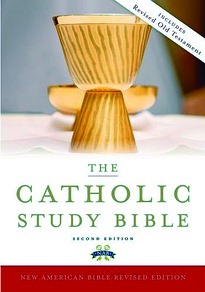 This leads to all sorts of absurdities. For example, on page 70, we learn that the latest update to the NAB was in 1991 – even though the reader of this volume holds in her hands a 2011-updated edition. On page 75 we read about a “proposed Old Testament of the revised NAB” – namely the NABRE which the reader holds in her hands.
One of the most celebrated changes in the NABRE was to Isaiah 7:14 which now reads (on page 999):
Therefore the Lord himself will give you a sign; the young woman, pregnant and about to bear a son, shall name him Emmanuel. [Note: Isaiah’s sign seeks to reassure Ahaz that he need not fear the invading armies of Syria and Israel in the light of God’s promise to David (2 Sm 7:12–16). The oracle follows a traditional announcement formula by which the birth and sometimes naming of a child is promised to particular individuals (Gn 16:11; Jgs 13:3). The young woman: Hebrew ‘almah designates a young woman of marriageable age without specific reference to virginity. The Septuagint translated the Hebrew term as parthenos, which normally does mean virgin, and this translation underlies Mt 1:23. Emmanuel: the name means “with us is God.” Since for the Christian the incarnation is the ultimate expression of God’s willingness to “be with us,” it is understandable that this text was interpreted to refer to the birth of Christ.]
But next to this chapter is a pointer to the Reading Guide, which reads on p. 285:
The historical context is the attempt by the Northern Kingdom (Israel) and Damascus to force Ahab, king of Judah, to fight with them against Assyria. Isaiah, who opposed this alliance, challenges Ahab to place his trust in the promise of divine protection made to his ancestor David and not to fear “these two stumps of smoldering brands.” When Ahab refuses to ask for a sign confirming the promise, Isaiah gives him one: :”Therefore the Lord himself will give you this sign: the virgin shall be with child, and bear a son, and shall name him Immanuel.”
In other words, the Bible prints the 2011 translation but includes commentary to the 1970 translation, just creating confusion. With this volume, the more closely the reader follows the words, the less likely she is to understand. (Other examples are noted in the comments to Timothy’s post here.) (One especially strange aspect of this study Bible is that OUP did take the time to update the Concordance and Glossary at the back of this 2011 study Bible.)
What is OUP’s excuse for this Frankenstein Study Bible – with the text from one translation and the commentary quoting from a different translation? According to Timothy, “The reason it wasn’t updated was that they wanted to move early to have the text available for fall classes.”
The real tragedy is that this volume appeared so late (not even starting to shipp on August 29th – so it won’t show up in college bookstores until mid-September) that most American colleges that follow a semester system (where classes typically start in the second half of August) that OUP both failed its readership and failed to get the volume out in time for fall classes.
It seems pretty clear that in this case, OUP has decided that the dollar is more important than quality or accuracy. What a disservice.
An unusual study Jewish study Bible
 Update 10/27/11 : See also this post.
Update 10/25/11: This book is now available. See first impressions here.
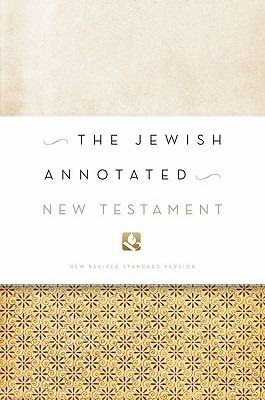
In 2004, Oxford University Press published The Jewish Study Bible – a mainstream study Bible with an extensive commentary and supplements of the NJPS translation of the Hebrew Bible.
Now Oxford University Press is publishing a “sequel” of sorts. Marc Brettler (Brandeis), who co-edited The Jewish Study Bible, has teamed-up with Amy-Jill Levine (Vanderbilt) to publish The Jewish Annotated New Testament.
As of the time of this posting, I have not yet seen a copy of this volume. Here is the description at the Oxford University Press website:
Although major New Testament figures–Jesus and Paul, Peter and James, Jesus’ mother Mary and Mary Magdalene–were Jews, living in a culture steeped in Jewish history, beliefs, and practices, there has never been an edition of the New Testament that addresses its Jewish background and the culture from which it grew–until now. In The Jewish Annotated New Testament, eminent experts under the general editorship of Amy-Jill Levine and Marc Z. Brettler put these writings back into the context of their original authors and audiences. And they explain how these writings have affected the relations of Jews and Christians over the past two thousand years.
An international team of scholars introduces and annotates the Gospels, Acts, Letters, and Revelation from Jewish perspectives, in the New Revised Standard Version translation. They show how Jewish practices and writings, particularly the Greek translation of the Hebrew Bible, influenced the New Testament writers. From this perspective, readers gain new insight into the New Testament’s meaning and significance. In addition, thirty essays on historical and religious topics–Divine Beings, Jesus in Jewish thought, Parables and Midrash, Mysticism, Jewish Family Life, Messianic Movements, Dead Sea Scrolls, questions of the New Testament and anti-Judaism, and others–bring the Jewish context of the New Testament to the fore, enabling all readers to see these writings both in their original contexts and in the history of interpretation. For readers unfamiliar with Christian language and customs, there are explanations of such matters as the Eucharist, the significance of baptism, and “original sin.”
For non-Jewish readers interested in the Jewish roots of Christianity and for Jewish readers who want a New Testament that neither proselytizes for Christianity nor denigrates Judaism, The Jewish Annotated New Testament is an essential volume that places these writings in a context that will enlighten students, professionals, and general readers.
Features
- First New Testament annotated by Jewish scholars
- Brings out Jewish background of early Christianity, New Testament writers
- Explains Jewish concepts (e.g., food laws, rabbinic argumentation) for non-Jews, Christian concepts (e.g., Eucharist) for Jews
- Helpful for non-Jewish readers interested in the Jewish roots of Christianity
Product Details
700 pages; 20 Line Drawings; 6-1/8 x 9 1/4; ISBN13: 978-0-19-529770-6ISBN10: 0-19-529770-9
About the Author(s)
Amy-Jill Levine is E. Rhodes and Leona B. Carpenter Professor of New Testament Studies at the Vanderbilt Divinity School.
Marc Z. Brettler is Dora Golding Professor of Biblical Studies at Brandeis University.
This edition follows closely on the heels of Willis Barnstone’s The Restored New Testament, which is also a fundamentally Jewish look at the text of the New Testament.
Who is this Jewish Annotated New Testament written for, one wonders? Will it have a largely Jewish set of contributors, like The Jewish Study Bible? (If it were written for an academic audience, arguably it should simply have a set of qualified contributors, without regard to personal belief.) Is it designed to introduce a largely non-Jewish audience to particular views from Jewish scholarship (analogous to the way that The African Bible Commentary was designed to introduce non-Africans to some aspects of African theological thought)? Is it designed primarily to introduce a Christian text to a largely Jewish audience (thus “for readers unfamiliar with Christian language and customs, there are explanations of such matters as the Eucharist, the significance of baptism, and ‘original sin.’ “)?
It certainly seems to be a worthwhile exercise to explicate Jewish foundational thought as illustrated in the New Testament, but that seems to be something that most academic treatments of the New Testament attempt. Why is the study of Judaism in the New Testament fundamentally a Jewish (rather than a non-denominational academic) effort?
Playing off the words of the old cliché, I wonder if this new volume will be “good for the Jews”?
How should we translate the title of the artwork?
Here is a 1926 scupture now displayed in the San Francisco Museum of Modern Art made by the Romanian artist (then living in Paris) Constantin Brancusi:

The original 1926 title of this artwork is La Négresse blonde, which SFMOMA translates as “The Blond Negress.”
Is this a good translation of the French title? How women of African descent feel when they see this title? The word “Negress” in 2011 is shocking to see – certainly it does not have the same meaning that Négresse had in 1926. Or is the title meant to be ironic (in the same way that the sculpture certainly is)?
What do you think would be a better way to translate the name of this sculpture into English?
(Bonus question: what is the best translation of Ἰουδαῖος (Ioudaios) as it occurs in the New Testament into English?)
Here is the description SFMOMA gives of the artwork:
La Négresse blonde (The Blond Negress)
1926 sculpture | bronze with marble and limestone base
Fusing the traditions of classical sculpture with Romanian, African, Egyptian, and, later, even industrial forms, Brancusi’s groundbreaking works introduced abstraction and primitivism into sculptural practice. They were as important to the development of Modernism as the paintings of Pablo Picasso.
Brancusi’s sculptural vocabulary consisted of relatively few highly distilled forms, one of the most significant being the ovoid or egg shape that is the basis for La Négress blonde. The title of the work makes reference to an African woman Brancusi had met in Marseilles. The perfect, upturned ovoid serves as the woman’s head. Her distinguishing features are reduced to a pair of full lips, a chignon, and a zigzag ornament at the back of the neck, perhaps denoting a scarf or the lower part of her coiffure. The sculpture’s pedestal comprises a cylinder, a Greek cross, and a plinth that can be read as the woman’s body, shoulders, and neck. The bronze portion of the sculpture, however, can also be interpreted as the body of a golden fish, the top and rear embellishments becoming its dorsal and tail fins. The highly polished surface allows the viewer to contemplate the contrast between the simplicity of the sculpture and the complexity of his or her own reflection.
In attempting to capture the "essence of things," Brancusi broke with the Western tradition of representing the world in a realistic manner and paved the way for twentieth-century sculptural abstraction. His work was radical for its time, and when detractors refused to consider it art, his friend and peer Marcel Duchamp came to his defense, arguing, "To say that the sculpture of Brancusi is not art is like saying an egg is not an egg."
Welcome to BLT
Welcome to the blog named BLT. It is not just a sandwich. It stands for a set of topics that we hope to discuss: Bible, Literature, and Translation. We’ll talk about the Bible as literature and the literature of translation and the translation of Bibles and the translation of literature and literature of translation and Bible as a translation and literary translations of Bibles and so on. And we are certain to throw in the arts, the sciences, philosophy, mysticism, religion, and pretty much everything else.
The initial crew of bloggers represents a diverse set of viewpoints but one that is unified in our openness to new ideas and a fundamental belief in the dignity of all humans. This blog is open to all: Jews, Catholics, Mainliners, Evangelicals, Eastern Christians, Atheists, Theists outside the Judeo-Christian tradition, etc. For me a strong underlying theme of this blog is that everyone has a voice — especially people that have been traditionally marginalized.
I’ll let my co-bloggers (currently J. K. Gayle, Suzanne McCarthy, and Craig Smith) introduce themselves, but I’ll simply mention that I am a professor at a US university with strong interests in applied issues in linguistics.
There won’t be any bacon or other treif meat in my posts, but there will be lots of substance. I look forward to hearing from you.


 BLT
BLT 