Maureen Freely: like Orhan Pamuk’s twin, or even exactly the same
Maureen Freely is a winner of this year’s best “Fiction in Translation” award (given by The Financial Times), and she’s also made the shortlist for the “2011 Independent Foreign Fiction Prize.” Another of her wonderful translations of another of Orhan Pamuk‘s novels (The Museum of Innocence) is the reason for these prestigious recognitions.

Last year, Freely shared with The Guardian, a bit more of her own story: “How I got lost in translation and found my true calling.” Particularly intriguing is what she thinks of her true calling as translator. She sees it as part and parcel of her additional efforts to bring about social justice — for example, the necessity “to write in Orhan’s defence in the media here and elsewhere.” Freely likewise views her work as a translator as in no way in conflict with her work as novelist, as a journalist, as a university lecturer, and as a mother. When she discusses translation, she speaks of it as encouraging complex patterns cross-fertilization of world literature. “An up-and-coming Colombian novelist might be inspired not just by Borges, Conrad and Faulkner, but by contemporary novelists from Asia, Africa and Europe; his literary response to their work will go on to influence what his contemporaries on the other side of the world write next.” And that’s all because of someone’s willingness, somebody’s abilities, to translate.
It’s really worthwhile that you read Freely for yourself. And when you do, I’ll add, it’s worth paying attention to what she says she becomes, when she translates. As a hint, let me just show the shadow of Freely translating Pamuk:
[W]hat I want to do most is capture the music of his language as I hear it. Accuracy is important, but a lot of what I need to be accurate about lies deep below the surface. After consultation with the author, the first sentence of The Black Book became: “Rüya was lying face down on the bed, lost to the sweet, warm darkness beneath the billowing folds of the blue-checked quilt.” The first sentence of Istanbul was: “From a very young age, I suspected there was more to my world than I could see: somewhere in the streets of Istanbul, in a house resembling ours, there lived another Orhan so much like me that he could pass for my twin, even my double.” I can see, even as I type these sentences, how ephemeral they are. Other translators will find their own ways to capture what they see and hear in the text.


Now go see what more Freely sees and hears. Listen here to her speaking of Pamuk’s works and of her own work in translation of them.
Annotated machzorim
With the Jewish New Year of 5772 nearly upon us, it is a chance to review the remarkable machzorim (Jewish prayerbooks for specific holidays with specialized liturgy – here, I consider Rosh Hashanah machzorim). There has been quite a flood of new volumes on the market recently, and several of them have extensive meditations or spiritual notes that raise them above the ordinary holiday prayerbooks of a previous generation.
I must say that I find adding these mediations or spiritual notes a very appealing practice – as long as the typography makes it clear that these are not part of the regular liturgy. These sorts of notes are useful for self-study, solo prayer, or when one is bored during a prayer service – for many, they can make a prayer service more meaningful or help stimulate concentration and mindfulness (kavannah).
Machzorim with liturgical and theological annotations only
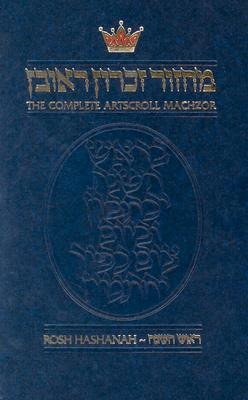 Artscroll Machzor
The publisher Artscroll has long had an extensive set of machzorim, including volumes with transliteration (for those with limited Hebrew), with interlinear translation (for those with moderate Hebrew), and for different practices (nusach Ashkenaz, Sephard). Perhaps its best-known volume is its “basic” Hebrew/English volume. The annotations in the Artscroll machzorim are probably familiar to those who have seen its other prayerbooks – many readers find them somewhat condescending. They are in the form of commentary on the prayer – not spiritual meditations. Also, the translation is in many places awkward English or could better match the Hebrew. For me the merit of the Artscroll volume is the huge number of “extras” it has (such as the complete text of Mishnah Rosh Hashanah, and additional piyutim).
(Note: Amazon price: $21.11)
Koren Machzor
 Following on its successful introduction of its siddur (general prayerbook) last year, publisher Koren has released a Rosh Hashanah machzor, with translation by Jonathan Sacks, a prominent British rabbi. (Rumors are that Koren will release a Yom Kippur machzor in 2012.) The annotations are certainly sparser than those in the Artscroll, but perhaps written more elegantly. Still, there are no special meditations or spiritual commentary. Like the Artscroll, this volume has plenty of “extras.” The typography and layout of this volume is especially beautiful – the most beautiful of all the machzorim I consider in this post. (Note, this machzor departs from the regular format by having “Hebrew on the left, English on the right” so the text flows out of the center of the open book.)
(Note: Amazon price: $21.25)
Machzorim with spiritual annotations or meditations
 Soloveitchik Machzor
The Soloveitchik machzor was published in 2007 and features extensive commentary drawn from the many teachings of Joseph Soloveitchik. Soloveitchik was known as a major commentator on the High Holy Days, and his book On Repentance remains one of the major theological frameworks for understanding teshuvah (repentance/return). The quality of the annotations is quite high, although the physical production of this book is not, and it uses a modified form of the often awkward Artscroll translation. This machzor is my personal favorite of all those I consider in this blog post – I feel that it is a true “teaching” machzor, and that rather than the sometimes simplistic perspectives presented in other machzorim, this machzor has deeper commentary.
(Note: Web price: $28.79)
Machzor Lev Shalem
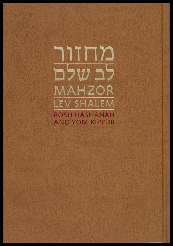 Machzor Lev Shalem, from the American Jewish Conservative denomination (Rabbinical Assembly) is second only to the Koren machzor in beauty. I am not often a fan of two color printing, but this volume uses it elegantly, and features an incredibly beautiful Hebrew font. This is a larger format book than the machzorim mentioned above, but it is still easy to handle. The cover is formed with some sort of material that is very pleasant to touch – in fact, holding this book is a particularly pleasant experience. The format for the book is the classic “English on the left, Hebrew on the right” but follows the traditional side annotation format common in Jewish texts (e.g., the Vilna Talmud). The annotations on the right are liturgical and theological, while the annotations on the left are often meditations. I must say that this is an extremely attractive and useful format, and the Rabbinical assembly claims sales of 120,000 – which I suspect is some sort of record for one-year sales of machzorim. (Like most liberal machzorim, this one volume combines the liturgy for Rosh Hashanah and Yom Kippur in a single volume.)
(Note: Web price: $39.60)
Machzor Eit Ratzon
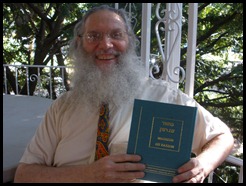 Machzor Eit Ratzon is privately published by Joe Rosenstein, a math professor at Rutgers. It is an independent effort but aimed at liberal congregations. It has a unique five part structure – four columns from right to left present (a) liturgical, historical, and theological perspectives; (b) an English translation; (c) Hebrew text; (d) Romanized transliteration, while an area on the bottom presents spiritual meditations and notes. Although this version is less elegantly typeset than other versions I consider in this post (and is physically the tallest and widest machzor), it is easy enough to use it for reading, studying, and likely praying. This may be the most user-friendly machzor I have ever seen. (Like most liberal machzorim, this one volume combines the liturgy for Rosh Hashanah and Yom Kippur in a single volume.)
(Note: Web price: $32.00 + $6.00 s/h)
On Wings of Awe (Revised Edition)
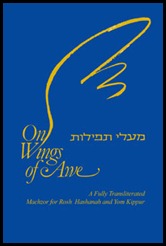 On Wings of Awe is a revision of a classic 1985 American liberal machzor aimed at the Reform movement. I have not seen the new edition, so I will simply quote from the publishers description:
Transliterations of every Hebrew prayer in the book make it possible for non-Hebrew readers as well as Hebrew readers to enter fully into the service. This Machzor also includes poetic translations and interpretations of all sections of the Rosh Hashanah and Yom Kippur services, which help worshippers find their own pathway into some of their more complicated and theologically troubling sections. There are also a number of personal prayers, through which worshippers from high school age to the elderly may articulate some of their own concerns, anxieties, and hopes through the language of the High Holydays. On Wings of Awe includes practices that have recently become standard in American synagogues: introducing each other at the start of the service; antiphonal readings; chanting in English; encouraging congregants to stand and read prayers from their seats; asking people to turn to each other and study a text during a service.
(Like most liberal machzorim, this one volume combines the liturgy for Rosh Hashanah and Yom Kippur in a single volume. I do not know what extent of spiritual annotations this machzor has.)
(Note: Amazon price: $24.95)
(I throw in an honorable mention for Lawrence Hoffman’s Prayer of Awe series – which is not a machzor but a study of the High Holy Days liturgy. He has now has released two volumes. Hoffman’s Prayer of Awe series is is a successor to his My People’s Prayer Book series. I hope to address both of these series in a later post sometime.)
Forthcoming book: Book of Common Prayer–Texts of 1549, 1559, and 1662
10/25/11 Update: this book is now in print and I have reviewed it here.
Oxford sent me its new Fall religion catalogue, and one book that caught my eye is by Brian Cummings (Sussex): The Book of Common Prayer: The Texts of 1549, 1559, and 1662. This blurb describes this book as follows:
The words of the Book of Common Prayer have permeated deep into the life and literature of the English-speaking world. For nearly five hundred years, and for countless people, it has provided a background fanfare for a marriage or a funeral march at a burial. Yet this familiarity hides a violent and controversial history. When it was first produced, the Book of Common Prayer provoked riots among Catholics, and 4,000 died in a rebellion in Devon and Cornwall to oppose it. In the civil wars of the seventeenth century, it was banned by radical puritans, who believed it encouraged superstition and idolatry, and it caused riots all over Scotland. Conversely, with the spread of the British Empire, it was translated into a host of global languages and adopted as the basis for forms of worship in the United States and elsewhere.
This edition presents the work in three different states: the first edition of 1549, which brought the Reformation into people’s homes; the Elizabethan prayer book of 1559, familiar to Shakespeare and Milton; and the edition of 1662, which embodies the religious temper of the nation down to modern times. All texts are freshly edited from original copies, preserving much of their original appearance, orthography, and punctuation. The Introduction explains the historical significance of the book and the controversial process by which it was put together and revised, the changes to the text from the Reformation to the Restoration of Charles II and the 1662 version, and the significance of the book for everyday life and for the history of the English language and its literature. The book includes a glossary, extensive notes, and two appendices.
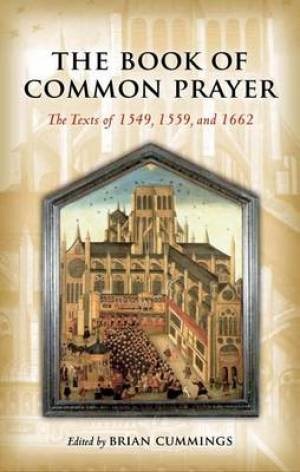 The catalogue somewhat surprisingly calls it “the first edition for the common reader.” But frankly they had me at the mention of “original appearance, orthography, and punctuation.”
Even better, Brian Cummings is not a theologian but a literature professor, and his book The Literary Culture of the Reformation: Grammar and Grace was well-reviewed (although still on my to read list).
This was of course a rapid period of evolution in religion and language in England, and a glance at the Amazon look-inside feature reveals that this volume has over 100 pages of notes, and extensive appendices and introduction. It appears to be laid out a bit in the style of Oxford’s World Classics volumes, but at an Amazon price of only $18.78, it looks like a worthy purchase in hardcover format.
(PS: By the way, the Oxford catalogue this season was quite strange. P. 42 advertises the second edition of The Oxford Dictionary of the Jewish Religion while p. 17 pushes the first edition of the same volume, both in ways suggesting that each of those editions are the definitive editions to get. And I could not find any mention in the catalogue of one of Oxford’s major new volumes: The Jewish Annotated New Testament.)
Happy New Year
The universal dreams and ironies of Orhan Pamuk
Nobel prize winning novelist, Orhan Pamuk recently complained: “When I write about love, critics in the US and Britain say ‘this Turkish writer writes very interesting things about Turkish love’. Why can’t love be general?”

Now, is Pamuk really complaining that he wants his novels to appreciated as more generally human and less specifically Turkish? Well, at first glance it would seem that’s what he’s saying. And his fiercest critics have said this is exactly what he wants: to insult Turkish identity. After publishing his novels Kar and İstanbul: Hatıralar ve Şehir, and after these were translated into English by Maureen Freely (as Snow and Istanbul: Memories and the City) and after these were read more widely, Pamuk began receiving death threats from Turkish nationalists, who despised how his works made their Turkey look. Nonetheless, Pamuk famously spoke out and spoke up all the more, in an interview with Peer Teuwsen published in Tages-Anzeiger, the Zurich-based Swiss-German journal. And for that interview, Pamuk went on trial for having “publicly denigrated Turkish identity” — here’s where he’s commented on that in The New Yorker, as Freely translates for him again. That was June 2005, and then the world, and the world of literary scholars began to protest until, the week when the EU was to investigate the judicial system of Turkey, in late January 2006, the charges were dropped.
It’s quite clear, then, that Pamuk finds himself embraced by citizens of the world and by some of the world’s most recognized authors as one of their own. Is this the sort of “general love” that his fiction speaks of, that he’s complaining “critics in the US and Britain” are ignoring? If not officially insulting Turkish identity, then is Pamuk at least denigrating Turkish literature or Turkish culture in any way?
The answer: No.
When receiving the Nobel Prize in Literature in 2006, he discussed with pride his Turkish heritage. At one point, he said:
Çocukluğumda, gençliğimde hissettiğimin tam tersine benim için artık dünyanın merkezi İstanbul’dur. Neredeyse bütün hayatımı orada geçirdiğim için değil yalnızca, otuz üç yıldır tek tek sokaklarını, köprülerini, insanlarını, köpeklerini, evlerini, camilerini, çeşmelerini, tuhaf kahramanlarını, dükkanlarını, tanıdık kişilerini, karanlık noktalarını, gecelerini ve gündüzlerini kendimi onların hepsiyle özdeşleştirerek anlattığım için. Bir noktadan sonra, hayal ettiğim bu dünya da benim elimden çıkar ve kafamın içinde yaşadığım şehirden daha da gerçek olur. O zaman, bütün o insanlar ve sokaklar, eşyalar ve binalar sanki hep birlikte aralarında konuşmaya, sanki kendi aralarında benim önceden hissedemediğim ilişkiler kurmaya, sanki benim hayalimde ve kitaplarımda değil, kendi kendilerine yaşamaya başlarlar. İğneyle kuyu kazar gibi sabırla hayal ederek kurduğum bu alem bana o zaman her şeyden daha gerçekmiş gibi gelir.
What I feel now is the opposite of what I felt as a child and a young man: for me the centre of the world is Istanbul. This is not just because I have lived there all my life, but because, for the last 33 years, I have been narrating its streets, its bridges, its people, its dogs, its houses, its mosques, its fountains, its strange heroes, its shops, its famous characters, its dark spots, its days and its nights, making them part of me, embracing them all. A point arrived when this world I had made with my own hands, this world that existed only in my head, was more real to me than the city in which I actually lived. That was when all these people and streets, objects and buildings would seem to begin to talk amongst themselves, and begin to interact in ways I had not anticipated, as if they lived not just in my imagination or my books, but for themselves. This world that I had created like a man digging a well with a needle would then seem truer than all else. (trans., Freely)
And he was repeating something he’d already alluded to, something that he loved as a Turk: “That lovely Turkish saying – to dig a well with a needle” (Türkçe’deki o güzel deyiş, iğneyle kuyu kazmak). So Pamuk is not, and never will be, erasing the culture, or the language, of Turkey. Rather, as he’s calling for English translations and as he’s listening to critics in English speaking nations, he’s reminding us that human dreams, that love, must be understood and experienced and given and read in literature – ironically even in great, particularly Turkish literature – as universal.
Rosh Hashanah in the Bible: a sample of notes and footnotes
Rosh Hashanah in the Bible
Considering the magnitude of Rosh Hashanah in the spiritual cycle of the Jewish people, one might suspect that it would warrant frenquent mention in the Bible. On the contrary, Rosh Hashanah is scarcely mentioned and it is not even referred to by a specific name.— Paul Steinberg with Janet Greenstein Potter, Celebrating the Jewish Year: The Fall Holidays / Rosh Hashanah, Yom Kippur, Sukkot, page 24
Here, then, is how some translators have helped readers read Rosh Hashanah in the Bible:

–“Table of Scriptural Readings”, The Jewish Bible: Tanakh: The Holy Scriptures — The New JPS Translation According to the Traditional Hebrew Text: Torah * Nevi’im * Kethuvim, page xii
The preface to the first edition of The Torah was dated September 25, 1962, Ereve Rosh Ha-Shanah 5723.
— JPS, “On the Making of the New Translation,” PREFACE, The Jewish Bible: Tanakh: The Holy Scriptures — The New JPS Translation According to the Traditional Hebrew Text: Torah * Nevi’im * Kethuvim, page xix
In the Hebrew calendar, the civil year begins in the fall, with Rosh Hashanah and Yom Kippur. However the ritual year begins in the spring, at the vernal equinox. Several commentators have noted how significant it is for Israel’s birth to coincide with “nature’s new year.”
— Craig Smith’s footnote on Exodus 12:2, The Inclusive Bible: The First Egalitarian Translation, page 36
This chapter describes each of the seven sacred festivals in turn: the Sabbath; the feasts of Passover and Unleavened Bread; the feast of the Firstfruits; the feast of Weeks, also called Shavuot or Pentecost; the feast of Trumpets, which became Rosh Hashanah, the civil new year, and is celebrated even today with the blowing of the shofar, or ram’s horn; Yom Kippur, the Day of Atonement; and the feast of Tabernacles, or Sukkot.
— Craig Smith’s footnote on Leviticus 23, The Inclusive Bible: The First Egalitarian Translation, page 69
Originally called the Feast of Trumpets, this is now known as Rosh Hashanah, the civil new year in the fall, which is still celebrated in synagogues with the blowing of the shofar. It is the first of the “Days of Awe,” which culminate with Yom Kippur, the Day of Atonement, ten days later.
— Craig Smith’s footnote on Numbers 29:1, The Inclusive Bible: The First Egalitarian Translation, page 92
in the seventh month on the first of the month. In the postbiblical period, this sacred assembly would be designated Rosh Hashanah, New Year. The month in which it occurs, approximately equivalent to September, figures as the seventh month in biblical calculation because the agriculturally based calendar begins in the early spring.
A day of trumpeting. The Hebrew teru’ah in all likelihood refers to the sounding of the ram’s horn, the shofar. Blasts on the ram’s horn were used in coronation ceremonies, and as Moshe Winfeld plausibly argues, this festival was probably linked with other ancient Near Eastern festivals that enacted an annual coronation of the principal deity. it is quite possible that as the biblical faith, evolving toward the form it took in rabbinic Judaism, became more monotheistically theological and less centered on agriculture, this theme of God’s kingship led to the adoption of the first day of the seventh month as the beginning of the year — the time when God’s majestic rule is ceremonially acknowledged and humanity vows fealty and submits itself (there are ancient Near Eastern precedents) to divine judgment.
— Robert Alter’s footnote on Numbers 29:1, The Five Books of Moses: A Translation with Commentary, page 834
LEVITICUS // Holy Days (23): . . . . As laid out in Leviticus, the sacred days of the seventh month follow a conventional ancient pattern described by Gaster (1961): the dying of the old year (“mortification” and “purgation,” as expressed in Rosh Ha-Shanah and Yom Kippur), followed by the birth of the new year (“invigoration” and “jubilation,” as expressed in Sukkot).
–Everett Fox’s note, The Five Books of Moses: Genesis, Exodus, Leviticus, Numbers, Deuteronomy (The Schocken Bible, Volume 1), page 616
a reminder by (horn-)blasting: This became the Jewish festival of Rosh Ha-Shanah, the “head of the (New) Year,” at which a shofar (ram’s horn) is still blown in synagogue. The reason here is probably a combination of proclamation (as before a king) and driving out demons (who, it should be noted, do not like loud noises).
–Everett Fox’s footnote on Leviticus 23:24, The Five Books of Moses: Genesis, Exodus, Leviticus, Numbers, Deuteronomy (The Schocken Bible, Volume 1), page 621
a day of (horn-)blasts: Observed by Jews as Rosh Ha-Shanah, the “Head of the Year” (New Year) in the fall, and accompanied in synagogue by blasts on the shofar.
–Everett Fox’s footnote on Numbers 29:1, The Five Books of Moses: Genesis, Exodus, Leviticus, Numbers, Deuteronomy (The Schocken Bible, Volume 1), page 804
Hebrew On the first day of the seventh month. This day in the ancient Hebrew lunar calendar occurred in September or October. This festival is celebrated today as Rosh Hashanah, the Jewish new year.
— Tyndale House editors’ footnote on Leviticus 23:24 and Numbers 29:1, Holy Bible: New Living Translation, pages 99, 131
At some point in Israelite tradition, the first day of the first month (which occurs in the spring, two weeks before Passover) must have served as New Year’s Day. In rabbinic law, it is listed, in fact, as one of four New Year’s Days, the most familiar being the autumnal holiday known today as Rosh Ha-Shanah (m. Rosh Hash., 1.1)….
— Jon D. Levenson’s footnote on Genesis 8:13, The Jewish Study Bible: featuring The Jewish Publication Society TANAKH Translation, page 24
The promise to Sarah fulfilled at last. . . . A midrash reports that it was on Rosh Ha-Shanah that The LORD took note of Sarah (b. Rosh Hash. 11a); Gen. ch 21 is thus the Torah reading for the first day of Rosh Ha-Shanah
— Jon D. Levenson’s footnote on Genesis 21:1-8, The Jewish Study Bible: featuring The Jewish Publication Society TANAKH Translation, page 44
What Rachel does with the mandrakes she buys is strangely unreported. One expects them to play a role in her overcoming her infertility, but it is God alone who is given credit for that His remembering her underscores her favored status (cf. 8.1). On the basis of a word for “remembering” in Lev. 23.24 (translated “commemorated”), the Talmud dates Rachel’s conceiving (as well as Sarah’s [see 21.1 – 8 n.] and Hannah’s) to Rosh Ha-Shanah (b. Rosh Hash., 11a). The matriarchs thus play a prominent role in the traditional Rosh Ha-Shanah liturgy.
— Jon D. Levenson’s footnote on Genesis 30:22, The Jewish Study Bible: featuring The Jewish Publication Society TANAKH Translation, page 62
(One should be aware that footnotes and other notes on Rosh Ha-Shanah run throughout the entire edition of The Jewish Study Bible: featuring The Jewish Publication Society TANAKH Translation. Levenson’s, above, are three of more than twenty informative notes on the biblical significances of ראש השנה.)
Footnotes are an integral part of a translation
Chris Heard is apparently studying Maimonides’s Guide of the Perplexed in the abridged (second edition) Friedländer translation.
There is a funny thing about this second edition – Friedländer begins his second edition with this paragraph:
The first Edition of the English Translation of Maimonides Dalalāt al-Ḥairin being exhausted without having fully supplied the demand, I prepared a second, revised edition of the Translation. In the new edition the three volumes of the first edition have been reduced to one volume by the elimination of the notes; besides Hebrew words and phrases have been eliminated or transliterated. By these changes the translator sought to produce a cheap edition in order to bring the work of Maimonides within the reach of all students of Theology and Jewish Literature.
In other words, to keep costs down, Friedländer authorized the publication of his book with all the Hebrew and footnotes removed, and it is this edition which has largely been misprinted.
But this is a false economy. Today, Chris posed the question:
Dear readers, I’ve run into a bit of a puzzle, so I’m coming to you to “crowdsource” the search. In his Guide for the Perplexed, Maimonides writes:
In Bereshit Rabba, our Sages, speaking of the light created on the first day according to the Scriptural account, say as follows: these lights [of the luminaries mentioned in the Creation of the fourth day] are the same that were created on the first day, but were only fixed in their places on the fourth day. The meaning [of the first verse] has thus been clearly stated. (Friedländer translation)
For the life of me, I cannot find any passage in Genesis Rabbah that corresponds to Maimonides’s description. Anybody out there able to point me to the right passage?
 Now this is an astute observation by Chris, but if he had the reprint of the Friedländer first edition or the Pines edition then he would have read the footnotes (in Friedländer , Part II, Chapter XXX, footnote 4; in Pines, Part II, Chapter XXX, footnote 18) and saved himself some time: “This passage is not found in our editions of Bereshith Rabba. It is found in Babyl. Talm. Chagigah, 12 a.” (Friedländer , Pines has a similar footnote). (An analogous point could be argued for Matthew 2:23.)
Perhaps the economics of 1903 justified a “cheap edition” but wouldn’t it be a favor to students and scholars everywhere to reprint Friedländer with full footnotes?
Jane Stranz, the newest BLT blogger
I’ve been asked to write the post here to introduce Jane Stranz, who is the newest member of the BLT blogging team. I might as well just ask for forgiveness.
First, in no sense whatsoever is Jane a new blogger. Second, the best way to introduce Jane to you is to let her speak for herself.
Now, let me simply say how much I’ve learned from Jane Stranz through the years. It’s an honor for me now to co-blog with her. She’s in transition now. No, not so much in transition to this blog, but in real life, to a new address in an old city of an old country, to a new job, writing in a second language. So until you read her first post here, do find her auto-bio at her other blog, Of life, laughter and liturgy. Of herself, she says:
My name is Jane Stranz. I was born and brought up in Britain and am an ordained minister of the United Reformed Church, which is a small non-conformist church. For over 10 years I worked as a minister in local parishes of the Eglise Réformée de France in Dunkerque, Chambéry and Ferney-Voltaire. Since July 2002 I’ve been working at the World Council of Churches as the English language translator and coordinator of the language service. I’m married to Stephen Brown a journalist who works at Ecumenical News International and has recently finished his doctorate on the churches in former East Germany and the movement that led to the fall of the Berlin wall. I live in France and each day go over the border just 500 metres away into Switzerland to work. Since 1999 I’ve been living with multiple sclerosis, sounds rather noble but really means I just live in denial and inject interferon b three times a week and count myself very lucky to live in a country with a great health care system.
And know what you’re in for hearing from Jane:
She might get you reading of Hulda, Miriam, Arlene Swidler, and Elizabeth Cady Stanton all in the same post.
You’re likely to learn of works by Anne-Claire Rivollet and by Luise Schottroff.
You’ll get Jane’s take on Suzanne’s take on “the rehabilitation of Rahab.”
She watches the world, the world of translation, of politics, and keeps us watching (Here’s her announcement that Barack Obama’s victory even makes French papers write English headlines!)
Join her lunch group by reading the “Song of Questions” from A Women’s Haggadah by E. M. Broner and Naomi Nimrod.
See how she responds to being voted #5 in the Top 10 of all the 100s of bibliobloggers.
How might Jane Stranz get you re-reading Luce Irigaray or Grace Jantzen quoting her?
Read her many many book reviews (sometimes two on the same one, as she blogged here and here on how “helpful” Tom Thatcher’s study Jesus The Riddler: the Power of Ambiguity in the Gospels is).
Learn what books have changed her, have helped her read the Bible.
But know what kind of novels she has to read, and how that’s so personal, and funny.
She weaves and grieves, with friends against war.

And sometimes, when you’re lucky, it’ll be one of those days, when Jane Stranz is confessing and is energizing us by sharing her own encouragements:
Sometimes I get bored with calling myself a feminist. It seems sort of tired and old fashioned, yet it is very much part of who I am and what makes me tick. I admit I have sort of given up smiling every time I get comments such as “when are we going to have an international men’s day”…. So today I felt energised and encouraged when reading Mariella Frostrup‘s excellent essay in the Observer.
So stay tuned here at BLT to hear from Jane.
What Does “Bondservant” Mean?
For context, see Kurk’s post.
It all sounds so genteel – “bondservant.” But what does it mean? Perhaps a bondservant is a type of bondholder – effectively an indentured servant – who merely needs to pay off his or her bond to “complete the assignment.” Or maybe it is more like a bondager – a sharecropper or tenant farmer. Or maybe it is something holy, like a bondieuserie.
But those are misreadings of “bondservant.” In the the history of Biblical translation, a bondservant (or, more usually, “bondslave,” “bondmaid[en],” “bondman” ) is a slave.
Thus, the KJV has at 1 Maccabees 2:11:
“Of a free-woman shee is become a bondslaue.”
Tyndale has at Galatians 4:22:
“Abraham had two sonnes, the one by a bonde mayde, the other by a fre woman.”
Now, as Kurk relates, Wayne Grudem feels that the distinction between “slave” and “bondservant” has to do with permanent rather than temporary, voluntary rather than conscripted, and economic rather than racial (Grudem carefully avoids mentioning the term “tribal.”)
That is not supported by actual usage in Bible translations. For example, I would have expected Grudem to be familiar with the KJV which uses the term as thus (1 Kings 9:20-21):
And all the people that were left of the Amorites, Hittittes, Perizzites, Hiuites, and Iebusites, which were not of the children of Israel, Their children that were left after them in the land, whom the children of Israel also were not able vtterly to destroy, vpon those did Solomon leuie a tribute of bond-seruice vnto this day.
Not temporary, but “vnto this day.”
Not voluntary but “a tribute.”
Not economic but based on religion and nationality (“Amorites, Hittittes, Perizzites, Hiuites, and Iebusites, which were not of the children of Israel.”)
It is most certainly not the case that in the Roman Empire (let alone the Babylonian Empire, the Assyrian empire, the Canaanite and Israelite kingdoms, the Alexandrian Empire, etc.) that slavery was primarily economic – primarily it was drawn from conquered peoples. If the possibility of manumission existed, well it existed also in Antebullum American South.
Has the meaning of the word “slave” changed as John Collins (“as an American, the term slave, um, is a term that is, is, is a term that is, is difficult to think of as a humanized, uh, institution at all”) and Wayne Grudem (“for the average English reader, the word slave has irredeemably negative associations and connotations”) assert? Did it once have positive connotations?
In fact, the word “slave” has a more positive connotation than it did 400 years ago. Previously “slave” had a pejorative meaning (e.g., Shakespeare Coriolanus 4.5.175: “Oh Slaues, I can tell you Newes, News you Rascals;” 1.7.39 “Where is that Slaue Which told me they had beate you to your Trenches?” But its core meaning of a human in bondage (which is the real meaning of “bondservant”) has remained unchanged at least since Chaucer’s 1394 Troilus and Criseyde (3.391: “ I wol þe serue Right as þi sclaue.”)
The claim that “bondservant” is a clearer term than “slave” is certainly inaccurate; as is a claim that it has any real difference in English meaning (except to be more obscure.) But one wonders at this sudden sensitivity of the ESV translators. Why do they suddenly care about a change in the connotations of the word “slave,” but are indifferent to the change in connotations of “man” and other masculine forms to denote humankind? Why do the suddenly care about a change in the connotations of the word “slave,” but are indifferent to the change in views about the way the word “Jew” is used in the translation of the New Testament?
“bondservants” and other submissive wives
Denny Burk posted the following BBC video here, where’s there’s been some subsequent conversation. (It’s a video in which, as Burk puts it, the ESV translation revision majority vote “to change four instances of [doulos, δοῦλος] ‘slave’ to ‘bondservant’ in 1 Corinthians 7.”) Ed Kaneen has posted more helpful analyses here and here, calling into question the translation decision.
In this BLT blogpost, I’d like you to watch the ESV team (all-male, all-heterosexual, all-married, all-complementarian, all-Anglo-and-Anglo-American, all-Christian, all-Protestant, all-evangelical) deciding “the translation of the word slave in the Bible.” Listen as C. John “Jack” Collins, at 2 minutes into the video, says this:
…. as an American, the term slave, um, is a term that is, is, is a term that is, is difficult to think of as a humanized, uh, institution at all. Although, surprising, surprisingly enough, some of my African American correspondents are less sensitive about that than I am.
What should be obvious is that this “American” does not self-identify as an African American. Nor does he label himself a female American. What may not be as obvious, however, is that this Anglo American man is married to a female who is not an African American. He does have one wife. So you may infer that this wife of his is not one of his “African American correspondents.”
Forty seconds later into the video, Wayne Grudem agrees with Collins’s assessment of “the term slave,” and Grudem gives these final comments before the vote is taken:
…. but for the average English reader, the word slave has irredeemably negative associations and connotations. In people’s minds it’s a permanent condition whereas in the Old Testament and certain, certainly in the New Testament it’s temporary; it leads to freedom. And it was often voluntary, at least in the first century. Number two, slavery in the Old Testament or the New Testament was not primarily racial; it was economic. And third, it was often a situation that had status and carried considerable legal protection. For those reasons, I think we are importing highly inaccurate meanings of the term.
What should be obvious is that this person (Wayne Grudem) is positioning himself as not your average English reader but as one of the scholars who knows better what biblical bondservanthood is than what’s “in people’s minds” about slavery. What might not be as obvious, however, is that this scholar is inferring that, if Great Britain and the United States of America had followed “the Old Testament or the New Testament” translated properly, then human enslavement could still have positive biblical associations and connotations in which the condition of slavery would have been for volunteers who submitted themselves to the temporary status of bondservant, with full protections from the law, as they recovered themselves from their personal economic crises only to gain again their freedom.
Go ahead and watch, and then we can discuss why these facts may be important to Collins’s and Grudem’s majority vote “to change four instances of [doulos, δοῦλος] ‘slave’ to ‘bondservant’ in 1 Corinthians 7.”
—
So, you saw it. You saw the sensitivities of Collins and of Grudem. This is a personal issue for each one of them. If they were “African Americans” or “average readers,” then outsiders looking in could accuse them of subjective bias in translation. However, their successful vote works to protect them from accusations of bias. Their vote works to perpetuate their positions as Anglo American men, husbands of Anglo American women, leaders of their Christian homes and ministries, evangelicals to their world, scholars on matters of biblical words, on biblical manhood and womanhood. (Wayne Grudem is a chronic contributor to and conservator for the Council on Biblical Manhood and Womanhood.)
Now, we may want to agree with Henry Neufeld when he has said (blogging on some of these very same people) “that the correct way to examine and test a Bible version is by looking at the end product and not by determining the quality and morals of the translators.” And yet, even Neufeld sees the subjective sensitivities and the personal impact of the ESV end product, when he goes on to say the following:
I’m not accusing the ESV translators of being misogynists. I do believe, however, that they have followed a translation philosophy that helps to foster exclusion rather than inclusion.
Which comes first, one’s translation philosophy or one’s class and one’s race and one’s gender? Is there a biblical translation philosophy as there may be a biblical bondservanthood or a biblical manhood and womanhood?
Can’t we be a tad bit suspicious when one’s scholarly understanding of a word solidifies one’s own personal positions in life while that understanding would question the sensitivities of others as “surprising” or as merely “average”?
Could we agree with Rod of Alexandria (blogging on some supposedly “biblical way of viewing race”), when he rather astutely says the following?:
If we understand race as something as so simply as that which comes down from a bloodline, we are falling prey into biological determinism in which our stories are trapped in the false genealogies, histories, and stereotypes that come with that understanding of race. It is not a biblical way of viewing race, that Tony Evans [John Piper] and the like are promoting, but a very philosophical one, almost as old as Social Darwinism itself.
You may be asking me, as if surprised (as if a surprised scholar), why race or gender has to enter this discussion at all. Isn’t C. John “Jack” Collins right that I Corinthians 7 has nothing to do with race-based slavery? Isn’t Wayne Grudem right that biblical slavery, like biblical wife-submission, is something voluntary?
The best answers to such questions, I believe, come from those who do not share Collins’s and Grudem’s positions. How might Harriet Jacobs answer, for example? She was born into bondservanthood but describes her enslavement as something she might have volunteered for, as initially so “comfortable” and as “so fondly shielded” that she “never dreamed that [she] was a piece of merchandise.” She’s an African American, and she’s an average reader.

Or how would Rodney S. Sadler, Jr. answer?

In discussing Genesis 16:2, Sadler quotes Jacobs. But Sadler and Jacobs are speaking very differently in their understanding of biblical slavery than do Collins and Grudem.
Sadler claims the following:
[that the] sexual language [of the Hebrew passage –] used for this nonconsensual contact [between Abraham and Hagar, “an enslaved Egyptian woman”] – should remind us of enslaved Africana foremothers and forefathers raped by masters and enslavers who used their bodies for sexual gratification and their offspring as slaves.
And then he’s reminded of Jacobs, quoting her as saying the following:
But he was my master. I was compelled to live under the same roof with him—where I saw a man forty years my senior daily violating the most sacred commandments of nature. He told me I was his property; that I must be subject to his will in all things. My soul revolted against the mean tyranny. But where could I turn for protection?. . . . My master met me at every turn, reminding me that I belonged to him, and swearing by heaven and earth that he would compel me to submit to him. (Jacobs 44-46)
Sadler’s conclusion?
As we consider the plight of women victimized under a misogynistic system, we should note that Genesis provides no insight into the fear, betrayal, and incredulity that Hagar must have felt. (page 75, “Genesis,” The Africana Bible: Reading Israel’s Scriptures from Africa and the African Diaspora).
Now, lest some average reader protest that Sadler is not considering biblical bondservanthood as Grudem does, as “often voluntary, at least in the first century,” then can we turn to somebody else who looks back to the New Testament in that initial century. What does Carolyn Osiek say?

Must we say that she’s an American, Anglo American, a female, unmarried, a feminist? Also a scholar and not just an average reader with involuntary unbiblical slavery on her mind?
Osiek starts one of her studies on the language of the New Testament this way. Her scholarly essay, “Female Slaves, Porneia, and the Limits of Obedience,” begins as follows:
From a modern perspective, we would say the [first-century] categories ‘women’ and ‘slaves’ are partially overlapping. Some women were slaves, but not all were; some slaves were women, but not all slaves were. But, in fact, in ancient categories it is the expression ‘women slaves,’ which seems to us more inclusive, that is a conceptual contradiction. While women and slaves of the ancient Greco-Roman world shared much in common within the male perspective of the patriarchal household, they did not belong to overlapping categories. Both were in Aristotle’s categories fit by nature to be ruled, not to rule.
Both shared intimately in the life of the household, including its religion, economy, child production and nurturing, and burial. . . . Both women and slaves in many ways remained in a state of perpetual liminality. Ancient literature regularly ascribes to one the vices of the other. But if females who were slaves had to be fitted either into the category of women or of slaves, the ancient thinker would have considered them slaves, not women. As females who were slaves, they were doubly fit by nature to be ruled and dominated. (pages 255 – 276, Early Christian Families in Context: an Interdisciplinary Dialogue)
Now, Osiek goes on to comb through the ancient literature, including the scriptures and even the New Testament of the first century, to find differences in how the categories “women” and “slave” were treated in various texts. She concludes generally:
This sexual availability of slaves seems to have been completely taken for granted.
And it makes me wonder how much Collins and Grudem and the majority voters for ESV biblical bondservanthood have taken for granted.
Osiek had already added the following, opining with good reason:
There is an astonishing lack of specification about slaves even in the literature of marital advice. More ancient authors than might be supposed advocate the marital fidelity of husbands, including Aristotle . . . and Pythagoras . . ., but it is doubtful whether sex with one’s own slaves is included. Plutarch, on the other hand, considers it normal for husbands to take their debauchery elsewhere, to go wide of the mark . . . with a . . . slave. . . . If Plutarch is consistent, then his advice about educating freeborn males not to be overbearing with slaves . . . does not prohibit rape of slaves.
And it makes me wonder about how Collins and Grudem translate the language of biblical marital advice, when wives from the New Testament forward, from the first century into the twenty-first, are advised to voluntarily submit themselves to their husbands. If bondwives were a word, . . .
Philip K. Dick and Abraham Abulafia
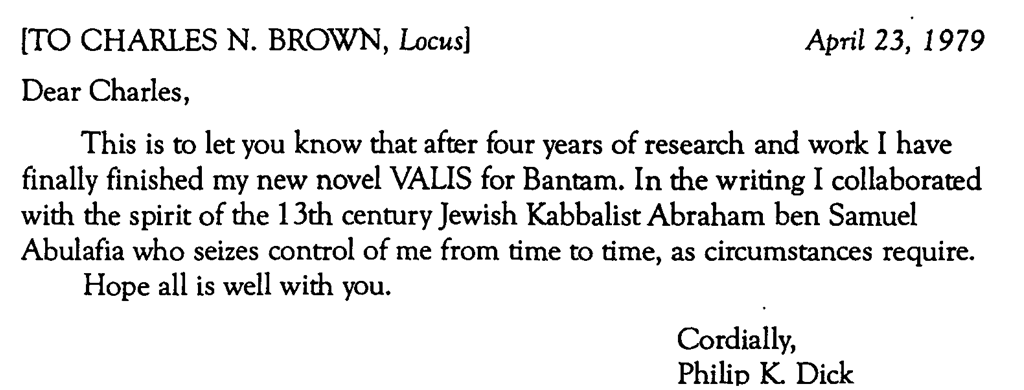
From The Selected Letters of Philip K. Dick: 1977-1979 (p. 225):
[TO CHARLES N. BROWN, Locus] April 23, 1979
Dear Charles,
This is to let you know that after four years of research and work I have finally finished my new novel VALIS for Bantam. In the writing I collaborated with the spirit of the 13th century Jewish Kabbalist Abraham ben Samuel Abulafia who seizes control of me from time to time, as circumstances require.
Hope all is well with you.
Cordially,
Philip K Dick
HT: Alan Brill, Avi Solomon, and Philip K. Dick and Religion
No translation is perfect
I find this odd. I just don’t know how to react to this kind of writing from a respected seminary professor. HT Rod Decker.
Every translation of the Bible ever produced in any language is a human production, and is not perfect. No translators have been superintended by the Holy Spirit in the way the original writers of Scripture were. The original text was inspired; translations are not. Thankfully most translations are reliable and accurate, despite their differences. The differences are not usually matters of error, but of variations in how the meaning of the original text is expressed in English.
There are some warts in the NIV11. All translations have warts, in that some portions of any translation will disappoint us. Of course, what disappoints you may not disappoint me! Some of these differences are simply matters of English phrasing. New translations and revisions usually have some infelicitous expressions that are corrected in the next revision. (See Philippians 3:10 as a possible example of this in NIV11.) These are small warts.
Most translations have a few larger ones as well. The question then becomes, How many warts are tolerable? How big are they? Where are they located? It is possible that a single translation wart, if it is large enough and ugly enough, and especially if it is located dab on the front of the translation’s nose, could be judged serious enough to cause one to look for another suitor.
The bigger warts in the NIV11 include Romans 16:1 and 2, in which Phoebe is described as a deacon—potentially problematic in some churches, but that depends on the function of deacons in a particular church. Likewise, 1 Timothy 2:12 now says that a woman is not to “assume authority over a man”—a translation that goes back to the Reformation, but one that is different from recent English translations. In Romans 16:7 we find Junia (a woman’s name) to be “outstanding among the apostles.” Most warts of this sort involve difficult issues of word meaning (1 Timothy 2:12) or textual criticism (Romans 16:7). Most have marginal notes that give alternate translations.
Banning PowerPoint in Switzerland
There is a political party called “The Anti-PowerPoint Party” (APPP). Its political goal is, as you might expect, to ban PowerPoint. The APPP blames PowerPoint for a decline in the quality of presentations.
I’ll let you explore APPP’s website on your own, but it seems to mostly be hyping books and coaching by its founder, Matthias Poehm. In the end, this humorous political party seems to be less about a political principle and more about raising money for Poehm – perhaps we could write
Anti-PowerPoint Party : Matthias Poehm :: Scientology : L. Ron Hubbard
Still, the party has its supporters, such as Julie Bindel in The Guardian who self-righteously brags:
On leaving academia seven years ago I vowed that I would never use PowerPoint again. I still speak at conferences, though, and have been known to rant at organisers when asked in advance for my PPT presentation. I inform them that I will be turning up with a set of index cards on which I have jotted down key points, but will not be boring my audience to tears with fiddly slides consisting of flying text, fussy fonts or photo montages. Call me old-fashioned, but I believe in having a real discussion about ideas as opposed to force-feeding an increasingly sleepy crowd with numerous graphs and bullet points projected on to the nearest wall.
The APPP website collects the “horror-slide of the month” which are sometimes painful but also sometimes not-so-bad.
And, of course, there are some classics in teasing PowerPoint clichés, such as Peter Norvig’s “The Gettysburg PowerPoint Presentation.” But there is even artwork made with PowerPoint, such as David Byrne’s “Envisioning Emotional Epistemological Information.”
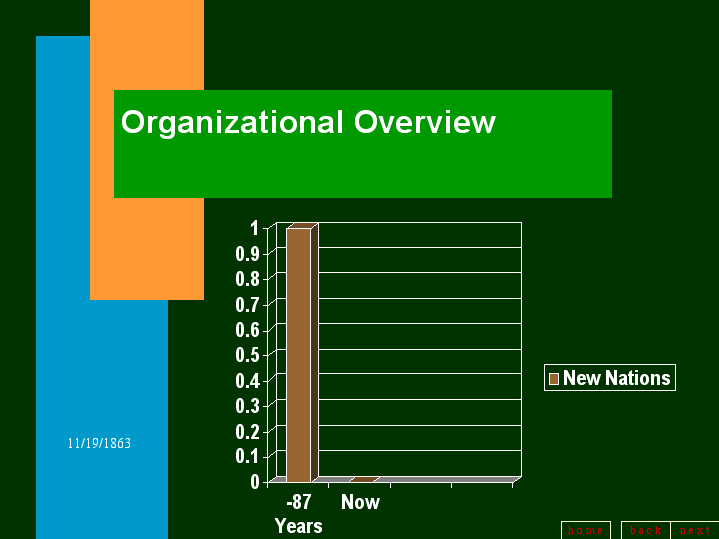

In fact, I think that the PowerPoint hate is misguided – we do not blame Microsoft Word for a decline in the quality of writing (although, perhaps, it is properly blamed for some odd “auto-correct” spelling errors!) Speaking now of academic presentations: I think that those who despise PowerPoint do not remember the general quality of presentations in pre-PowerPoint days. Sure, there were plenty of engaging chalkboard or podium presentations, but there were plenty of clunkers or inscrutable presentations as well. We only need to go to certain humanities conferences and listen to papers being “read” to remember just how awful those days were. In general, I suspect that that PowerPoint has greatly improved listener comprehension and even the dreaded Microsoft Powerpoint Autocontent Wizard has probably helped unskilled presenters both organize their material in a more logical manner and break the material into more manageable chunks.
It is just a little bit too easy to take a swipe at PowerPoint. One can’t help but think that pecuniary interests motivate Matthias Poehm’s crusade (or even Edward Tufte’s.)
Now there are places where PowerPoint is inappropriate. I can’t imagine going to a religious service where PowerPoint was used (even to flash hymnal lyrics up on the screen.) I don’t believe PowerPoint should be used as an archival medium or to replace written essays or books. But overall, it seems to me that we are blaming the wrong thing – we are blaming PowerPoint when we should be blaming schools that fail to teach students proper presentation skills.
Wittgenstein quote
Man hört immer wieder die Bemerkung, daß die Philosophie eigentlich keinen Fortschritt mache, daß die gleichen philosophischen Probleme, die schon die Griechen beschäftigten, uns noch beschäftigen. Die das aber sagen, verstehen nicht den Grund, warum es so sein muß. Der ist aber, daß unsere Sprache sich gleich geblieben ist und uns immer wieder zu denselben Fragen verführt…. Ich lese “philosophers are no nearer to the meaning of ‘Reality’ than Plato got.” Welche seltsame Sachlage. Wie sonderbar, daß Plato dann überhaupt so weit kommen konnte! Oder, daß wir dann nicht weiter kommen konnten! War es, weil Plato so gescheit war? — Ludwig Wittgenstein, TS 213
Translation (by Anthony Kenny)
You always hear people say that philosophy makes no progress and that the same philosophical problems which were already preoccupying the Greeks are still troubling us today. But people who say that do not understand the reason why it has to be so. The reason is that our language has remained the same and always introduces us to the same questions…. I read “philosophers are no nearer to the meaning of ‘reality’ than Plato got.” What an extraordinary thing. How remarkable that Plato could get so far! Or that we have not been able to get any further! Was it because Plato was so clever?
Response to Daniel Street: Why it is a pipe dream.
Daniel Street is making some practical suggestions for Greek Immersion in the Seminary Curriculum. I completely sympathize with the concerns about language requirements in theological programs, but I do not understand the proposals. First, let me say that I know there are some extremely respected Greek programs that are being emulated, and I don’t mean to criticize them. However, I would like to register my cautions and a few questions.
Daniel proposes that:
1) fluency be a goal
2) classes be conducted in Greek
3) there be more class time relative to homework
4) intensive full day courses would be available
First and foremost, the usual immersion programs and modern language programs are in languages that have native speakers. The teachers and professors of these programs are almost always native speakers of the language. Even then, the French Immersion elementary and secondary school programs do not produce students with a high level of expressive fluency. This is usually gained by spending a year in the second language environment, among native speakers.
Through my own secondary school and university experience, most, but not all of my French language instructors were not fluent in English. They communicated best in French, and therefore there was an authentic communicative need to use their language. I believe that there are two requirements of a language learning context – one is comprehensible input and the second is authentic communicative need. Krashen page 151
After living in a French language environment for a year, I found myself more than capable of fulfilling the language competency requirement for French at the University of Toronto. However, this did not qualify me to be a French Immersion teacher. I taught high school French and had a temporary appointment teaching Latin American History in a French Immersion program until a teacher was hired from France with an advanced degree in history from the Sorbonne. My own graduate degree was from an Ontario francophone institution, although I was able to write my papers in English, as long as I presented them in class in French. I was the only anglophone in the class. I still don’t qualify as an Immersion teacher.
In any case, I feel that proposals to offer Greek Immersion programs in seminaries lack a spoken language, native language instructors, a native language environment, and communicative need. If the intent is to teach modern Greek, then it ought to be taught by speakers of modern Greek. If the intent is to teach Hellenistic or classical Greek, then a significant body of literature must be taught, not just a small collection of documents.
Back to the drawing board. I want to hear what language students will become fluent in, who the native language instructors will be, where the year abroad will be, and what institutions using that language will be established. On the other hand, students could attend classical Greek classes in the academy and take Near Eastern Studies classes where they read great gobs of Hellenistic Greek. There are universities that offer this.
Will demo girls show something with the bugs worked out?
I love how advances in computer technology are changing the ways we humans can communicate. It’s terrific that this very blogpost you are reading here is written with two-finger finger taps on my iPad. And I just made up the phrase “finger taps” and it’s modifier, “two-finger.” You get that remarkably. So notice the old smashes up against the brand new. Instant discovery. Lightning speed change.
Now, what’s the hope for language, for translation? Will we always assume that phrases like the ones I’ve invented here just now, or “demo girls” and “work out” and “the bugs,” are merely shadows on the walls of the cave?
Listen to this article for novel phrases. Then tell me what you want to say to your Czech or Spanish or Swahili or Japanese speaking friends when you text them; what if you want to say, “the old smashes up against the new with two-finger finger taps?” See what I’m saying? Okay, here’s the article. Imagine “knock on wood” in Swahili. But what other metaphors and idioms do you see in the article? Will translation by technology “wipe these out”?
…Ortsbo… allows you to chat in over 50 languages with anyone across the world with realtime translation….
Companies like Vocre announced at Tech Crunch Disrupt offer voice to text translations in real time, although when we tried to get a demo of Vocre it did not perform well and the translation had to be edited for accuracy. I spoke with Andrew Lauder Founder, President and Chief Executive Officer of Vocre briefly about this trouble and he attributed it to microphone quality being less optimal on the iPod in comparison to the iPhone; which is what the demo girls were using to show me the translation.
Regardless, Vocre is a very useful tool and once the team works out the bugs it should grow very fast amongst iPhone travelers. What is special is that Vocre uses the corrected translations to improve the engine and accuracy for future translations. Something Ortsbo has yet to do, but is planning to. Luccatch briefly talked about crowd sourcing phrases and terms used that are not easily translatable while keeping the same meaning, like “knock on wood.” Although you and I as english speaking folks may understand the phrase, someone in swahili may not grasp the concept if directly translated. This is where Ortsbo’s Wiki will come to the rescue. Already with 85-95% accuracy it can only get better. Ortsbo web translation is being used by 30 million unique users with 250 billion translations each month. When asked how the iPhone app adoption was performing — with 114 seemingly positive reviews on iTunes — Lucatch diverted from an answer and turned to their future release of a Mango version once Windows Mango launches.
Editor-speak decoded
Allowing the Word to speak for itself
Last March I was able to view the Biblia latina, cum postillis Nicolai de Lyra et expositionibus Guillelmi Britonis in omnes prologos S. Hieronymi et additionibus Pauli Burgensis replicisque Matthiae Doering Venice: Nicolaus Jenson, 1481. Although I don’t have an image of this Bible, similar Bibles can be viewed here and here., Here is the commentary for this Bible provided by the Thomas Fisher Rare Book Library, U. of Toronto,
The most striking characteristic of many incunable Bibles like this one is their complicated page layout.They have been described as a tour de force of the printer’s art with the Biblical text in large print surrounded by a traditional gloss, beneath which are the Postilla or “notes’ of Nicholas of Lyra (d. 1349), followed by the objections of Paul of Burgos (a converted rabbi who took exception to Nicholas’s emphasis on Hebrew interpretation), underneath which are the criticisms of Matthias Döring (d. 1469) in Nicholas’s defence. Nicholas was one of the few Hebraists to emerge in the later Middle Ages, and in his day he was criticized for ‘judaizing’ the Scriptures. His Postilla or ‘notes’ show a thorough understanding of the Jewish exegetes, expecially Rashi (1040-1105), and it was principally through Nicholas that the Jewish interpretations of teh Old Testament were introduced to Christian theologians. Luther was expecially influenced by his commentary, prompting the coining of the Latin adage, ‘Si Lyra non lyrasset, Luther non saltasset’ meaning, ‘Had Lyra not played, Luther could not have danced.’ This Venetian imprint represents the first time the Biblia latina was printed in combination with Nicholas’s extensive reflections. While the reformers were endebted to his insights, they eventually rejected the addition of commentary to the Biblical text in favour of a page relatively unencumbered by marginalia, allowing the Word to speak for itself.
It seems that any translation is not actually allowing the Word to speak for itself, but is rather the product of preceding commentary. I used to imagine, when I was younger, that Tyndale worked from the Greek and Hebrew texts alone, although now I see how unscholarly that would have been. But last March, while in Toronto, I spent some time leafing through the Greek and Hebrew Bibles that were available to Luther and Tyndale. The reality hit me, that the Bibles were in the Greek or Hebrew, with a Latin translation, and with commentary, either by Nicholas of Lyra or Erasmus. Yet these names and their commentaries are little known to us today.
Forthcoming books: Jefferson Bible, English Onkelos completed, Sweeney’s survey, Torah MiEtzion anthology, Zondervan 2nd edition interlinear Bible, new Matt Zohar volume
Here are some interesting-looking new books appearing in the next 90 days:
 The Smithsonian edition of the Jefferson Bible, which promises to be definitive, is appearing in conjunction with the forthcoming Smithsonian exhibition of the newly restored Jefferson Bible.Jefferson formed his own gospel by assembling excerpts from texts in four languages (English, French, Latin, Greek) and combining moral teachings while omitting supernatural events. We are promised an edition that for the first time will be a full-color facsimile and will include the full contents – including all of the material in French, Latin, and Greek, as well as Jefferson’s own handwritten notes.
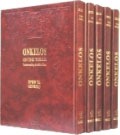
- The final volume (Deuteronomy-Devarim) in the Drazin-Wagner (English translation of ) “Onkelos on the Torah” series is finally appearing. Onkelos is the main Aramaic translation of the Torah (c. 110 CE), and is
 in many places is a paraphrase rather than a translation. Because of its interpretative nature, Onkelos was heavily used by medieval Bible commentators (notably Rashi) and a Jewish tradition exists of reading the portion of the week “twice in Hebrew and once from Onkelos.” However, in the current age, Hebrew is better known than Aramaic. This edition is aimed at the English language reader (who perhaps has some Hebrew and some Aramaic). Each double page includes Onkelos, the original Masoretic text, and Rashi all in original (vowelized) languages, with English including a translation of Onkelos (marked in two type styles to indicate portions where Onkelos deviates from the Masoretic text) and an extensive commentary, largely drawn from medieval Jewish commentators. The haftarah prophetic passages read during synagogue services are included with “an English translation from the Aramaic Targumim”, and a number of extra materials for understanding the text are included. The earlier volumes in this series were by far the most detailed English translation of Onkelos that I am aware of, and this volume looks to be similarly detailed.
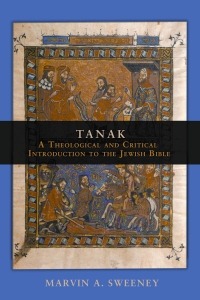
 Marvin Sweeney (Claremont Graduate University) survey of the Hebrew Bible is appearing (perhaps competing against James Kugel and Marc Brettler’s similar volumes – both entitled “How to Read the Bible”). Sweeney’s book is to be published by Fortress and is to be 464 pages. I don’t have an inside information on this volume, so I’ll just quote the publisher’s blurb: “Though ‘biblical theology’ has long been considered a strictly Christian enterprise, Marvin A. Sweeney here proposes a Jewish theology of the Hebrew Bible, based on the importance of Tanak as the foundation of Judaism and organized around the major components: Torah, Nevi’im (Prophets), and Kethuvim (Writings). Sweeney finds the structuring themes of Jewish life: the constitution of the nation Israel in relation to God; the disruption of that ideal, documented by the Prophets; and the reconstitution of the nation around the Second Temple in the Writings. Throughout he is attentive to tensions within and among the texts and the dialogical character of Israel’s sacred heritage.” Sweeney’s book is entitled: Tanak: A Theological and Critical Introduction to the Jewish Bible.
 Yeshivat Har Etzion (YHE) is one of the most exciting religious schools in Israel, with many programs for study including its Virtual Beit Midrash and KMTT podcast. Its Wikipedia page(which perhaps was edited by one of its supporters) claims it is “one of the most selective and advanced Yeshivot [religious schools] in the world” Certainly it has a number of leading (traditional Jewish) religious scholars, who also interact to some degree with modern Biblical scholarship. It has just launched a new series, and a volume of essays on Genesis is forthcoming. According to the blurb, the essays are written by “Aharon Lichtenstein, Menachem Leibtag, Chanoch Waxman, Yoel Bin-Nun, Elchanan Samet, Yonatan Grossman, Yaakov Medan and other leading scholars.” If this is of the same high quality as YHE’s other English materials, this book should be a treat.
 A stunning translation of the last decade is Robert Mounce’s interlinear translation of the New Testament. This is a tour de force, since it largely follows Greek word order in English. Zondervan published this version in three editions – each containing pages laid out in three columns – the large central column containing an interlinear format with Zondervan’s edition of the Greek text, Mounce’s translation, along with Greek word parsing information and GK numbers. The side two translations contained standard English translations – the three published versions were the KJV/NIV, the TNIV/NLT, and the NASB/NIV. The side columns were largely superfluous (especially in the case of the KJV, which uses a much different base Greek text, and the NLT, which is tends towards paraphrase rather than formal equivalence.)Apparently the NASB/NIV edition was the big seller, because Zondervan is re-releasing it in a new edition with the updated NIV2011 translation. But I think the purchase is worth it just to enjoy Robert Mounce’s amazing translation. (One odd point, Zondervan promotes this book by including a bio of Mounce that claims “he was involved in the translation of the NIV, NLT, NIrV, and especially the ESV.” Why would Zondervan promote a translation of one of its competitors).
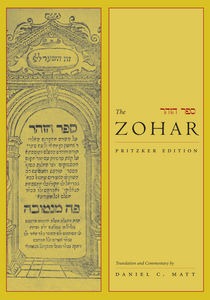
 One of the most amazing translations projects going on is Daniel Matt’s (disclaimer: I am an acquaintance) ongoing ten volume translation of the Zohar. Matt’s translation is fully annotated, but it also aims to preserve the poetry in the Zohar. If you want to get an idea of what his translation is like, here are some sample pages. Also, Matt’s project is far more inclusive than it might at first seem, since he has been establishing a critical Aramaic text for his translation. He and his publisher (Stanford University Press) have been web-publishing the critical Aramaic text (free for download), and the text (established to date) is available here. Volume Six of his translation is due in October.
- For other interesting-looking future publications, see also this post on The Jewish Annotated New Testament and this post on the Norton Critical edition of the English Bible.


Now, I think I am going to spend some of my day reading the books that I already have, so I’ll be ready when these books come out.
Egypt’s Palm Frond Cold War Against Succos
On the first day [of Succos] you shall take the product of hadar [citron] trees, branches of palm trees, boughs of leafy [myrtle] trees, and willows of the brook, and you shall rejoice before the LORD your God seven days. [NJPS, Leviticus 23:40]
 As relations between Israel and Egypt continue to rapidly deteriorate, now we have news that Egypt has banned the export of palm fronds used as part of Jewish ritual during the holiday of Succos. (See CNN story here and Ha’aretz story here)
According to Ha’aretz, Egyptian palm fronds normally form 40% of the Israeli local supply during the holiday.
(Note that this has happened before – in 2005 – at that time, Ha’aretz reported that Egyptian palm fronds formed 70% of the Israeli local supply.)


 BLT
BLT 