NA28 editions (ESV, NRSV, REB)
My heart sunk a bit a few months ago when I saw that the NA28-ESV diglot published by Crossway – I had feared that this would be the official replacement for the wonderful NA27-RSV diglot published by the German Bible Society (or the interesting NA27-NET diglot). As it turns out, my fears were unnecessary – it appears that the German Bible Society is putting out an edition of the NA28 with both the NRSV and REB translations, which will be useful on all sorts of levels.
Crossway has been very active in publishing all sorts of editions, but as I previously reported, their edition of the ESV together with BHS was a stinker.
(I do not wish to belabor the point here, but I should mention that I have long held the opinion that the RSV and NRSV are better translations than the ESV, and I also take issue with the narrowness of the ESV panel. On the other hand, I continue to be impressed by Crossway’s success in marketing the ESV and making it available in a wide array of formats.)
Of course, all of these diglots are a bit anachronistic, in the sense that none of the translations mentioned (ESV, NET, NRSV, REB) used the NA28 as source material – they all used previous editions of Nestle-Aland.
But I am happy to see that the appearance ESV diglots reflect Crossway’s ambitious publication program rather than any sort of imprimatur from the German Bible Society – which instead is publishing with the NRSV and REB edition.
The Meanings of Joshua and of Jesus
Late last week, I managed to blog some about the opinions of some evangelical Christian bloggers concerning what’s in the “Old Testament” that would be horrific as historical genocide. But I didn’t have time to discuss much, if any at all, the very common view for many evangelical Christians that the solution to the problems with the Jewish Joshua and his charge to slaughter women and children is Jesus. I could have linked to an earlier blogpost of Claude Mariottini in which he raises the “question whether the God who revealed himself to Israel and the God who was manifested in the person of Jesus Christ are the same God or whether this God is a God of love and mercy.” There Mariottini was also asking, “How could God order Joshua and the Israelites to conquer the land of Canaan and in the process destroy many cities and exterminate entire populations, including men, women, and children, young and old?” Clearly, John Piper and Rachel Held Evans in their respective posts and comments suggest that God is better after Joshua and is more trustworthy, believable, and loving and loveable in Jesus. (I’ve bolded the font of the quotation above and of those below).
Yesterday, Peter Enns added his evangelical Christian opinion to the ostensible Christian difficulty with the ostensible genocide of non-Jews (whom he refers to as Canaanites) by God and Joshua. At any rate, Enns is hinting that it should be just fine for evangelical Christians not to conclude that “the historicity of the … conquest of Canaan [must absolutely be historical fact] pretty much as the Bible describes.” Enns is calling for evangelical Christians not to do intellectual exercises just to do them if they plan on always only coming to the same conclusion that is the one that must be evangelical and Christian. On his blog, Enns says he “follows Jesus,” so it’s not clear how that might inform his thinking and his conclusions, or not.
To Enns and his post, one commenter replies:
I consider myself evangelical and I have no issues with academic exploration at all. I hold to the worldview that Jesus had and affirmed, and I filter information from the lens of that worldview. I have no problem wrestling with issues, hard questions and constructive dialogue is important, but at the end of the day I will submit myself to the authority of the Scriptures whilst continuing to explore the ever-changing views and evidences of science, archaeology, etc.
Similarly another commenter says:
What Paul was talking about in that verse was the Old Testament – the only Scripture available to them at the time. His letters weren’t considered Scripture to him. They weren’t compiled yet into the Bible or “Scriptures” we know today. Evangelicals are supposed to check their mind at the door and accept all the positions that people simply want to read into as being God-breathed. Especially Paul’s restrictions upon women. The John Piper’s of the world and countless others through the ages WANT to see that men are superior, women should be submissive, slavery is acceptable, and all that other BS. None of which, of course, Jesus himself said.
Likewise another commenter writes:
The real problem is that Evangelicals (and those who share their mindset) are imprisoned within an ideology of revelation rather than a true theory of revelation. For them, as well as for many other Christians, the crisis for their faith arises from the notion that revelation is contained in a book rather than in the person Jesus.
Thought experiment: Imagine history without Jesus. Now explain why the Israelite scriptures (aka “Old Testament”) are revelational, and if you think they are, in what sense.
What seems clear is that Jesus as the loving merciful God incarnate is better than Joshua as the willing participant in genocide as commanded by the Old Testament God. That seems to be clear to many evangelical Christians anyway. And yet what must be meant by “Joshua” and by “Jesus”? That’s really where I’d like to go with the rest of this post.
THE MEANINGS OF JOSHUA
Let’s say that Moses nicknamed Joshua. In Numbers 13:16, there’s this statement that he did:
וַיִּקְרָ֥א מֹשֶׁ֛ה לְהֹושֵׁ֥עַ בִּן־נ֖וּן יְהֹושֻֽׁעַ׃
What does that mean? Well, whoever wrote Numbers or Bəmidbar or בְּמִדְבַּר (was it Moses?), was letting him play with language.
Moses nicknamed or renamed his assistant who had been named Hoshea (הוֺשֵׁעַ); and so the former renamed the later the name Joshua (יְהוֹשׁוּעַ), and he did so ostensibly by speaking the younger person’s name with a contraction of the unspeakable Name (יהוה). After all, HaShem (the LORD) had spoken to Moses (in verse 1 of chapter 13)
From הוֹשֵׁ֥עַ comes יְהוֹשֻֽׁעַ. When it is written, then the pun is literary, no longer only soundplay but visual wordplay. And this can be explained otherwise, and is some explained with different meanings, by Tamar Kadari, who discusses the explanation of midrash. Notice, literally, the letters:
As regards the significance of this change [of the name Sarai to Sarah], the Rabbis explain that initially she was a princess [sarai] over her people, while now she will be a princess over all the inhabitants of the world [sarah] (Tosefta Berakhot [ed. Lieberman] 1:13). In an additional exegetical explanation, because Sarai performed good deeds, God added a large letter to her name, and she would now be called “Sarah” (Mekhilta de-Rabbi Ishmael, Masekhta de-Amalek, Yitro 1). The Rabbis determined that whoever now called Sarah by her former name transgressed a positive commandment (JT Berakhot 1:6, 4[a]). The midrash relates that the letter yud that was taken from Sarai’s name flew up before God. It complained: “Master of all the worlds! because I am the smallest of all the letters, You removed me from the righteous woman’s name?” God replied: “Before, you were in a woman’s name, and at the end of her name, now I put you in a man’s name, and at the beginning of the name [Num. 13:16]: ‘but Moses changed the name of Hosea [hoshe’a] son of Nun to Joshua [yehoshua]’” (Gen. Rabbah 47:1).
Before we get to Jesus, let’s recap. We read something Moses ostensibly writes about Moses renaming Hoshea ben Nun “Yehoshua.” It sounds like it means “YHWH will Hoshea” or “the Lord will Deliver Us.” It also looks like it can mean The Princess Over All the Inhabitants of the World (or Sarah) gave up her name The Princess Over [Just] Her People to help Moses change this young man’s name. A little feminine Yod makes him more manly.
THE MEANINGS OF JESUS
Let’s move forward, then, to Jesus. What’s that mean? Well, we have to move forward to around 250 B.C. We have to get Moses back in Egypt, where we find ourselves in namesake Polis of the conqueror Alexander the Great. It’s in Alexandria, Egypt where the name Jesus first appears, sort of. The Jewish sons of Sarai, of Sarah, have translated the Torah, the five books of Moses, and it’s referred to as the Pentateuch. The fourth book becomes Ἀριθμοὶ, Numbers. And Numbers 13:16 is rendered as follows:
καὶ ἐπωνόμασεν Μωυσῆς τὸν Αυση υἱὸν Ναυη Ἰησοῦν
In Numbers 13:1, HaShem has become κύριος, Lord or Master.
So all of the wordplay between the tetragrammaton and Hoshea to make Joshua is gone, and all of the lore of Sarai’s Yod making Hosea Sarah’s Yeshua is lost. (The Greek only adds the manliness to the command to Joshua to be “courageous” by mandating ἀνδρίζου or andr-izou.) It could even be argued that the Latin transliterations of the much later Vulgate Bible get at the playful sounds and lettering of the Hebrew names with “Osee” renamed by Moses as “Iosue.” At least the Latin conveys more than does the Greek Αυση turned Ἰησοῦν (or Ayse turned Iesous).
What is important to infer here is that Jewish readers of the Greek translation of the Book of Joshua and of the five Books of Moses would likely have not even needed to pay attention to what the Greek lost of the wordplay. The meanings of Ἰησοῦς, as the meanings of יְהוֹשׁוּעַ, are only understood by insiders.
And when the stories of Jesus Christ are told and written, the Greek name Ἰησοῦς, as יְהוֹשׁוּעַ, is understood by insiders. In other words, when in the gospels of Matthew and of Luke the virgin Mary and her betrothed Joseph are to name their baby boy, they are to name him יְהוֹשׁוּעַ, which means Joshua, which means the son of Sarai, become Sarah, whose YOD has become part of Hosea’s new name. This Yeshua, if we transliterate the sounds with English letters, would have meant for some listeners that this baby’s name means Yah-Delivers-Us. The warrior-conquerer, the assistant to Moses in the dessert who led the people into the Promised Land, was the namesake of this little baby.
When the writer of the gospel of Matthew has this little baby boy grown up and preaching, then this young man, this Joshua or Yeshua, or Ἰησοῦς, or יְהוֹשׁוּעַ, hints at the significance of the Hebrew letter YOD in the Torah. In Matthew 5:8, this young man declares:
“ἰῶτα ἓν ἢ μία κεραία οὐ μὴ παρέλθῃ ἀπὸ τοῦ νόμου”
or, “neither the littlest letter י nor some serif stroke will go away from Torah.”
And later the writer of the Book of Hebrews writes of Joshua, of the two different Joshuas, the original and the one named after the original. Hebrews 4:8 followed by Hebrews 4:14 shows the same name for both men:
εἰ γὰρ αὐτοὺς Ἰησοῦς κατέπαυσεν, οὐκ ἂν περὶ ἄλλης ἐλάλει μετὰ ταῦτα ἡμέρας·
Ἔχοντες οὖν ἀρχιερέα μέγαν διεληλυθότα τοὺς οὐρανούς, Ἰησοῦν τὸν υἱὸν τοῦ θεοῦ, κρατῶμεν τῆς ὁμολογίας.
In a very short context, the writer of Hebrews, using Greek, is specifying two different Joshuas, or Yeshuas.
Oh, and it should be clear that when the New Testament quotes the Book of Joshua it is putting the words into the mouth of Jesus: Hebrews 13:5 quotes Joshua 1:5 and Matthew 22:37; Mark 12:30, 33; Luke 10:27 all quote Joshua 22:5 .
THE MEANINGS OF JESUS AS JOSHUA
So what does that mean for evangelical Christians who believe that Joshua leading a God-commanded genocide is not as good as Jesus as a merciful and loving incarnate son of God? I’m not really sure.
The gospels of the New Testament do not always make Jesus, as a Joshua, always kinder or less violent or easier to understand or accept or believe.
Matthew 10 (ESV) has Jesus saying this:
Do not think that I have come to bring peace to the earth. I have not come to bring peace, but a sword. For I have come to set a man against his father, and a daughter against her mother, and a daughter-in-law against her mother-in-law. And a person’s enemies will be those of his own household. Whoever loves father or mother more than me is not worthy of me, and whoever loves son or daughter more than me is not worthy of me. And whoever does not take his cross and follow me is not worthy of me. Whoever finds his life will lose it, and whoever loses his life for my sake will find it.
Luke 12:49–53 has him saying:
I came to cast fire on the earth, and would that it were already kindled! I have a baptism to be baptized with, and how great is my distress until it is accomplished! Do you think that I have come to give peace on earth? No, I tell you, but rather division. For from now on in one house there will be five divided, three against two and two against three. They will be divided, father against son and son against father, mother against daughter and daughter against mother, mother-in-law against her daughter-in-law and daughter-in-law against mother-in-law.
Luke 14:26 has him saying:
If anyone comes to me and does not hate his own father and mother and wife and children and brothers and sisters, yes, and even his own life, he cannot be my disciple.
Luke 19:27 has him saying:
But as for these enemies of mine, who did not want me to reign over them, bring them here and slaughter them before me.
Luke 22:35–38 has this dialogue between Jesus and his disciples saying:
And he said to them, “When I sent you out with no moneybag or knapsack or sandals, did you lack anything?” They said, “Nothing.” He said to them, “But now let the one who has a moneybag take it, and likewise a knapsack. And let the one who has no sword sell his cloak and buy one. For I tell you that this Scripture must be fulfilled in me: ‘And he was numbered with the transgressors.’ For what is written about me has its fulfillment.” And they said, “Look, Lord, here are two swords.” And he said to them, “It is enough.”
So what? Well, it’s tough to say Jesus, given those statements, is much different from his namesake, Joshua. Doesn’t it make us all want to pay a little more attention to the narratives, to history painted, to the words spoken and written and translated? To the wordplay and the nuance and the context? If our ethics must come from texts or from the gods or men or women within the texts, then what?
The Dovekeepers and Ancient Jewish Magic
I have just finished reading The Dovekeepers by Alice Hoffman, a novel of the fall of Jerusalem and the siege of Masada. It was hard to get through the first 50 pages, hard to engage in such a sad story with a known ending. I was ambivalent about the long-winded detail, the dark, murky atmosphere, and the marginal circumstances and dysfunctional relationships of the four narrators. The narrators did not seem to represent a typical life of a woman at that time. At least, that is a first impression.
I noticed in the Amazon reviews, several criticisms of this book. First, it was said that there was too much magic, that these people were barely recognizable as Jews. Second, was there really an awareness of an afterlife among Jews at that time? And then, of course, one has to ask if Josephus’ account of Masada was accurate, or more of a myth or legend.
“The Dovekeepers” is the story of the Roman defeat of the Jews at Masada ~70 C.E. told from the perspectives of four women who had sought refuge there in the stronghold built by King Herod. Each narrator’s section of the story is quite long and detailed. Each contains much much much Hoffman-trademarked magic, omens, superstitions, potions, spells, witches, angels, demons, ghosts, amulets, symbols, beasts…you get the idea. I think if each of these stories had been shortened and had less of the “other-world”-ness it would have moved along better.
I was personally able to lose myself in this world, and take it on as realistic. After all, in a world devoid of modern medicine, who would not engage with potions and amulets to protect oneself through childbirth, to protect the newborn baby, and to protect those who engaged in combat? As human beings, we seek agency. We feel the need to control, to attempt, at least, to control our lives. We don’t just surrender to disease and warfare, we fight them. We fight them with both science and religion. As women, we go to the doctor, we take our medicine. In the absence of this modern response to illness, women will still take on agency, engage, act to alter the fate of those they love.
It is only when we see magic, science and religion as, all three, occupying the same space in our psyche – the need for agency in the face of disaster – that we can accept these ancient practices as filling the same function as modern medicine. Even now, if there is less that science can do, then we engage with magical cures. That still remains true.
Alice Hoffman provides as reference Ancient Jewish Magic: A History by Gideon Bohak. She depends particularly on the section which relates the views on magic expressed in Philo, the Qumran scrolls and Josephus. On the one hand, magic is demonized and seen as particular to the feminine domain. On the other hand, some practices which appear identical to the practices labeled magic, are allowed by religious leaders. Bohak labels this “licit magic” in contrast to “illicit magic.” In some cases it is simply a matter of a “harmful” potion being illicit, whereas a “healing” potion is licit.
I wonder if too little has been written about this aspect of ancient daily life. However, when I used to read about magic and divinations, it seemed too strange, alienating and other. I was raised to fear and shun the other. Now, I can freely read about magic, ancient practices, kaballah, and so on, without feeling that because I am reading about these things, they influence me negatively, or that this exposes me to something evil. My interest in early kabbalah and magic entails no belief in these things so I don’t fear them. I should add that they don’t fascinate me either, my interest simply responds to the fact that these texts are an integral part of the history of writing and the development of scientific thinking.
It is a loss to biblical scholarship, if the magical elements are ignored, marginalized, demonized or relegated to an illicit feminine domain. Where are the discourses on the phylacteries and the urim and thumin?
God’s and Joshua’s genocide?
My apologies for being quiet on the blog here, and my apologies in advance for likely having to be away again for an extended period. It’s another busy time for me in matters elsewhere.
Yesterday, nonetheless, a conversation began in the blogosphere that I feel BLT readers may be interested in. It’s the question of whether the Hebrew Bible makes God the perpetrator of genocide. It was Rachel Held Evans who pointed out the supposed problem with the book of Joshua as history to be ethically puzzled about. In a post that’s got people talking, she wrote:
I encountered this [emotionless evangelical Christian theology] recently after I spoke to a group of youth about doubt. In the presentation, I mentioned that upon reading the story of Joshua and the Battle of Jericho for myself, I realized it was a story about genocide, with God commanding Joshua to kill every man, woman, and child in the city for the sole purpose of acquiring land. I explained that this seemed contrary to what Jesus taught about loving our enemies.
Afterwards, a youth leader informed me that when it came to Joshua and Jericho, I had nothing to worry about…and had no business getting his students worried either.
“I don’t know why you had to bring up the Jericho thing,” he said.
“Doesn’t that story bother you?” I asked. “Don’t you find the slaughter of men, women, and children horrific?”
“Not if it’s in the Bible.”
“Genocide doesn’t bother you if it’s in the Bible?”
“Nope.”
He crossed his arms and a self-satisfied smile spread across his face. He was proud of his detachment, I realized. He seemed to think it represented some kind of spiritual strength.
“But genocide always bothers me,” I finally said, “especially when it’s in the Bible. And I get the idea that maybe it’s supposed to. I get the idea that maybe God created me to be bothered by evil like that, even when it’s said to have been orchestrated by God.”
Held Evans actually started her blogpost by quoting John Piper from one of his own:
“It’s right for God to slaughter women and children anytime he pleases. God gives life and he takes life. Everybody who dies, dies because God wills that they die.”
– John Piper
She didn’t link to his post, but you can find it here. With a cool head (but, Held Evans claims, with no heart), Piper reasons:
“My answer to that is that there is a point in history, a season in history, where God is the immediate king of a people, Israel, different than the way he is the king over the [non-Jewish, Christian] church, which is from all the peoples of Israel and does not have a political, ethnic dimension to it.”
Not long after Piper asked, and definitively answered, his question, blogger Dr. Claude Mariottini, Professor of Old Testament at Northern Baptist Seminary, encountered something similar. Mariottini had been to SBL where the conference theme was actually the question, “Is Yahweh a Moral Monster?” In his own blogpost, Mariottini recaps a session he attended, and he discusses in the post some of the passages from Joshua, to conclude the following:
“These texts and many others clearly show that there was no genocide.”
The question for Held Evans and for Piper and for Mariottini is not at all whether the literature of these narratives of the Bible is really history or not. The question is how they must reflect on God in real life and in actual genocide. Held Evans is led to doubt. Piper is led to make God different in the Old Testament for Israel than he now is in the New Testament for the church. Mariottini’s SBL fellows want to know if Yahweh is a moral monster; while the blogger himself reads Joshua and other such biblical texts as descriptions of war, presumably of just war, not of genocide.
So what must we do with such scriptures? Are they for faith vs doubt, heart vs head? Are they for rationalizing and proving dispensational ethics? Are they for understanding dimensions of human violence among peoples of God and of godlessness? Are there other understandings and responses and questions that we would do well to ask?
What is a “Practice”?
In American culture, perhaps because of its historic domination by Protestant Christianity and Protestantism’s intense emphasis on scripture, religion is generally taken to refer to a system of belief. But in many religions, including Catholic and Orthodox Christianity, Judaism, and Islam, what you do is at least as important as what you believe when it comes to defining religion: hence the idiom “practicing your religion.”
Practice has become more prominent in theological reflection in recent years, perhaps prompted by the various streams of emergent Christianity that find inspiration, beauty, and spiritual nourishment in a variety of practices taken eclectically from the two thousand year history of the church. But what is a practice, exactly?
The following quotations are taken from a paper by Nicholas Healy [1], in which he urges a better definition of the term, and quotes the definitions of several other authors. I have reformatted them slightly into bullet form in order to assist in comparing elements of the definitions.
[Alasdair] MacIntyre defines a practice as:
‘any coherent and complex form of socially established cooperative human activity
– through which goods internal to that form of activity are realized
– in the course of trying to achieve those standards of excellence
– which are appropriate to, and partially definitive of, that form of activity,
– with the result that human powers to achieve excellence,
– and human conceptions of the ends and good involved,
– are systematically extended’. [2]
David Kelsey, for example, defines a practice as
‘any form of socially established cooperative human activity
– that is complex and internally coherent,
– is subject to standards of excellence that partly define it,
– and is done to some end
– but does not necessarily have a product’. [3]
For Dorothy Bass, [Christian] practices are
‘patterns of co-operative human activity
– in and through which life together takes shape over time
– in response to and in the light of God as known in Jesus Christ’. . .
[A]n activity qualifies as an ecclesial practice ‘only if it is
– a sustained, cooperative pattern of human activity
– that is big enough, right enough, and complex enough
– to address some fundamental feature of human existence’.[4]
Reflecting on the practices of Catholicism as I have practiced, experienced, or observed them, my own definition would be something like this:
– an action, behavior, or pattern of activity
– intentionally performed
– on a regular basis
– which is understood by the community in which it is performed
– as functioning to express, shape, or establish identity
– and/or to form, shape, or strengthen character
What do you think of these definitions?
What’s your definition?
What practices (religious or otherwise) do you, or have you, performed? And how have they functioned in your life or the life of your community?
And a translation question for my erudite co-bloggers and readers: What term(s) are used for (this sort of) “practice” in other languages, especially those which have been historically significant in Christianity and other faith communities? And what connotations do those terms have?
[1] Nicholas Healy, Practices and the New Ecclesiology: Misplaced Concreteness?, International Journal of Systematic Theology Nov 2003 5:4, 287-308
[2] Alasdair MacIntyre, After Virtue: A Study in Moral Theory, second edn (Notre
Dame: University of Notre Dame Press, 1984), p. 187.
[3]David H. Kelsey, To Understand God Truly (Louisville, KY: Westminster/John Knox
Press, 1992), p. 118.
[4]Miroslav Volf and Dorothy C. Bass, eds., Practicing Theology: Beliefs and Practices in Christian Life (Grand Rapids: Eerdmans, 2002), p. 3, 23
On lip-synching the National Anthem
Many complaints have arisen about Beyoncé’s apparent lip-synching of the National Anthem at Obama’s second inauguration
I have to agree with the critics here – given the choice between hearing the National Anthem sung live (but poorly) and having an outstanding recorded performance, I would prefer to see the live performance. For a formal ceremony such as an inauguration, seeing a live performance seems to be appropriate.
I am reminded of so many things here – of a biography I read long ago of Pierre Boulez (I believe it was Joan Peyser’s), which described how he once received a gift of a phonograph, and ended up discarding it, because he could not stand hearing a piece of music played the same way time after time. I am reminded of the difference between attending a museum exhibit and reading a catalogue or of the pleasures of reading a facsimile edition of a great book. I am reminded of the recent filmed production of the Boublil-Schönberg Les Misérables which has as its “hook” the idea that it recorded voices live (although orchestra was added in post-production) rather than using lip-synching as do most musical films. (What is better: a recording of a live performance or a recording of a recorded performance?)
When I speak in public, I usually prefer not to use a microphone, and I sometimes use the old saw that speaking through a microphone is like kissing through a screen door. There is nothing that can compare with the immediacy of direct speech. But to take that example more seriously – what would one prefer: an imperfect real kiss or a perfect pre-recorded video of a kiss?
David Brooks on Humility

New York Times columnist David Brooks is teaching “The Humility Course” at Yale. On the first day of class, he compares himself to Bono and discusses his office hours by explaining that meeting with students individually is exciting “certainly for them but also for me.” Observations from Scott Ross here.
JPS forthcoming publication “Outside the Bible”
The Jewish Publication Society’s forthcoming collection of non-canonical works, Outside the Bible, is reportedly going to appear at the end of the year.
In a fund-raising e-mail, Barry Schwartz announces “JPS’s groundbreaking three-volume, three thousand page collection of Second Temple literature will go to press in March” and gives the following description:
About Outside the Bible: Ancient Jewish Writings Related to Scripture
Edited by: Lawrence Schiffman, James Kugel and Louis Feldman:Outside the Bible is the most comprehensive collection of texts comprising ancient Israel’s excluded scriptures and earliest biblical exposition, accompanied by modern commentary from seventy of the world’s leading Second Temple scholars that places them in context and explains their significance for Jews and Christians alike.
"Breathtaking in its scope and eminently satisfying in its execution, Outside the Bible will prove to be an indispensable reference for every scholar of Hebrew Bible, second- temple Judaism, New Testament, and early Christianity. With introductions to and translations of the mass of non-canonical Jewish writings produced from the Exile up until the Mishnah, by an eminent group of internationally renowned scholars, here we have a resource that will meet scholarly needs for generations to come."– Bart D. Ehrman, James A. Gray Professor, Department of Religious Studies, University of North Carolina at Chapel Hill
JPS has released samples from the forthcoming work, including a table of contents. From the page samples, it appears that the translations will be heavily annotated. The page samples also indicate a publication date of December 2013 (while mentioning it will be “available at SBL, November 23, 2013.”) The price is $275; although the page sample mentions a 25% pre-publication discount (see the last page of the page sample for details).
The number of pages seems in dispute – in JPS’s e-mail mentioned above, the work is “three thousand pages”; on the publisher’s web page, the work is 2,640 pages; while the page sample mention 1,406 pages.
JPS also has released a promotional interview with one of the editors, Larry Schiffman of Yeshiva University, formerly of NYU. This was a happy occasion for me, since it gave me a chance to discover Larry Schiffman’s blog.
Martin L. King’s (non-)visit to Israel
Here, from the Israel State Archives, is the account of the efforts of the Israeli government to get Martin King to make an official visit to Israel. Because of various events, King never made it. The editor of the Israel State Archive entry speculates at the end:
Israel wanted very much to bring Martin Luther King for a visit. His status as a Nobel Peace Prize laureate would give the event great prestige, and it was hoped that it would have a positive impact on the status of Israel in the Afro-American community in the United States and in Africa, where King was a revered figure. King was sympathetic to Israel and declared support for its right to exist in peace. But given all the delays and evasions, it seems he did not want to identify himself with Israel to this extent during the struggle for equal rights for blacks in the United States. This attitude may also have arisen from the decline in his status in the Afro-American community, due to the rise of more radical groups which were identified with anti-Israel positions, such as Malcolm X and the “Nation of Islam,” and the “Black Panther” movement.
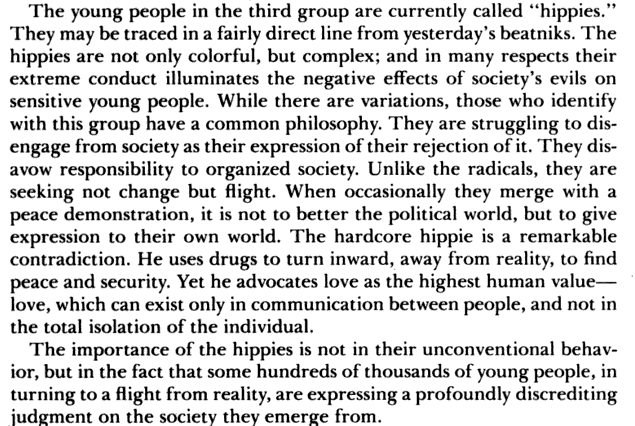
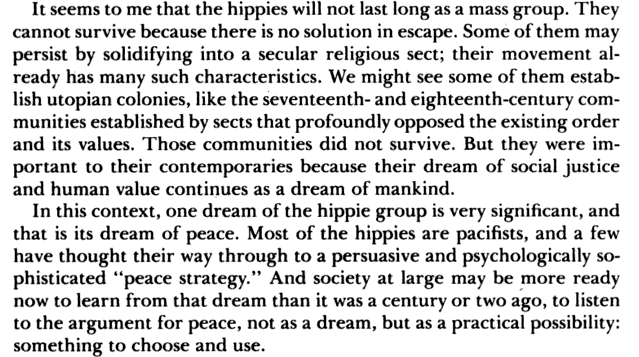
Martin L. King on hippies
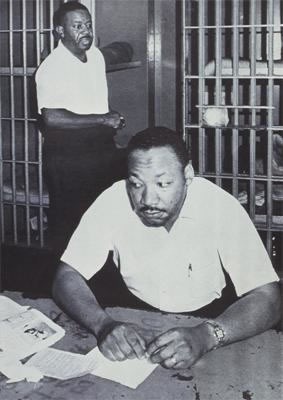
Martin King and Aaron Swartz

On January 11, 26-year old activist Aaron Swartz committed suicide, a month before he was due to face trial for having broken into MIT’s computer network in an apparent attempt to download the entire database of JSTOR journal articles and republish it on file sharing networks. Aaron Swartz appeared to be following the path he outlined in his Guerilla Open Access Manifesto:
Information is power. But like all power, there are those who want to keep it for themselves. The world’s entire scientific and cultural heritage, published over centuries in books and journals, is increasingly being digitized and locked up by a handful of private corporations. Want to read the papers featuring the most famous results of the sciences? You’ll need to send enormous amounts to publishers like Reed Elsevier.
There are those struggling to change this. The Open Access Movement has fought valiantly to ensure that scientists do not sign their copyrights away but instead ensure their work is published on the Internet, under terms that allow anyone to access it. But even under the best scenarios, their work will only apply to things published in the future. Everything up until now will have been lost.
That is too high a price to pay. Forcing academics to pay money to read the work of their colleagues? Scanning entire libraries but only allowing the folks at Google to read them? Providing scientific articles to those at elite universities in the First World, but not to children in the Global South? It’s outrageous and unacceptable.
“I agree,” many say, “but what can we do? The companies hold the copyrights, they make enormous amounts of money by charging for access, and it’s perfectly legal — there’s nothing we can do to stop them.” But there is something we can, something that’s already being done: we can fight back.
Those with access to these resources — students, librarians, scientists — you have been given a privilege. You get to feed at this banquet of knowledge while the rest of the world is locked out. But you need not — indeed, morally, you cannot — keep this privilege for yourselves. You have a duty to share it with the world. And you have: trading passwords with colleagues, filling download requests for friends.
Meanwhile, those who have been locked out are not standing idly by. You have been sneaking through holes and climbing over fences, liberating the information locked up by the publishers and sharing them with your friends.
But all of this action goes on in the dark, hidden underground. It’s called stealing or piracy, as if sharing a wealth of knowledge were the moral equivalent of plundering a ship and murdering its crew. But sharing isn’t immoral — it’s a moral imperative. Only those blinded by greed would refuse to let a friend make a copy.
Large corporations, of course, are blinded by greed. The laws under which they operate require it — their shareholders would revolt at anything less. And the politicians they have bought off back them, passing laws giving them the exclusive power to decide who can make copies.
There is no justice in following unjust laws. It’s time to come into the light and, in the grand tradition of civil disobedience, declare our opposition to this private theft of public culture.
We need to take information, wherever it is stored, make our copies and share them with the world. We need to take stuff that’s out of copyright and add it to the archive. We need to buy secret databases and put them on the Web. We need to download scientific journals and upload them to file sharing networks. We need to fight for Guerilla Open Access.
With enough of us, around the world, we’ll not just send a strong message opposing the privatization of knowledge — we’ll make it a thing of the past. Will you join us?
This is in many ways a remarkable essay, with much to admire and much to deplore in it. Swartz took on the civil disobedience promised in this essay – as summarized in this account by Orin Kerr:
JSTOR is an organization that sells universities, libraries, and publishers access to a database of over 1,000 academic journals. For a large research university, JSTOR charges as much as $50,000 a year for an annual subscription fee, at least parts of which go to pay copyright fees to the owners of the articles in the databases. The JSTOR database is not freely available: Normally, a username and password are required to access it. But if you access the site from a computer network owned by a university that has purchased a subscription, you can access the site without a username and password from their network. Users of the service then have to agree to use JSTOR in a particular way when they log in to the site; they generally can download one article at a time, but the JSTOR software is configured to block efforts to download large groups of articles.
Aaron Swartz decided to “liberate” the entire JSTOR database. He wanted everyone to have access to all of the journals in the database, so he came up with a plan to gain access to the database and copy it so he could make it publicly available to everyone via filesharing networks. Swartz lived in the Boston area, and he had legitimate access to the JSTOR database using Harvard’s network, where he was a fellow. But Swartz decided not to use Harvard’s network for what he had planned. Instead, he used MIT’s network across town. Swartz did not have an account or formal relationship with MIT, but MIT is known for having relatively open account practices.
In Swartz’ first attempt, he purchased a laptop, went into a building at MIT, and used the MIT wireless network to create a guest account on MIT’s network. He then accessed JSTOR and executed a program called “keepgrabbing” that circumvented JSTOR’s limits on how many articles a person could download — thus enabling Swartz to start to download a massive number of articles. MIT and JSTOR eventually caught on to what was happening, and they blocked Swartz’s computer from being able to access the MIT network by banning the IP address that he had been assigned.
Swartz responded by changing his IP address, and it took a few hours before JSTOR noticed and blocked his new IP address. To try to stop Swartz from just changing IP addresses again, JSTOR then blocked a range of IP addresses from MIT and contacted MIT for more help. MIT responded by canceling the new account and blocking Swartz’ computer from accessing the MIT address by banning his MAC address, a unique identifier associated with his laptop.
Undeterred, Swartz tried again. This time he brought a new laptop and also spoofed the MAC address from his old one to circumvent the ban. Using the two latops and the program designed to circumvent JSTOR’s limits on downloading articles, he started to download a significant chunk of JSTOR’s database. A day or two later, JSTOR responded by blocking all of MIT’s access to JSTOR for a few days.
Again undeterred, Swartz came up with a different plan. Instead of trying to connect to the MIT network wirelessly, Swartz broke into a closet in the basement of a building at MIT and connected his computer directly to the network — hiding his computer under a box so no one would see it. Over a month or two period, he succeeded in downloading a major portion of JSTOR’s database.
Investigators were on to Swartz at this point, however. They installed a video camera in the closet to catch Swartz when he accessed the closet to swap out storage devices or retrieve his computer. Swartz was caught on camera, and he even seems to have realized that he was being filmed; at one point he was filmed entering the closet using his bicycle helmet as a mask to avoid being identified. (Here’s the picture.) Swartz was spotted on MIT’s campus soon after by the police and tried to run away, but he was then caught and arrested. Federal charges followed.
There has been much debate on whether there was prosecutorial overreach on the charges; I do not venture to enter into that debate. But, I am drawn to juxtapose Swartz’s situation with that of Martin L. King, the great civil rights leader. Both King’s and Swartz’s lives ended tragically, too short – King from an assassin’s bullet and Swartz from his own hand. But their approaches towards civil disobedience were entirely different; King was forthright about his civil disobedience and was willing to accept the consequences of his actions – among other things, it raised awareness of unjust laws and policies. Swartz was also battling some unjust laws and policies, but his protest took a different approach, and his form of “civil disobedience” is more difficult to recognize.
I do not think that Swartz was standing in King’s footsteps.
Ultimately, Swartz’s death is a great tragedy; and I think many things about the case could have been better handled. Perhaps the greatest hope for something positive from his death is the chance to revise poorly written laws; there is some initial reason for hope for action in this direction.
Now the computer Watson swears
Just too funny (although it raises an interesting question: how do we learn the entire corpus of language while learning to avoid language that is inappropriate for different social situations?) [PS: Apologies for the censorship below – the language can be found in the original article, but I didn’t think it was appropriate here]:
The scientific test to gauge if a computer can “think” is surprisingly simple: Can it engage in small talk? The so-called Turing test says a computer capable of carrying on a natural conversation without giving itself away can be considered intelligent. So far, no machine has made the cut.
Eric Brown, a research scientist with IBM, is charged with changing that. The 45-year-old is the brains behind Watson, the supercomputer that pummeled human opponents on Jeopardy in 2011. The biggest difficulty for Brown, as tutor to a machine, hasn’t been making Watson know more but making it understand subtlety, especially slang. “As humans, we don’t realize just how ambiguous our communication is,” he says.
Case in point: Two years ago, Brown attempted to teach Watson the Urban Dictionary. The popular website contains definitions for terms ranging from Internet abbreviations like […], short for “[…],” to slang such as “[…].”
But Watson couldn’t distinguish between polite language and profanity – which the Urban Dictionary is full of. Watson picked up some bad habits from reading Wikipedia as well. In tests it even used the word “[…]” in an answer to a researcher’s query.
Ultimately, Brown’s 35-person team developed a filter to keep Watson from swearing and scraped the Urban Dictionary from its memory. But the trial proves just how thorny it will be to get artificial intelligence to communicate naturally. Brown is now training Watson as a diagnostic tool for hospitals. No knowledge of […] required.
Washington National Cathedral to hold same-sex weddings
I suspect that this will be of interest to a wide range of our readers, regardless of their views on religious institutions performing same-sex weddings. There is considerable symbolism since the church in question styles itself as the unofficial “national church” of the US:
The (Episcopalian) Washington National Cathedral (arguably the most visible church in the United States) announced today that effective immediately it will allow same-sex weddings. (Same-sex marriages are legal in the District of Columbia.)
More here.
Surprising Israeli election commercials (with English subtitles)
Makom Israel has provided YouTube videos of some Israeli political television commercials for the upcoming parliamentary election. The videos even come with optional English subtitles (you may need to click on the “CC” image in the lower control bar of the video). On the YouTube page, there is a “more info” link that provides background.
This is my first time seeing Israeli video commercials, and I was rather shocked by many of them – I was particularly shocked by the “Shas” commercial which is a blatant appeal to racist bigotry (claiming that the current government is freely “giving away” Jewish conversions to Russian immigrants of Jewish descent who are culturally Jewish but not technically Jewish under Orthodox rabbinic law.) It features a tall blonde Russian immigrant “Marina” who cannot speak Hebrew correctly (and who mixes Russian phrases her Hebrew) dialing a toll free STAR-CONVERSION number to get a faxed conversion certificate.
This fits in with the theme of Shas party leader Arye Deri that the current ruling coalition is a party of “Russians and whites.” By “whites,” Deri using an offensive term for Ashkenazi Jews (generally, Jews of northern or Eastern European descent) – Shas is appealing for a Sephardic Jewish (generally, Jews of Spanish or Middle Eastern descent) vote.
I can hardly imagine this racism so explicitly stated in a television commercial.
(On googling further, I see that this advertisement was withdrawn today “for the sake of peace” after a formal request from the official election committee for the State of Israel.)
The “Pirate Party” (which advocates for Knesset [parliament] members who will vote as directed to by Internet polls) and “Green Leaf” (which advocates for legalization of marijuana) commercials are upsetting in a completely different way.
“The Movement” [Ha-tnua] commercial (which advocates for the only female candidate for prime minister) is the only one that talks about negotiations with Palestinians (and is even so daring as to show a picture of its prime minister candidate Tzipi Livni with Barak Obama.)
All the commercials are listed here. (HT: Michael Pitkowsky)
In Memoriam
John William McKenzie Brady, 8 years old, died on December 31, 2012, and yesterday, one of my students, 7 years old, told me that his dad went to sleep on Christmas Eve and did not wake up the next morning.
Women doing stuff
I have naturally drifted toward reading as many books by women and about women, as by men, and about men. They are not typically books about feminism, or women’s history, but just about women doing stuff. So here goes.
Janet Wallach has written Desert Queen: The Extraordinary Life of Gertrude Bell: Adventurer, Adviser to Kings, Ally of Lawrence of Arabia, about the drawing of the borders of Iraq in the early 1900’s. She has also written The Richest Woman in America: Hetty Green in the Gilded Age about the expansion of the railway in the USA, and about New York City during the panic of 1907.
Janet Soskice has written The Sisters of Sinai: How Two Lady Adventurers Discovered the Hidden Gospels about one of the greatest manuscript discovery of the 19th century. She also wrote The Kindness of God: Metaphor, Gender, and Religious Language.
The economist, Sylvia Nasar wrote Grand Pursuit: The Story of Economic Genius. Marvin Lowenthal has translated The Memoirs of Glückel of Hameln about a Jewish widow at the turn of the 17th century who carried on the family business.
In all of these books we learn about the carrying on of business and scholarship. I don’t mind reading books specifically about women’s history, but sometimes I like to have the same experience as men have when they read. I like to read about people of my own gender just doing the things that come naturally, running businesses, being involved in politics and academia, and so on.


 BLT
BLT